




If you take steroids, then you may experience hair loss. But have you ever wondered why this may be? In this article, we’ll outline the relationship between the two and what you can do to prevent hair loss from anabolic steroids.
Overview
- Taking steroids can accelerate hair loss symptoms in men genetically predisposed to male pattern baldness (androgenetic alopecia).
- The risk of hair loss depends on the steroid a person takes. DHT derivatives like Masteron and Winstrol are the harshest on hair, while compounds like Deca are comparatively gentler but not risk-free.
- Treatment options exist, but are limited in their efficacy. Medications such as finasteride and minoxidil can slow steroid-induced hair loss, but they can’t fully prevent it if steroid use continues.
Introduction: The Basics of Hair Loss and Anabolic Steroids
If you’ve been hitting the gym hard or exploring bodybuilding supplements, you might have stumbled upon one pressing question: do steroids cause hair loss? It’s a concern that’s not only aesthetic but deeply personal.
After all, your hair is more than just strands on your scalp. It’s a symbol of vitality, youth, and confidence. In this article, we’ll break down the science behind anabolic steroids, their impact on hair, and what you can do to protect your mane while pursuing your fitness goals.
Understanding Anabolic Steroids
Before diving into hair loss, let’s clarify what anabolic steroids are. In simple terms, anabolic steroids are synthetic compounds that mimic the male hormone testosterone. They’re commonly used to:
- Increase muscle mass and strength
- Improve athletic performance
- Accelerate recovery after workouts
These drugs can be prescribed medically for certain conditions, but many athletes and bodybuilders use them illicitly for performance enhancement. There are are hundreds of steroid compounds, but the most common are: testosterone (base compound), Dianabol (Methandrotestosterone), Trenbolone, and Anavar (Oxandrolone).
While the benefits may seem attractive, the side effects can be significant: and hair loss is one of the most common. If you are already genetically predisposed to male pattern baldness (androgenic alopecia), then taking steroids can exacerbate hair loss.
Most anabolic steroids artificially increase testosterone and DHT levels in the body. For those with male pattern baldness, increasing the circulation of DHT causes the molecule to bind to hair follicles, causing hair loss. This manifests in a receding hairline and thinning hair on the crown.
The Hair Growth Cycle: The Science of Hair Growth and Hair Loss
So, we have walked you through how steroids work. Before we take a deep-dive into the relationship between steroids and hair loss, we’ll give you a brief overview of how hair grows.
All of the hair on our body follows the hair growth cycle. Hair growth can be split into 3 distinct phases:
- Anagen Phase – The active growth phase lasting 2–7 years.
- Catagen Phase – A short transitional phase lasting 2–3 weeks.
- Telogen Phase – The resting phase lasting around 3 months before hair sheds.
Hair follicles are highly sensitive to hormones, especially dihydrotestosterone (DHT), a derivative of testosterone. DHT binds to receptors in hair follicles and, in genetically predisposed individuals, can shrink follicles and shorten the anagen phase. The result? Thinner hair and eventual hair loss.
That’s why many men experiencing hair loss choose to take medication like finasteride or minoxidil. These medications help prevent hair loss and resting, stimulating hair growth.
Symptoms of Steroid-Induced Hair Loss
If you are taking steroids and think you are losing hair, then there are some tell-tale signs you should be watching out for. These are:
- Increased hair shedding during showers or brushing
- Hairline recession or thinning temples
- Widening mid-parting line in women
- Hair shaft miniaturisation (thinner, shorter hairs)
If you notice any of these symptoms while you are taking steroids, then it would be wise to stop your cycle or invest in a preventative hair loss medication.
The Scientific Mechanism: Why Steroids Accelerate Hair Loss
When people ask, “do steroids cause hair loss?”, the answer lies less in gym folklore and more in molecular biology. Anabolic steroids don’t magically make hair fall out overnight. Instead, they shift your body’s hormonal balance in ways that amplify the very pathways responsible for male and female pattern baldness.
Here’s what happens biologically:
Stage 1: Androgen Pathways and Steroids
Anabolic-androgenic steroids (AAS) are synthetic derivatives of testosterone. When introduced into the body, they bind to androgen receptors (ARs) in multiple tissues, including skeletal muscle, skin, and hair follicles. This is what drives both muscle growth and side effects.
- Anabolic effects → Protein synthesis, hypertrophy, and recovery enhancement.
- Androgenic effects → Secondary male sex traits such as facial hair, voice deepening, and unfortunately, scalp hair miniaturization.
Stage 2: Conversion to Dihydrotestosterone
Testosterone and many anabolic steroids undergo enzymatic conversion. Although enzymatic occurs naturally, taking steroids artificially elevates powerful male sex hormones like DHT. The enzyme responsible for converting testosterone into DHT is 5-alpha reductase (5AR).
These 5AR enzymes convert testosterone into DHT; a much more potent androgen with 3–10x higher affinity for androgen receptors than testosterone.
Additionally, certain steroids are already DHT derivatives (e.g., Masteron, Winstrol), meaning they bypass this conversion and act directly on the body’s androgen receptors.
Stage 3: Hair Follicle Miniaturisation
Hair follicles in the scalp have androgen receptors in the dermal papilla cells. In individuals genetically predisposed to androgenic alopecia DHT binds to these receptors. This activates signalling cascades that alter follicular gene expression.
This shortens the anagen (growth) phase of the hair growth cycle and prolongs the telogen (resting) phase. In turn, this causes the miniaturisation of hair follicles, producing progressively thinner, vellus-like hairs).
Over time, chronic exposure leads to irreversible follicular atrophy in affected scalp regions (frontal hairline, vertex). This can be measured on the Hamilton-Norwood Hair Loss Scale.
Types of Steroid and Their Hair Loss Risk
Believe it or not, not all steroids affect hair equally. Some are notorious for accelerating male pattern baldness, while others are considered milder but can still contribute to thinning if you’re genetically predisposed. The main factors are:
- The chemical structure of the steroid
- Whether the steroid is a testosterone base, DHT derivative, or a 19-nor compound.
- The dosage and length of a steroid cycle
- Your genetic predisposition to DHT and androgenic alopecia (male pattern hair loss).
So, let’s take a deep dive into which steroids cause hair loss:
Testosterone-Based Steroids (High Hair Loss Risk)
Testosterone is the cornerstone of almost every steroid cycle and comes in different forms such as enanthate, cypionate, and propionate. While testosterone is incredibly effective at building muscle, enhancing strength, and supporting recovery, it is also one of the biggest culprits when it comes to hair loss.
This is because testosterone is readily converted into dihydrotestosterone (DHT) by the enzyme 5-alpha reductase. Elevated testosterone levels mean more substrate for this enzyme, leading to higher DHT levels. For someone genetically prone to androgenic alopecia, this hormonal shift places enormous stress on hair follicles and can rapidly accelerate shedding.
In short, if male pattern baldness runs in your family, running a high-testosterone cycle will almost certainly speed up the process.
DHT Derivatives (Extremely High Hair Loss Risk)
Among the different classes of anabolic steroids, DHT derivatives are by far the harshest when it comes to hair health. Compounds such as Masteron (Drostanolone), Winstrol (Stanozolol), Anavar (Oxandrolone), and Proviron are already derived from dihydrotestosterone itself.
Unlike testosterone, which still requires enzymatic conversion into DHT, these compounds are essentially “ready-made DHT analogues.” This means they bypass conversion altogether and bind directly to androgen receptors in the scalp follicles, where they trigger miniaturization and thinning.
For this reason, DHT derivatives are considered the most hair-toxic steroids available. If you’ve ever wondered which steroids cause hair loss the fastest, the answer almost always points to these DHT-based compounds.
19-nor Compounds (Moderate Hair Loss Risk)
The 19-nor family of steroids, including Deca-Durabolin (Nandrolone Decanoate) and Trenbolone, behaves differently in the body compared to testosterone or DHT derivatives. Instead of converting into DHT, nandrolone is metabolized into dihydronandrolone (DHN).
DHN is a weaker androgen when it comes to binding to the scalp’s androgen receptors, which makes Deca-Durabolin less aggressive on hair follicles than testosterone or Masteron. However, not all 19-nor compounds are equally mild.
Trenbolone, while technically a nandrolone derivative, is far more androgenic than Deca and can still cause significant hair thinning, especially in genetically predisposed users. This means that while Deca is often seen as a “hair-friendly” option compared to other steroids, Trenbolone does not share the same reputation and can be problematic at higher doses.
Summarising Steroid Hair Loss Risk
When it comes to steroid hair loss, the key thing to remember is: genetic predisposition matters! Steroid-induced hair loss is not random and genetics play a major role. Individuals with a family history of androgenic alopecia (male or female pattern baldness) are at a higher risk.
Some users may experience rapid shedding within weeks, while others see gradual thinning over years. As a general rule of thumb, if you already have a receding hairline or crown hair thinning, then you are at significant risk of losing hair if you take steroids.
Can Steroid Hair Loss Be Reversed?
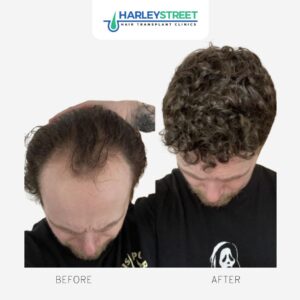
Once hair follicles are miniaturised/destroyed, regrowing hair becomes increasingly challenging. So, early intervention is preferable as this can slow or sometimes reverse pattern hair loss. If you are experiencing early signs of hair loss, medication is the best route forward. For more advanced cases, a hair transplant may be the only option
Finasteride For Hair Loss
Finasteride is a prescription medication that blocks the enzyme 5-alpha reductase, which converts testosterone into DHT. By lowering DHT levels in the scalp, finasteride reduces the hormonal stress that leads to follicle miniaturisation.
Many men successfully use finasteride to slow or even stop steroid-related hair loss. However, there are caveats: it may interfere with the hormonal balance of your steroid cycle, and some users report sexual side effects such as reduced libido.
For steroid users, topical finasteride may be a better option. As this medication is not systemically absorbed, it is less likely to interfere with your steroid cycle, maximising your gains and minimising chances of side effects
Minoxidil For Hair Loss
Minoxidil is a topical solution or foam that increases blood flow to the scalp, improves nutrient delivery, and lengthens the hair growth phase. While it doesn’t lower DHT, it provides a supportive environment for struggling follicles to keep producing hair.
Minoxidil works best when hair loss is in its early stages. Essentially, when follicles are still alive but shrinking. It’s less effective once bald spots have become completely smooth. Consistency is key, as results typically take three to six months of daily application to appear.
If you’re looking to maintain healthy hair and not affect androgen levels, then minoxidil is likely going to be the treatment for you. It is also suitable for use by men and women.
Hair Transplant
For those with established bald patches or significant thinning, surgical solutions such as Follicular Unit Extraction (FUE), Direct Hair Implantation (DHI), or Follicular Unit Transplantation (FUT) offer a permanent fix.
These procedures relocate hair follicles from the back and sides of the scalp (areas genetically resistant to DHT) to thinning regions. The results are natural and long-lasting when performed by an experienced surgeon.
If you’re looking to restore/reverse hairline hair loss, then a hair transplant is the only option on the table. While medication will prevent your hair loss getting worse, hair transplants can fully reverse hair loss.
Some Things to Consider About Hair Loss Treatments and Steroids
When thinking about hair loss treatments in the context of anabolic steroid use, it’s important to understand that not every option will work the same way when combined with performance-enhancing drugs.
For example, finasteride is highly effective at lowering DHT levels and slowing pattern baldness, but it can also interfere with hormonal balance during a steroid cycle. Users who rely heavily on testosterone or DHT-based compounds may find that finasteride blunts certain anabolic effects, creating a difficult trade-off between muscle gains and hair preservation.
Additionally, the effectiveness of hair loss medications may be stunted. As steroid users have very high androgen levels, this can reduce the efficacy of hair loss treatments. So, you may expect to see limited levels of hair regrowth.
Additionally, for those who have a hair transplant and continue to take steroids, high androgen levels greatly increase the risk of further hair loss post-surgery.
Do Steroids Cause Hair Loss? The Final Word
So, do steroids cause hair loss? The evidence is clear: anabolic steroids accelerate hair loss in individuals who are genetically predisposed to androgenic alopecia. By raising testosterone and DHT levels (or by directly acting as DHT derivatives) steroids place enormous stress on hair follicles, shortening the growth phase and triggering miniaturisation.
While treatments like finasteride, minoxidil, and even hair transplantation can help, none can fully offset the androgenic load created by performance-enhancing drugs. Ultimately, if keeping your hair is a priority, you’ll need to weigh the trade-off between rapid muscle growth and long-term hair preservation.