



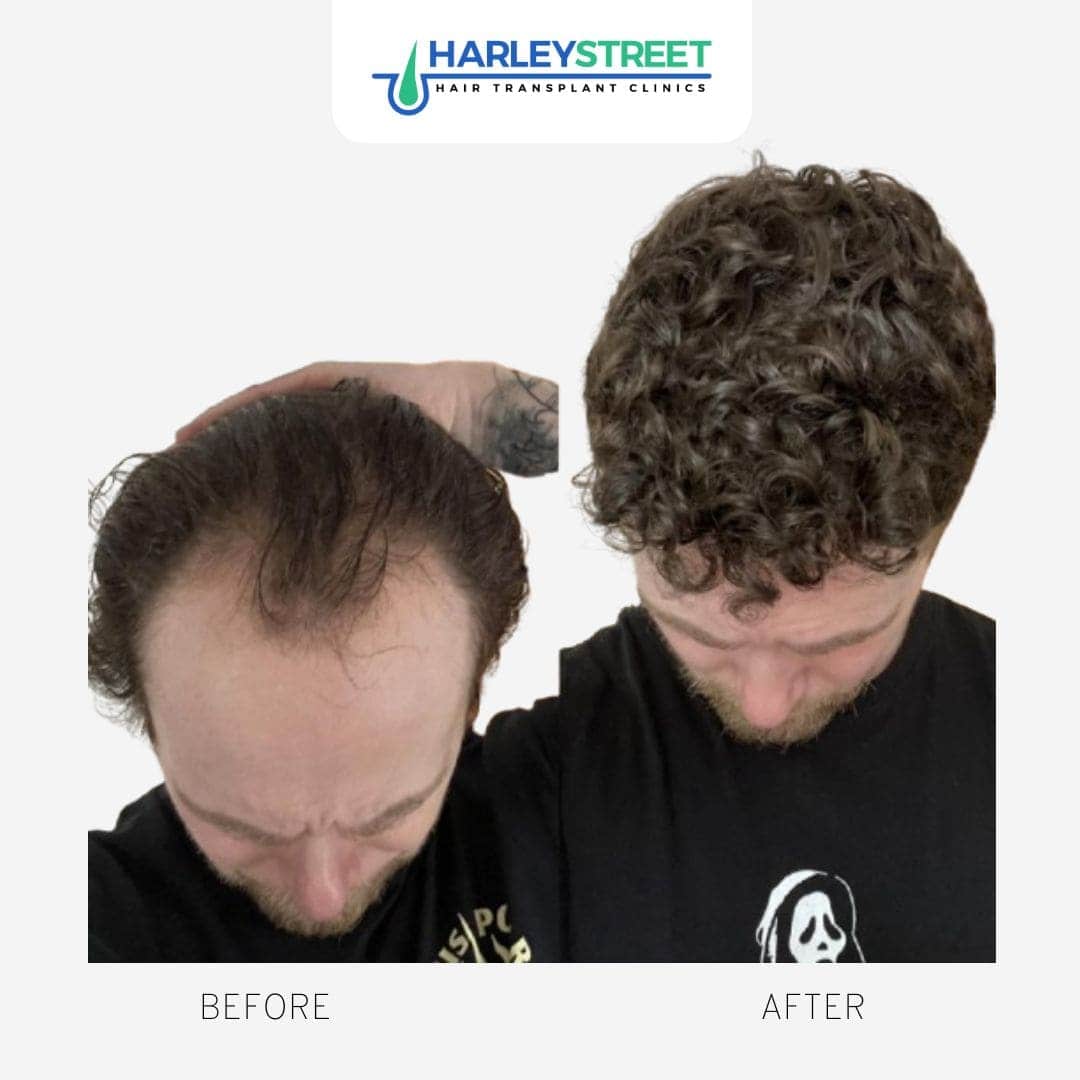
The recipient site (or recipient area) refers to the location on which grafts are transplanted during a hair transplant surgery. The recipient area in hair transplantation refers to either the hairline, crown, eyebrows, or beard. In this article, we’ll break down what the recipient area is, where it can be located, and how its size, placement, and care affect your overall results.
Overview
- The hair transplant recipient area is the part of the scalp (or beard/eyebrows) where grafts are implanted, and its design (angles, density, and depth) largely determines how natural the hair transplant result will look.
- Creating the recipient site involves precise planning and surgical technique. The hair transplant surgeon needs to match graft size to incision site size, create lateral slits to control hair direction, and ensure adequate blood supply while also minimising tissue trauma to support graft survival.
- Aftercare is critical to protect fragile grafts during healing. Patients must avoid touching or shaving the recipient area initially, manage redness or itchiness carefully, and follow their surgeon’s instructions to ensure optimal growth and long-term success.
The Basics of a Hair Transplant Procedure
If you’re considering a hair transplant, understanding the recipient area is crucial to setting realistic expectations. This is where the newly transplanted follicles are placed, and its characteristics determine much of your final result.
During a hair transplant, hair follicles are extracted from the back and sides of the head (donor area) and implanted into an area where the patient is experiencing hair loss (recipient site). In the vast majority of cases, hair loss is caused by the hereditary condition androgenetic alopecia (male pattern baldness & female pattern baldness).
An FUE hair transplant can be split into three sections:
- The extraction phase – healthy hair follicles are harvested from the donor area individually using an extraction tool. These hair grafts are then counted, placed in saline solution, and prepped for the implantation phase.
- The incision phase – the hair transplant surgeon creates a series of tiny incisions on the recipient area, so hair grafts can be delicately implanted into these cuts. These cuts are made at specific angles, directions, and densities to mimic natural hair growth patterns.
- The implantation phase – during this part of the procedure, hair grafts are carefully implanted in the prepared incisions on the recipient area. This part of the hair transplant is performed by the entire surgical team, who ensure correct placement for optimal survival and natural-looking results.
After a hair transplant procedure, a surgeon will then provide the patient with an aftercare kit and walk them through what to expect during the initial recovery period. This advice helps the patient understand how to keep the recipient area clean and hygienic, prevent infection, and manage any soreness of pain in the first couple of days after surgery.
What is the Recipient Site of a Hair Transplant?
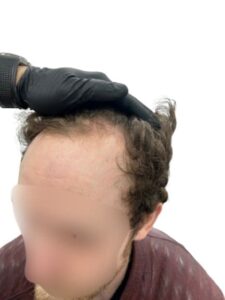 The recipient site (or recipient area) is the part of your scalp (or other body region) where hair grafts are implanted. Surgeons create tiny incisions at precise angles and densities to mimic natural hair growth patterns.
The artistry and precision used here often determine whether your hair transplant looks seamless or obvious. This is why it’s vital to have your procedure performed by an experienced surgeon in a reputable hair transplant clinic. In short, they know what they’re doing!
Whether its crafting a natural hairline or thickening a beard, the goal of any hair transplant is to repopulate bald or thinning areas on the recipient site using viable hair follicles harvested from donor zones that are genetically resistant to dihydrotestosterone (DHT).
Because transplanted follicles retain their donor dominance, they continue to grow hair permanently even after relocation to the recipient site. Around 12 months after a hair transplant, hair follicles in the recipient area will be grow naturally and have blended seamlessly into your pre-existing hair.
Hair Transplant Recipient Site: The Art of Graft Placement!
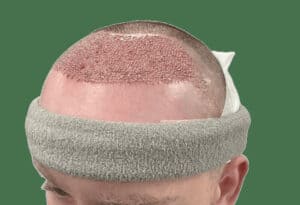 Before making any incisions into the recipient area, the surgical team will count the size of each follicular unit graft and categorise them into “single”, “double”, and “triple” hair follicles. Smaller grafts are perfect for blending into pre-existing hair, while larger grafts help to bolster and thicken thinning areas.
From here, incisions on the recipient area are created using lateral slits (also called coronal or horizontal slits). This technique gives the surgeon precise control over the direction and angle of transplanted hairs. Compared to vertical slits, lateral slits help the hair shafts fan out over the scalp surface, creating better coverage and a denser appearance.
Lateral slits also allow grafts to be inserted at more acute angles, which is crucial for matching the natural hair growth pattern. Especially, in delicate areas such as the temples, crown, sideburns, and eyebrows.
Controlling the depth of each incision is equally critical. Shallow, limited-depth incisions minimise injury to deeper blood vessels, reduce swelling, allow grafts to be placed closer together, and significantly improve healing outcomes. This meticulous planning and execution are what make natural-looking results possible.
What Hair Transplant Surgeons Must Consider About The Recipient Area!
When preparing and working on the recipient area, hair transplant surgeons must carefully account for several biological and surgical factors to maximise graft survival and the patient’s final result. The main things to consider are:
- Adequate Vascularity – the recipient site must have a healthy blood supply to nourish the newly implanted follicles. Areas with scar tissue, prior trauma, or compromised circulation may require special planning, such as preconditioning or staged implantation, to ensure graft survival.
- Minimising Tissue Trauma – creating slits or incisions with excessive force or density can damage surrounding tissue, leading to ischemia (restricted blood flow) and poor graft uptake. Surgeons use ultra-fine blades or custom needles and precise spacing to minimise trauma and preserve vascular integrity.
- Biological Enhancement – Some surgeons may recommend patients take hair loss medications (finasteride or minoxidil) or have platelet-rich plasma (PRP) sessions on the recipient area. This helps stimulate healing, improve angiogenesis (new blood vessel formation), and enhance graft anchoring during the early post-transplant phase.
Where is the Recipient Area Located?
The recipient area varies depending on the pattern of a patient’s hair loss and their aesthetic goals. The most common recipient areas are usually based on the scalp. These areas include:
- Frontal hairline and temples – a hairline hair transplant surgery is the most common procedure. Work on the hairline and temples is the bread and butter of any hair restoration clinic.
- Mid-scalp – work on the mid-scalp tends to take place in larger two-stage cases. The mid-scalp is the area between the frontal third and crown area.
- Vertex or crown – one of the most common forms of hair transplantation surgery is on the crown. The aim of this procedure is to provide much needed thickness and density to the crown area.
Outside of the scalp, recipient areas can also include the beard (beard transplant) and eyebrows (eyebrow transplant). As fewer beard and eyebrow surgeries are performed than hair transplants, these areas tend to be less common.
Each location has its own growth direction, density needs, and healing timeline. So, if you are interested in a beard or eyebrow transplant, ask for plenty of before and after pictures to assess the experience and quality of your surgeon.
Does the Size of the Recipient Area Affect the Cost of a Hair Transplant?
When it comes to having a hair transplant, one of the first question’s we’re always asked is: “how much does a hair transplant cost“? The answer to this question relies on an in-depth knowledge of the recipient area and the number of grafts required during surgery.
In short, the size of your recipient area is one of the biggest cost drivers. This is because larger areas require more grafts, more surgical time, and a higher skill level. A small hairline touch-up may need only 800 grafts, while a full crown and mid-scalp restoration can exceed 3,000 grafts.
As most clinics will charge by number of grafts or by area, understanding the size of your recipient area and how many grafts you require for a natural-looking result is an important part of the hair restoration journey. So, why not book a free consultation and get your personalised treatment plan?
Hair Transplant Aftercare
After a hair transplant procedure, the recipient area requires plenty of care and attention. It is vital to ensure you follow your HT aftercare instructions relating to recipient area care. Taking care of the recipient site is critical for avoiding post-transplant issues.
Your aftercare instructions will provide specific insight into how to manage the donor area and recipient area in the first two weeks after your surgery. As the recipient area contains the grafts which have been recently implanted, this area requires a different routine to the donor area.
Transplanted hair grafts are incredibly delicate and should not be touched in the first 7 days after your procedure. Grafts will need plenty of time to bed into the dermic layer (skin) around the recipient area before they can grow.
It goes without saying that post-op care directly affects how well grafts survive in the recipient area. While some clinics and surgeons may provide specific aftercare instructions, many will mention the following points:
- Avoiding touching, scratching, or rubbing the recipient site
- Sleeping with your head elevated for the first few nights
- Using saline sprays and prescribed medications
- Following your surgeon’s gentle washing instructions
Proper aftercare reduces the risk of infection, speeds healing, and maximises graft survival. So, looking after your recipient area is crucial is you want a successful hair transplant result.
Is The Recipient Area Painful After a Hair Transplant?
In the first couple of days after surgery, patients may experience some mild soreness, tightness, or swelling in the recipient area. This is a completely normal part of the aftercare process and not usually something to worry about.
During a hair transplant, local anaesthesia and saline solution are injected into the scalp, which needs time to dissipate after surgery. This is what causes swelling. Additionally, each incision site needs time to scab and heal.
Most patients can take mild anti-pain medication (paracetamol & ibuprofen) to provide relief. The most important thing is to not touch, rub, or itch the recipient area during your initial recovery period. Let the body’s natural healing process take place and minimise the chance of a poor result.
What Can I Do If My Recipient Area is Itchy After My Hair Transplant?
In the first couple of days after surgery, one of the most common annoyances is going to be itchy sensations. Hair transplant itching is a common and, once again, totally normal!
To manage itchiness, all patients are provided with a saline solution that can be sprayed onto the recipient site. This should help to soothe any itching sensation and negate the need to touch or rub the area.
Remember, the first 10-14 days are critical in the recovery process. Try to avoid touching the recipient site at all costs.
When Can You Touch the Recipient Area After a Hair Transplant?
As a general rule of thumb, you should avoid touching the recipient area for the first 10–14 days, when grafts are still fragile and not fully anchored. The only time you should be touching your recipient area is during the “contact washing” phase, from day 7 onwards.
Light washing is typically allowed after 7 days under your surgeon’s instructions, but any scratching, rubbing, or direct pressure should be avoided during the initial healing phase.
Can I Shave the Recipient Area After a Hair Transplant?
It’s best to wait at least four weeks before shaving the recipient area. This is so your scalp has enough time to heal in the first couple of weeks after your procedure.
Early shaving can dislodge grafts or irritate healing skin. Once the grafts are secure and scabs are gone, gentle trimming or shaving can resume. However, always confirm your intention to shave your head with your surgeon first.
I am Experiencing Redness in the Recipient Area. Should I Be Concerned?
No, redness in the recipient site after a hair transplant is completely normal. It happens because the creation of thousands of tiny incisions triggers your body’s natural inflammatory healing response. This makes the skin appear red, slightly swollen, and sometimes tender.
The redness is usually most visible during the first one to two weeks and gradually fades as the skin heals. In caucasian men, redness can sometimes linger for up to four to six weeks, while in darker skin tones it often fades sooner.
This redness on its own is not a sign of infection. However, if it becomes progressively worse or is accompanied by pain, swelling, pus, or an unpleasant odour, contact your surgeon or patient advisor to confirm it’s nothing serious.
Conclusion
A hair transplant recipient area refers to the site where new grafts are transplanted. It is where the artistry of a hair transplant procedure truly comes to life! Whether your hair transplant is looking to tackle the hairline, crown, eyebrows, or beard, every procedure will have a “recipient site”.
Taking care of the recipient site is absolutely vital for patients who would like a successful result. By following aftercare instructions, the body’s natural healing process is able to take place, putting the patient on a speedy road to recovery.