




Hair loss, or alopecia, occurs when hair sheds faster than it grows, resulting in thinning or bald patches. Malnutrition causes hair loss by depriving hair follicles of the nutrients they need for growth and strength. Proteins are critical for keratin production, and inadequate intake weakens hair structure, while deficiencies in iron, zinc, biotin, vitamin D, and other essential vitamins disrupt the hair growth cycle and force hair into the resting (telogen) phase prematurely. Contributing factors include restrictive diets, eating disorders, chronic illness, gastrointestinal malabsorption, and insufficient calorie intake. Symptoms include diffuse thinning, brittle or dry hair, slow regrowth, scalp fragility, and increased shedding. Treatment focuses on correcting nutrient deficiencies through a balanced diet or targeted supplementation, and hair typically begins to regrow once nutritional balance is restored, although recovery can take several months.
Good news first: in most cases, malnutrition-related hair loss is reversible. Once nutrient levels are corrected, follicles re-enter the growth phase and visible regrowth usually begins within two to six months. Permanent loss is uncommon and tends to occur only after very prolonged deficiency.
What is Malnutrition-Related Hair Loss?
Malnutrition-related hair loss refers to hair thinning or shedding caused by insufficient nutrients for healthy hair growth. Malnutrition weakens hair follicles by depriving them of the proteins, vitamins, and minerals essential to the hair growth cycle. Undernutrition — a lack of adequate calories or protein — and micronutrient deficiencies in iron, zinc, biotin, and vitamin D disrupt follicle function and trigger excessive shedding. Common causes include poor dietary intake, restrictive eating patterns, eating disorders, chronic illness, and gastrointestinal conditions that reduce nutrient absorption. Hair affected by nutrient deficiency often becomes brittle, dry, and prone to breakage, while regrowth slows until nutritional balance is restored. Addressing the underlying dietary or health issue, alongside targeted supplementation, supports follicle recovery and helps restore normal hair growth.
How does Malnutrition Cause Hair Loss?
Malnutrition causes hair loss by disrupting the normal hair growth cycle, which includes the anagen (growth), catagen (transition), and telogen (resting) phases. Deficiencies in protein, iron, zinc, biotin, and essential vitamins weaken hair shafts, reduce follicle density, and alter texture, producing brittle, thin, or slow-growing hair. Poor or imbalanced nutrition signals broader health issues, as hair acts as a visible marker of systemic deficiency or metabolic stress. Prolonged malnutrition shifts a significant number of follicles into the telogen phase, leading to diffuse shedding over weeks to months. Research has shown that nutrient deficiencies, particularly in iron and protein, are strongly associated with hair thinning and an increased proportion of telogen hairs in scalp biopsies. This process underlies telogen effluvium, a common response to malnutrition in which shedding accelerates due to systemic stress on the follicles.
How Reversible is Hair Loss linked to Nutritional Deficiencies?
Hair loss linked to nutritional deficiency is largely reversible once adequate nutrients are restored. Correcting deficiencies in protein, iron, zinc, biotin, and essential vitamins allows follicles to re-enter the anagen (growth) phase, with visible regrowth typically beginning within two to six months. Recovery speed depends on the severity and duration of the deficiency. Irreversibility occurs only when nutrient deprivation causes permanent follicle damage or scarring alopecia, and research indicates that chronic iron deficiency or prolonged protein-energy malnutrition can lead to lasting miniaturisation of follicles. Early intervention, a balanced diet, and targeted supplementation maximise regrowth potential and minimise permanent thinning.
Hair loss due to a poor diet — will it grow back? Yes, hair loss due to a poor diet generally regrows once nutritional balance is restored. Follicles re-enter the anagen phase when deficiencies in protein, iron, zinc, biotin, and vitamins are corrected. Visible regrowth usually begins within two to six months, with hair gradually thickening over time. Recovery depends on the severity and duration of the deficiency, as prolonged malnutrition may slow growth or weaken follicle function. Early intervention through a balanced diet and targeted supplementation increases the likelihood of full regrowth and helps prevent further thinning.
What does Malnutrition Hair Loss look like?
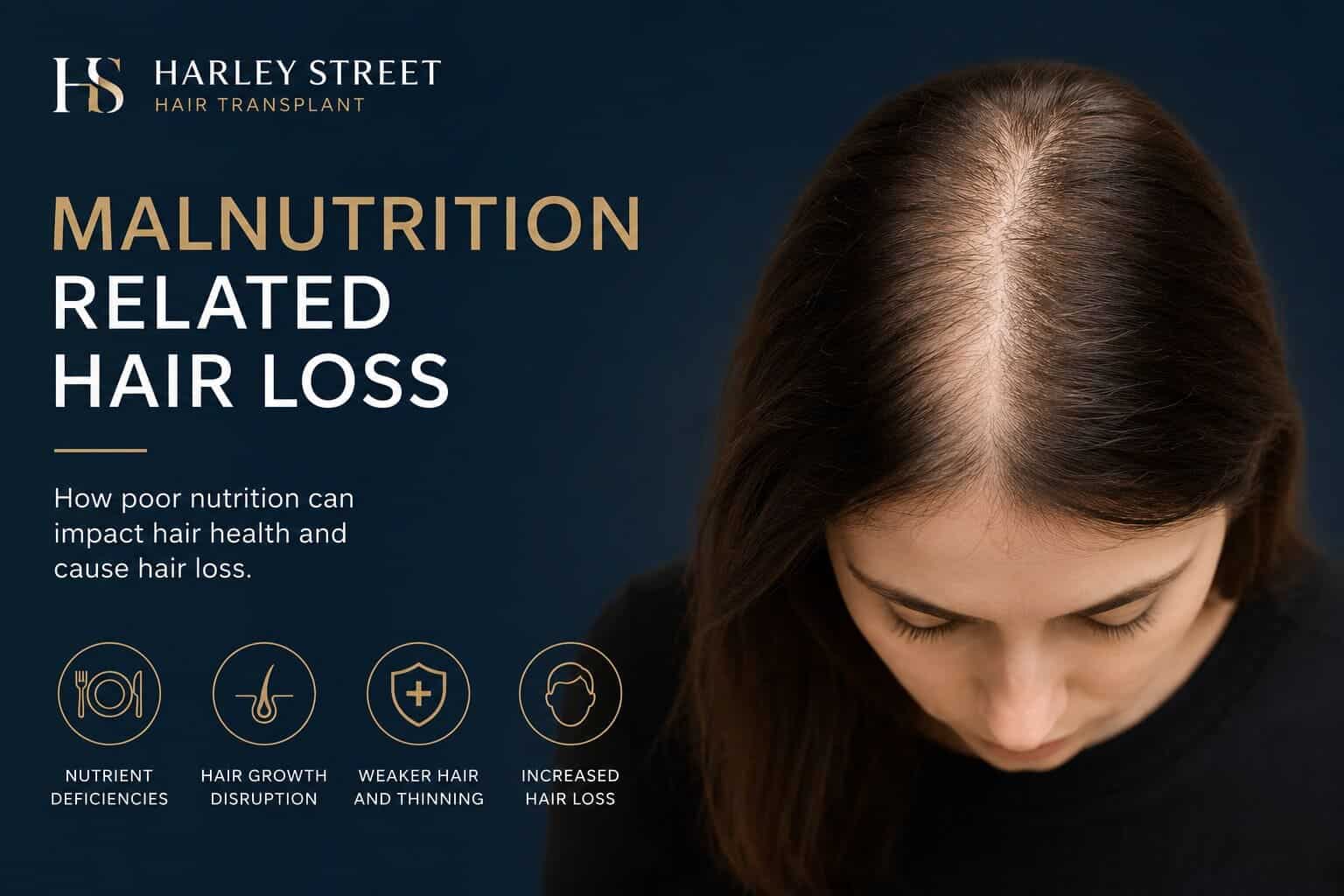
Malnutrition-related hair loss presents as diffuse thinning across the scalp, where density decreases evenly rather than forming distinct bald patches. Strands often appear brittle, dry, and fragile, breaking easily when brushed or styled. The texture may become coarse, dull, or lacking in natural lustre, and in severe cases hair may lighten in colour or become noticeably finer. Shedding typically increases during washing or combing, and regrowth is slow until nutritional balance is restored. Scalp irritation or fragility may accompany the visible changes, signalling underlying deficiencies in protein, iron, zinc, biotin, or essential vitamins.
What differences can be seen in Hair Condition Before and After Hair Loss due to Malnutrition?
The differences are changes in thickness, texture, shine, strength, growth speed, and scalp visibility. Before visible loss, hair often becomes dry, dull, brittle, slow-growing, and prone to breakage because nutrient shortages weaken keratin formation and follicle activity. Following malnutrition-related loss, hair appears thinner across the scalp, with a wider part line, flatter volume, fragile ends, and more visible scalp. Severe malnutrition shows clearer signs — pigment changes, weak roots, and diffuse shedding — as the body redirects limited nutrients toward vital organs instead of hair growth.
What are the Signs of Malnutrition in Hair?
The signs of malnutrition in hair are listed below.
- Hair thinningReduced density across the scalp rather than one isolated patch. The scalp becomes more visible along the part line or crown.
- Excessive sheddingMore hair on pillows, drains, and combs. Nutritional stress triggers telogen effluvium, a diffuse shedding pattern.
- Brittle strandsHair breaks easily and snaps near the ends because protein and micronutrient shortages reduce structural strength.
- Dry textureHair feels coarse and rough, with poor moisture balance most noticeable at the mid-lengths and ends.
- Dull appearanceHair loses shine and looks flat, with lifeless strands and poor surface reflection.
- Slow growthLittle visible length change over weeks or months as poor nutrition disrupts follicle activity.
- Weak rootsStrands shed easily with light pulling. Protein-energy undernutrition is linked to wasting and hair loss in severe cases.
- Scalp drynessFlaking, tightness, or rough patches near the hairline. Protein deficiency is linked to dry skin and hair loss.
- Colour changesFaded or uneven pigmentation, especially when several micronutrient deficiencies occur together.
- Uneven volumeFlat areas and thinner sections as strand count and thickness decline together.
Malnutrition-related hair loss is commonly accompanied by fatigue, unintended weight loss, muscle wasting, dry skin, brittle nails, mouth sores, slow wound healing, dizziness, pale skin, and weakness. Severe or persistent hair loss alongside physical symptoms requires medical evaluation, because nutrient deficiency, thyroid disease, anaemia, or another condition needs proper testing.
What are the Causes of Malnutrition Leading to Hair Loss?
The causes of malnutrition leading to hair loss are listed below. Tap each to expand.
Low protein intake
Low calorie intake
Iron deficiency
Zinc deficiency
Vitamin D deficiency
Biotin deficiency
Poor fat intake
Eating disorders
Digestive malabsorption
Chronic illness
Alcohol misuse
Restrictive diets
Rapid weight loss
How does Nutritional Deficiency Contribute to Hair Loss?
Nutritional deficiency contributes to hair loss by reducing the protein, calories, vitamins, minerals, and fatty acids needed for keratin production and normal follicle growth. Follicle cells divide quickly, so malnutrition interrupts the anagen growth phase and moves more strands into the telogen resting phase, causing diffuse shedding. Poor nutrition weakens hair through reduced energy supply, impaired keratin formation, reduced oxygen delivery from iron deficiency, impaired follicle repair from zinc deficiency, and altered follicle signalling from vitamin D deficiency. Excess nutrition can also contribute when unnecessary supplementation creates toxicity, especially with vitamin A.
Does Lack of Protein Cause Hair Loss?
Yes, lack of protein causes hair loss, because hair strands are made mainly of keratin, a structural protein that requires a steady amino-acid supply. Low protein intake forces the body to conserve nutrients for vital organs, reducing support for hair production and increasing diffuse shedding. Scientific reviews identify protein deficiency and sudden weight loss as known triggers of telogen effluvium. Adequate protein from foods such as eggs, fish, poultry, beans, lentils, tofu, dairy, and nuts supports stronger strands, better density, and normal regrowth after a deficiency is corrected.
How can a Poor Diet Trigger Hair Loss?
A poor diet triggers hair loss by creating the nutrient deficiencies, hormonal imbalances, and inflammation that disrupt the hair growth cycle. Because follicle cells divide quickly, inadequate protein, calories, iron, zinc, vitamin D, essential fatty acids, and B vitamins reduce keratin production, follicle repair, oxygen delivery, and normal anagen activity. A poor diet also contributes to hormonal imbalance when low energy intake or extreme restriction alters thyroid, cortisol, insulin, and sex-hormone signalling, and to inflammation when high sugar, low micronutrient intake, or alcohol increases oxidative stress and weakens scalp-tissue support.
What are the Treatments for Malnutrition Hair Loss?
Malnutrition-related hair loss improves once the deficiency or dietary imbalance is corrected, but visible regrowth takes time because follicles need to return from the resting phase into the growth phase. The main treatments are below.
Nutritional correction
Protein restoration
Iron replacement
Zinc replacement
Vitamin D correction
Balanced meal planning
Medical testing
Treatment of digestive disorders
Stopping unsafe supplements
Gentle hair care
Topical minoxidil
Dermatologist care
What are the Best Foods to Promote Hair Regrowth?
Regrowth depends on enough nutrients for keratin production, oxygen transport, follicle cell division, collagen support, and scalp-barrier health. The best foods are below.
- EggsProtein, biotin, selenium, and B12 to help form keratin. Effective when loss relates to low protein intake.
- Fatty fishSalmon, sardines, and mackerel for protein, omega-3, vitamin D, and B12 to support scalp-barrier health.
- Lean poultryComplete protein plus niacin, B6, zinc, and iron for hair-shaft formation.
- Beans and lentilsPlant protein, iron, zinc, and folate — ideal for plant-based diets needing steady minerals.
- Leafy greensSpinach and kale supply iron, folate, and vitamin C, which improves non-haem iron absorption.
- OystersVery high in zinc, iron, protein, and B12. Effective for zinc-related shedding, but excess zinc needs guidance.
- Nuts and seedsZinc, selenium, vitamin E, and omega-3 fats that reduce strand fragility and support the scalp barrier.
- Greek yoghurtProtein, B12, calcium, and probiotics to support keratin formation and daily nutrient intake.
- Sweet potatoesBeta-carotene the body converts to vitamin A — a food-based source rather than a high-dose supplement.
- Peppers and citrusVitamin C and antioxidants that support collagen formation and iron absorption.
- Red meat (moderate)Haem iron, zinc, protein, and B12, absorbed more readily than plant iron.
- AvocadoMonounsaturated fats, vitamin E, and folate for scalp-barrier function and softness.
Which Nutrients Help Prevent Hair Loss and Promote Growth?
Follicle matrix cells divide quickly during the anagen phase, so a deficiency creates a modifiable risk factor for alopecia. The key nutrients are below.
- ProteinSupports keratin production. Low intake weakens strand strength, slows growth, and contributes to telogen effluvium.
- IronSupports oxygen transport so follicle cells receive oxygen for growth. Deficiency appears frequently in shedding studies.
- ZincSupports cell division, tissue repair, and oil-gland function for normal follicle cycling.
- Vitamin DSupports follicle cycling and scalp immune regulation. Low levels appear in non-scarring alopecia research.
- Vitamin CSupports collagen formation and improves iron absorption from plant foods.
- B vitaminsBiotin, folate, niacin, and vitamin B12 support healthy growth where a deficiency exists.
- Omega-3Supports scalp-barrier health and inflammation balance. Poor fat intake leaves hair dry and fragile.
- Vitamin ASupports cell growth and sebum — but must be balanced, as excess is linked to hair loss.
- Vitamin EAntioxidant protection against oxidative stress; high-dose supplementation needs medical guidance.
- SeleniumSupports antioxidant enzymes and thyroid metabolism. Important in small amounts; excess causes loss.
- Essential caloriesSupply energy for cell growth and follicle activity. Sudden weight loss pushes follicles into rest.
How Effective is a Hair Transplant for Treating Hair Loss due to Malnutrition?
A hair transplant is a surgical restoration procedure that moves healthy follicles from a dense donor area — usually the back or sides of the scalp — into areas of permanent thinning. It is mainly used for stable hair loss, not active malnutrition-related shedding. Surgical restoration only becomes relevant after nutritional deficiencies are corrected, shedding has stabilised, and a specialist confirms that lost density is unlikely to recover naturally.
The method is effective for malnutrition-related loss only when the loss has become permanent or overlaps with a genetic pattern. Because malnutrition usually causes temporary shedding, nutritional correction, blood testing, and six to twelve months of recovery come before surgery. Follicular Unit Extraction (FUE) is a common method in which individual follicles are removed and placed into thinning areas for natural-looking growth.
A transplant improves visible density after shedding has stabilised, but an active deficiency reduces healing quality and weakens results. Harley Street Hair Transplant Clinics operates a surgeon-led model with Care Quality Commission (CQC) registration and an FUE focus, offering in-person assessment, donor planning, and follow-up care. Final results usually appear after twelve to eighteen months, which is why medical clearance is necessary before a hair transplant. You can view patient before and after results to see typical outcomes.
What to Expect Before and After a Hair Transplant due to Malnutrition
A patient should expect medical testing, nutrition correction, and shedding stabilisation before surgery. A specialist usually checks iron, ferritin, vitamin D, zinc, thyroid markers, complete blood count, protein status, and scalp condition first. The procedure is delayed when active deficiency, rapid shedding, scalp inflammation, or unstable weight loss remains present, because poor nutrition weakens healing and reduces graft-growth quality. Afterwards, the scalp usually shows redness, mild swelling, scabbing, and temporary shedding of transplanted hairs in the first few weeks. New growth typically starts around three to four months, density improves across six to nine months, and final results appear around twelve to eighteen months.
When to See a Dermatologist for Hair Loss due to Malnutrition?
A dermatologist should be consulted when hair loss becomes sudden, patchy, painful, or severe enough to cause visible thinning, bald spots, scalp inflammation, or daily shedding beyond normal levels. Sudden hair loss signals a possible underlying medical condition, and patchy loss requires evaluation to rule out alopecia areata, infection, or scarring alopecia. Scalp warning signs — intense itching, burning, tenderness, redness, scaling, sores, pus, or crusting — need medical attention, because infection or inflammatory scalp disease damages follicles if left untreated. Care becomes urgent when hair loss appears with malnutrition symptoms such as rapid weight loss, weakness, fatigue, swelling, dry skin, slow wound healing, or frequent infections.
Worried about hair loss from diet or deficiency?A specialist can identify the cause and the right treatment path before any surgical option is considered.