





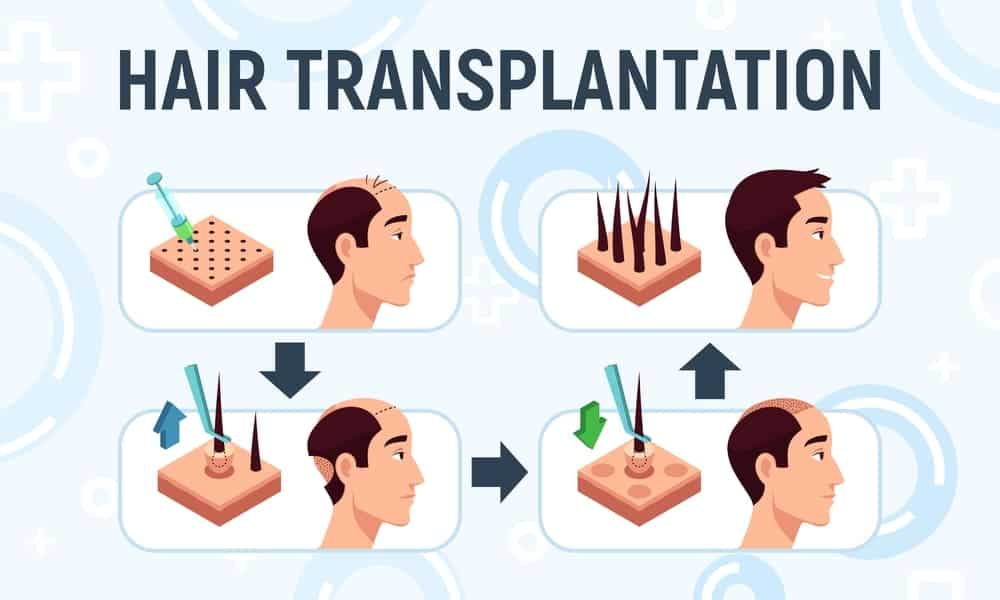
Hair transplant surgeries are becoming an increasingly popular hair loss solution across the world. Every year, between 500,000 and 1,000,000 hair transplants are performed worldwide. On this page, we’ve collated all the hair transplant statistics you could possibly need, from success and failure rates of surgical hair restoration to the procedure’s popularity in the UK and abroad.
Overview
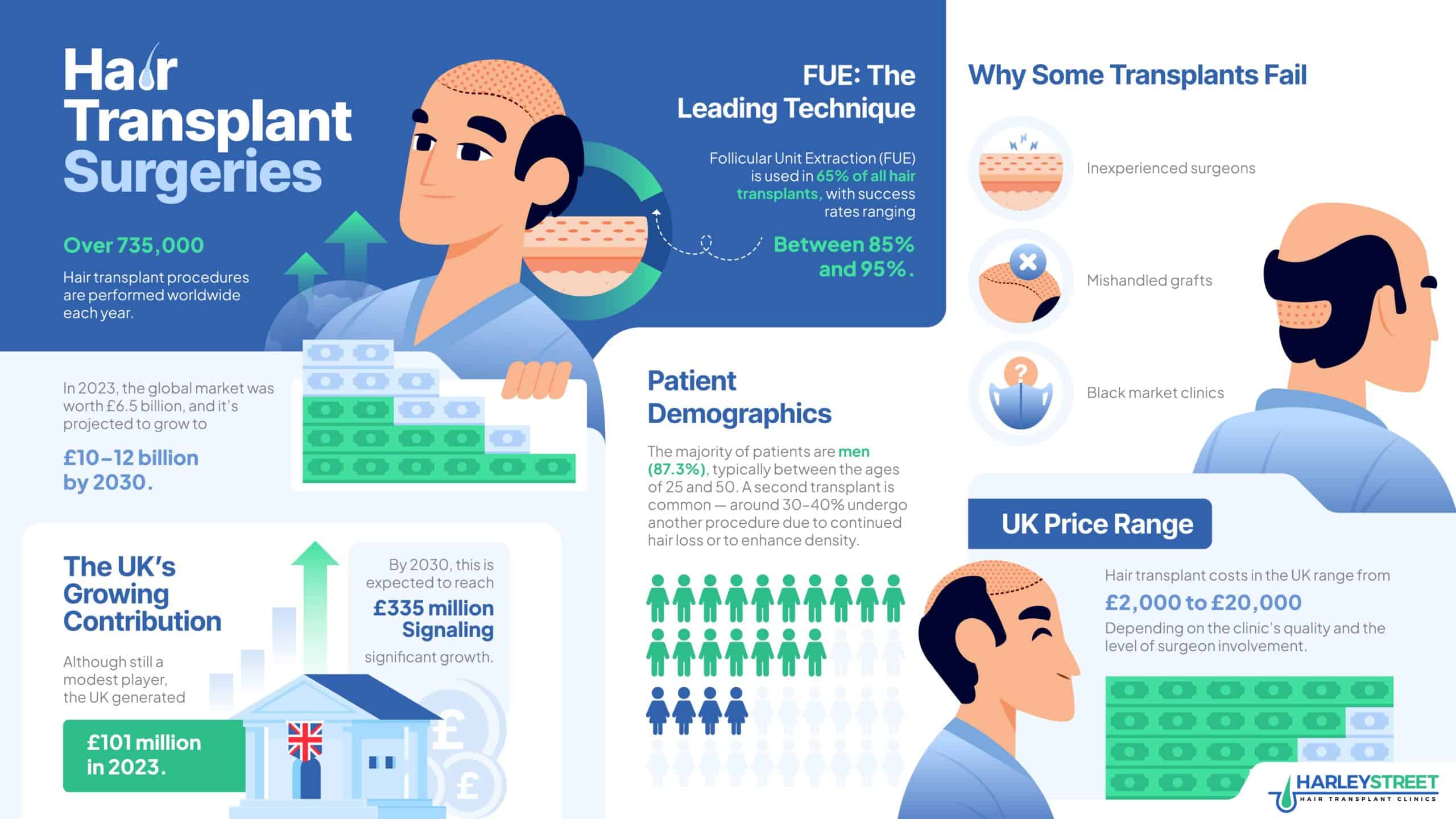
- Hair transplant surgeries are increasingly popular, with global procedures exceeding 735,000 annually and a market projected to reach £10–12 billion by 2030. The UK contributes modestly but is expected to see significant growth from £101 million in 2023 to £335 million by 2030.
- FUE is the most commonly used transplant method (65%), with success rates between 85–95%. Most patients are men (87.3%), typically aged 25–50. A second transplant is common (30–40%) due to progressive hair loss or to enhance density.
- Factors like poor surgeon expertise, graft mishandling, and black market clinics contribute to transplant failures. Prices in the UK range from £2,000 to £20,000 depending on clinic quality and involvement of surgeons.
Hair Transplant Surgeries: Everything You Need to Know
Hair transplantation is quickly becoming one of the most popular medical treatments for hair loss conditions like male pattern baldness (androgenetic alopecia). Hair transplant procedures extract donor hair follicles from a donor area (back and sides of the head) and implant them to a recipient site (receding hairline or crown area). They can even be performed on eyebrow and beard hair as well!
In 2023, the global hair transplant market is estimated to be worth a staggering £6.5 billion, and it is projected to reach between £10-12 billion by 2030. Currently, the UK only contributes a small amount to this industry, generating £101 million in 2023. However, revenues are also estimated to skyrocket to £335 million by 2030.
In 2022, the total number of hair restoration procedures performed worldwide was 735,000 (International Society of Hair Restoration Surgery: 2022). That number accounts for all methods of hair transplant, including FUE, FUT, and DHI.
The surge in demand for hair transplants can be explained by several factors. Currently, hair surgery remains the only way to “reverse” or “cure” hair loss. Moreover, the millions of successful hair transplant stories show prospective patients how these surgeries help improve people’s appearance in a culture increasingly dominated by aesthetics.
What Are the Most Popular Hair Transplant Methods?
 Currently, there are three forms of surgical hair restoration: FUT, FUE, and DHI. The FUE hair transplant is the most popular method used, comprising around 65% of all procedures. FUT also remains a popular method (particularly for transgender and female patients), contributing just over 30%.
In the statistics released by the ISHRS, there is little mention of DHI’s popularity worldwide. However, DHI remains a popular method of hair transplantation surgery. This form of hair restoration surgery is usually reserved for complex cases.
There are several reasons why individual extraction techniques (FUE and DHI) are more popular than strip surgery (FUT). Patients tend to prefer the FUE hair transplant because it is has a high success rate and minimally invasive. Further still, FUE and DHI do not leave patients with a lifelong scar on the donor area, as is the case with FUT.
Hair Transplant Predictions: What Will Surgeries Look Like?
While some areas of the global hair transplant market are difficult to predict, the future of surgical hair restoration is expected to continue its current trend. By 2030, we anticipate an increase in the percentage of surgeries extracting individual hair follicles (FUE and DHI) and a continued decrease in the performance of strip surgery.
- FUE (Follicular Unit Extraction) – we expect around 70% of all hair transplants to be follicular unit extraction (FUE). This method is suitable for almost all patients and is offered worldwide.
- DHI (Direct Hair Implantation) – the percentage of DHI hair transplants is expected to rise to 15% by 2030. As technology advances and more hair transplant surgeons are trained to use CHOI technology, there is expected to be a sharp increase DHI surgeries.
- FUT (Follicular Unit Transplantation) – we anticipate a gradual phasing out of follicular unit transplantation by 2030 to around 13%. This method will still be a suitable option for patients who do not wish to shave their donor area for surgery.
- RHT (Robotic Hair Transplant) – As robotic technology improves around the world, robotic hair transplants may account for up to 2% of all hair transplants performed by 2030. A robot’s ability to identify ideal grafts for harvesting and minimise human error gives this method a bright future!
What Percentage of Men and Women Get Hair Transplants?
Currently, 87.3% of hair transplant patients are men and 12.7% are women. Most hair transplants that are performed are designed to treat male pattern baldness (androgenetic alopecia). Research also shows that men tend to have hair transplants at a younger age than women.
Amongst women, eyebrow transplants tend to be more popular than hair transplants. Often, it can be difficult to determine the root cause of hair loss in women, ruling out the chance of hair restoration surgery.
As women’s hair loss tends to be temporary while men’s is permanent, women often opt for non-surgical options such as PRP, minoxidil, and red-light therapy.
What Age Do People Have Hair Transplants?
Hair transplant statistics show 25-50 to be the most popular age to have a surgery. That being said, there are some slight differences between men and women.
Around 29.3% of male hair transplants are performed on men aged 30-39, 18.1% on men aged 20-29, and 27.9% aged 40-49. Comparatively, the most popular age group for female hair transplants was 40-49 (28%), closely followed by 30-39 (26.8%). Hair transplants are less common in women aged 20-29, comprising only 16.7% of surgeries.
These results are unsurprising. Androgenetic alopecia typically affects men at a younger age than women. One of the driving factors behind female pattern hair loss are hormonal changes from the menopause.
Which Country Performs the Most Hair Transplants?
Currently, Turkey is the leading country in the world for hair transplants, performing more procedures than any other nation. There are several key reasons for Turkey’s dominance in the industry. Let’s explain this in more detail.
Most notably, the affordability of hair transplants in Turkey is a major draw. On average, patients can often expect to pay anywhere between 60-80% less than what they would spend in the UK, US, or Europe. Primarily, this is explained by lower energy, wage, and living costs abroad, as well as many clinics running on a technician-led (rather than surgeon-led) basis due to fewer healthcare regulations.
Outside of Turkey, other countries also play significant roles in the global hair transplant market. India, for instance, performed approximately 312,000 procedures in 2023, and the United States remains a leader in innovation and technology in the hair restoration field.
Staying in the UK for your hair transplant also comes with a series of added benefits, chiefly around safety and healthcare regulations. Clinics and practitioners must adhere to strict guidelines set by the Care Quality Commission (CQC) and the General Medical Council (GMC), which helps ensure that patients receive care from qualified professionals in safe, sterile environments.
What Reasons do People Have Hair Transplants?
People have hair transplants for a several personal, professional, and psychological reasons. According to the ISHRS, the most common motivation is the desire to improve one’s appearance and self-confidence, cited by over 60% of patients globally.
Hair loss, particularly male and female pattern baldness, can have a significant emotional impact, and many individuals pursue hair restoration to regain a youthful look and feel more comfortable in social settings. Having a hair transplant can be the first step toward regaining your self-confidence!
Career-related concerns are also a driving factor. Data from the ISHRS shows that approximately 34.7% of hair transplant patients underwent the procedure to improve their professional image. In appearance-focused industries such as media, sales, and hospitality, individuals often feel that a youthful, healthy appearance can positively influence their career opportunities.
Social motivations are another major factor. The ISHRS also reports that around 37% of individuals sought hair transplants to enhance their romantic or social lives. Anecdotal evidence from our clinic suggests upcoming weddings to be a major motivating factor when it comes to men having hair transplants.
Psychological wellbeing is another key consideration. Hair loss has been associated with increased anxiety, low self-esteem, and even depression. Research published in the Journal of Clinical and Aesthetic Dermatology highlights that hair restoration can significantly improve quality of life, with patients frequently reporting better mood and higher satisfaction with their personal image post-surgery.
Of course, a small number of hair transplants are also performed to treat scarring and hair loss from traumatic events. Hair transplants can help to cover scarring from accidents, burns, or surgery, as well as conditions like traction alopecia. In such cases, hair restoration helps restore not only appearance but also a sense of normalcy and personal identity.
What is the Success Rate of a Hair Transplant?
The success rate of a hair transplant is generally very high when performed by a qualified and experienced surgeon. According to the ISHRS, the average success rate of a modern hair transplant technique is between 85% and 95%.
By “success rate”, we refer to the percentage of transplanted hair follicles that successfully grow in the recipient area within 12–18 months post-surgery. So, for every 100 grafts that are implanted in an area, around 9 in 10 follicles will survive.
There are, of course, several factors that affect the success of a hair transplant. These include the surgeon’s expertise, hair transplant method, post-operative care, and the quality of hair follicles in a patient’s donor area.
How Long Does a Hair Transplant Last?
A hair transplant is generally considered a permanent solution to hair loss, with results that can last a lifetime. At Harley Street Hair Transplant Clinics, we have thousands of previous patients who have had a successful surgery, are following an aftercare routine, and their results are still in immaculate shape!
Most patients enjoy the results of their transplant for at least ten years, and in many cases, the new hair lasts indefinitely. The reason for this longevity lies in the nature of the donor hair. Hair follicles used in a transplant are typically taken from the sides or back of the scalp; these areas are genetically resistant to balding caused by androgenetic alopecia (pattern hair loss).
When these resistant follicles are transplanted to thinning or bald areas, they usually retain their original characteristics and continue to grow for many years, often for the rest of a person’s life.
However, the permanence of the results can vary depending on several factors. These include the patient’s age at the time of the transplant, the degree and progression of their hair loss, and how well they care for their hair and scalp after the procedure.
In particular, younger patients may continue to lose their existing (non-transplanted) hair over time, which can lead to a patchy appearance if not managed appropriately. We usually recommend all male patients take hair loss medication (finasteride or minoxidil) to prevent further hair loss from occurring.
How Many Patients Need Two Hair Transplant Surgeries?
In some case, hair transplant patients may require more than one procedure over their lifetime — not necessarily because the first one failed, but due to the progressive nature of hair loss. According to the ISHRS, it is estimated that between 30% to 40% of patients undergo a second hair transplant at some point.
However, there are several factors that contribute to this statistic. Of this 30% to 40%, many patients are aware they require multiple surgeries before they begin having a treatment. For cases of medium to severe hair loss, it is often the case that two surgeries are required. Stage one looks to restore the hairline and frontal section. Stage two then increases density on the crown.
Another factor contributing to this number is that male and female pattern hair loss is ongoing. Patients with androgenetic alopecia may continue to experience temple recession or hair thinning after their hair transplant. So, if a patient does not take preventative medication after their hair transplant, they may need a second hair transplant in the future.
In rare cases, a second hair transplant surgery may refer to a “top-up” surgery if an initial procedure has not provided a desired result.
Straight vs Afro Hair Can I Have a Successful Hair Transplant With Afro Hair?
The success rate of hair transplants can differ depending on hair type, with a noticeable distinction between straight and Afro-textured hair.
Generally speaking, straight hair transplants have a higher graft survival rate, often ranging between 85% and 95% when modern techniques like Follicular Unit Extraction (FUE) or Direct Hair Implantation (DHI) are used. In contrast, Afro hair transplants tend to have a slightly lower success rate, typically around 80% to 90%. This difference is primarily due to the unique structure and growth patterns of Afro-textured hair.
There are several explanations for this. Afro hair has naturally curved or C-shaped follicles beneath the scalp, making them more challenging to extract without damage. This curvature increases the risk of transection, where the follicle is accidentally cut or damaged during extraction, reducing the chance of successful regrowth.
Additionally, many FUE tools are designed for straight follicles, and if not adapted for curved ones, the effectiveness of the procedure may be compromised. The scalp characteristics of individuals with Afro hair can also play a role. Thicker, more fibrous, or tighter scalp tissue can make both extraction and implantation more technically demanding, potentially affecting the outcome if not handled properly.
As such, a specialist surgeon and technicians are usually required to perform an afro hair surgery. At Harley Street Hair Transplant Clinics, our afro hair specialist is Dr Mohammed Ditta. Book your free consultation today!
What is the Failure Rate of a Hair Transplant?
The failure rate of a hair transplant is a rare occurrence when a surgery has been performed by an experienced surgeon using a modern hair transplant technique (FUE or DHI). However, it is not zero. But what do we mean by “failure”?
A transplant is considered unsuccessful if a significant portion of the grafts do not survive or grow properly, leading to poor density, unnatural appearance, or visible scarring. One common cause of failure is poor graft handling — if hair follicles are not handled gently or kept at the right temperature and hydration during extraction and implantation, their survival rate can drop.
Further still, extraneous factors such as infection, inadequate blood supply, or poor scalp health (like heavy smoking, uncontrolled diabetes, or dermatitis) can also compromise results. That’s why it is vital you choose a respectable hair transplant clinic and take your aftercare routine seriously.
What Common Risks Elevate Chances of a Poor Hair Transplant?
Several common risks can elevate the chances of a poor or failed hair transplant, even when performed by a skilled surgeon. These factors can impact graft survival, healing, and final aesthetic results. So, what risks elevate chances of a poor hair transplant?
- Inexperienced Surgeon or Technician-Led Surgeries – without a doubt, the most important factor influencing the chance of a poor hair transplant is an inexperienced surgical team. This exponentially increases a patient’s risk of low graft survival rate, unnatural hairline design, and visible scarring (over-harvesting)
- Poor Graft Handling and Placement – This refers to what happens once your grafts have been extracted during surgery and when they are being implanted into your recipient site. A patient is likely to have a poor result if the surgical team keeps grafts out of the body too long (leading to desiccation), handle the grafts roughly with forceps, or implant at incorrect angles or depth.
- Infection – in the first couple of weeks after surgery, making sure you keep your scalp hair and skin clean is vital. While your scabs heal during your initial recovery period, there is an increased risk of an infection called folliculitis.
There are several factors affecting the efficacy of hair transplant surgeries. Some of which the patient controls directly and some they cannot. If you are considering a hair transplant, set yourself up for success.
Making sure you choose to go with a respectable hair transplant clinic will stand you in good stead for a great result. Remember: preventing a poor hair transplant from occurring is much easier than having a second repair surgery!
The Rise in Black Market Hair Transplants…
In recent years, there has been a huge rise in “black market” hair transplant clinics. In the 2022 ISHRS study, 96% of members reported that up to 25% of the cases they performed in 2023 were to treat poor hair transplants. Before 2023, the average percentage of repair cases due to a poor hair transplant was 6%. So, what are “black market hair transplants”?
A black market hair transplant refers to an illegal or unregulated hair restoration procedure performed by unqualified individuals or in non-accredited clinics. These procedures are usually advertised at very low prices and may be performed by technicians or non-medical staff rather than licensed surgeons, which is a serious breach of international medical standards.
These operations frequently occur in “assembly line” clinics, where multiple surgeries are carried out simultaneously with little oversight. In many cases, patients are misled by professional-looking websites, fake reviews, or vague claims of accreditation. Clinics may also operate under the names of certified doctors who are not actually involved in the procedures.
A key indicator of a black market hair transplant is the promise of very high graft counts (e.g., 4,000–6,000) in a single session without proper medical evaluation. These clinics may prioritize speed and volume over safety and technique, increasing the risk of long-term harm.
What is the Fatality Rate of Hair Transplants?
The fatality rate of a hair transplant is effectively zero. Hair transplantation is considered a safe, minimally invasive cosmetic procedure performed under local anaesthesia, not general anaesthesia. Because it’s an outpatient procedure with small incisions and careful techniques, serious complications (including death) are extremely rare to non-existent.
Hair Transplant Costs in the UK
The cost of a hair transplant can vary anywhere from £2,000 to £20,000 depending on the clinic and the services they offer. The cost of a hair transplant is also dependent upon the severity of a patient’s balding. Generally speaking, the transplant site, the more expensive the surgery. Essentially, all UK hair transplant clinics fall under one of three categories:
Technician-Led Hair Transplant Clinics (£2,000 to £4,000)
At this lower price point, procedures are usually offered by high-volume clinics that prioritize affordability. While these clinics can still deliver good results, especially for smaller areas like the temples or frontal hairline, they operate on a large scale.
It’s common for technicians, rather than the lead surgeon, to carry out the majority of a procedure, particularly during the implantation phase. Often, a surgeon will be overseeing up to 20 surgeries at one time! Surgical equipment may be basic, and post-operative care might be limited to standard follow-ups rather than tailored treatment plans.
Quality varies widely in this range, so it is vital to be cautious and research every clinic thoroughly. That is not to say technician-led clinics perform poor hair transplants. Rather, there is a greater level of variability in outcomes and results.
Surgeon-Performed Hair Transplant Clinics (£4,000 to £7,000)
In the UK, this is the standard price range for hair transplants, striking a balance between cost and quality. In this bracket, patients are more likely to be treated by experienced surgeons who perform key parts of the procedure themselves.
Clinics in this range often use advanced techniques like FUE or even DHI, and offer more thorough pre- and post-operative care, including follow-up appointments, detailed instructions, and sometimes supplementary treatments like hair loss medications.
At a surgeon-performed clinic, the consultation process is more detailed, and treatment plans are tailored to a patient’s hair loss pattern, goals, and long-term care. This price point is ideal for patients seeking natural-looking results without the premium cost of a luxury clinic.
Celebrity Hair Transplant Clinics (£10,000 to £20,000)
At the high end of the market, clinics charging £10,000 to £20,000 offer luxury-level service, exclusivity, and cutting-edge techniques. These clinics are often led by renowned surgeons with international reputations and may cater to celebrities or high-net-worth individuals.
The experience typically includes comprehensive consultations, detailed hair analysis (sometimes using AI or 3D imaging), and full surgeon-led procedures from start to finish. A premium clinic may also incorporate state-of-the-art technology, such as robotic-assisted FUE systems, and offer supplementary treatments like stem cell therapy, PRP, or post-surgical regenerative therapies.
While the results at this level are often outstanding, the premium pricing doesn’t always mean vastly better outcomes compared to mid-range clinics. What is does boast is a more enhanced service, comfort, and personalisation.
References
- British Association of Hair Restoration Surgery (BAHRS). (2023) Hair Transplant Surgery Guidelines and Patient Advice. [online] Available at: https://www.bahrs.co.uk/ [Accessed 9 Jun. 2025].
- CQC (Care Quality Commission). (2023) Register as a Provider of Regulated Activities. [online] Available at: https://www.cqc.org.uk/guidance-providers/registration/regulated-activities [Accessed 9 Jun. 2025].
- International Society of Hair Restoration Surgery (ISHRS). (2023) Practice Census Results: Global Statistics. [online] Available at: https://ishrs.org/statistics-research/ [Accessed 9 Jun. 2025].
- NHS. (2024) Hair Transplant Surgery. [online] Available at: https://www.nhs.uk/conditions/cosmetic-procedures/hair-transplant/ [Accessed 9 Jun. 2025].