FUT Hair Transplant

Stands for: Follicular Unit Transplant
Also known as “strip” transplant
Used for patients with longer hair that don’t want to shave their donor area


Certifications

GMC white
CQC logo-min
ISHRSMembersOnlyLOGO-Gold without background
ICO logo

Our Certifications

GMC white
CQC logo-min
ISHRSMembersOnlyLOGO-Gold without background
ICO logo
FUT Hair Transplant Procedure-min

What is a FUT hair transplant?

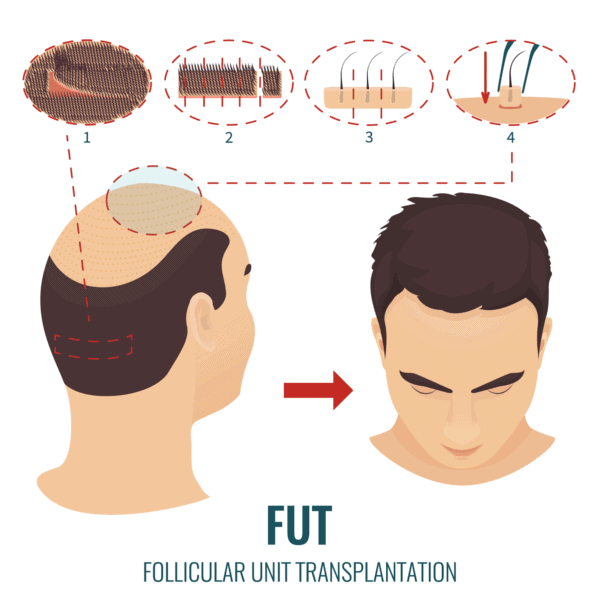
Follicular Unit Transplantation (FUT), also called the strip method, takes a long, narrow strip of skin from the back and sides of your head that can run roughly from above one ear to above the other, where hair is resistant to loss. The strip is divided under a microscope into individual grafts, which are then transplanted into thinning or bald areas.

FUT Hair Transplant

Because the donor area doesn’t need to be shaved, FUT suits patients who want to keep their hair longer, and it is the method many of our female and transgender patients choose. Every FUT procedure at our clinic is performed by Dr Aziz Elgindi, a GMC registered surgeon and full member of the ISHRS, in our CQC registered clinic on Harley Street, London.

A single FUT session typically gives around 2,500 grafts and can reach 3,500, depending on the density of your donor hair and how flexible your scalp is. FUT costs £1,000 more than the equivalent FUE procedure, and finance is available. It leaves a fine linear scar at the back of the head, which is hidden by your hair at around a grade 3.
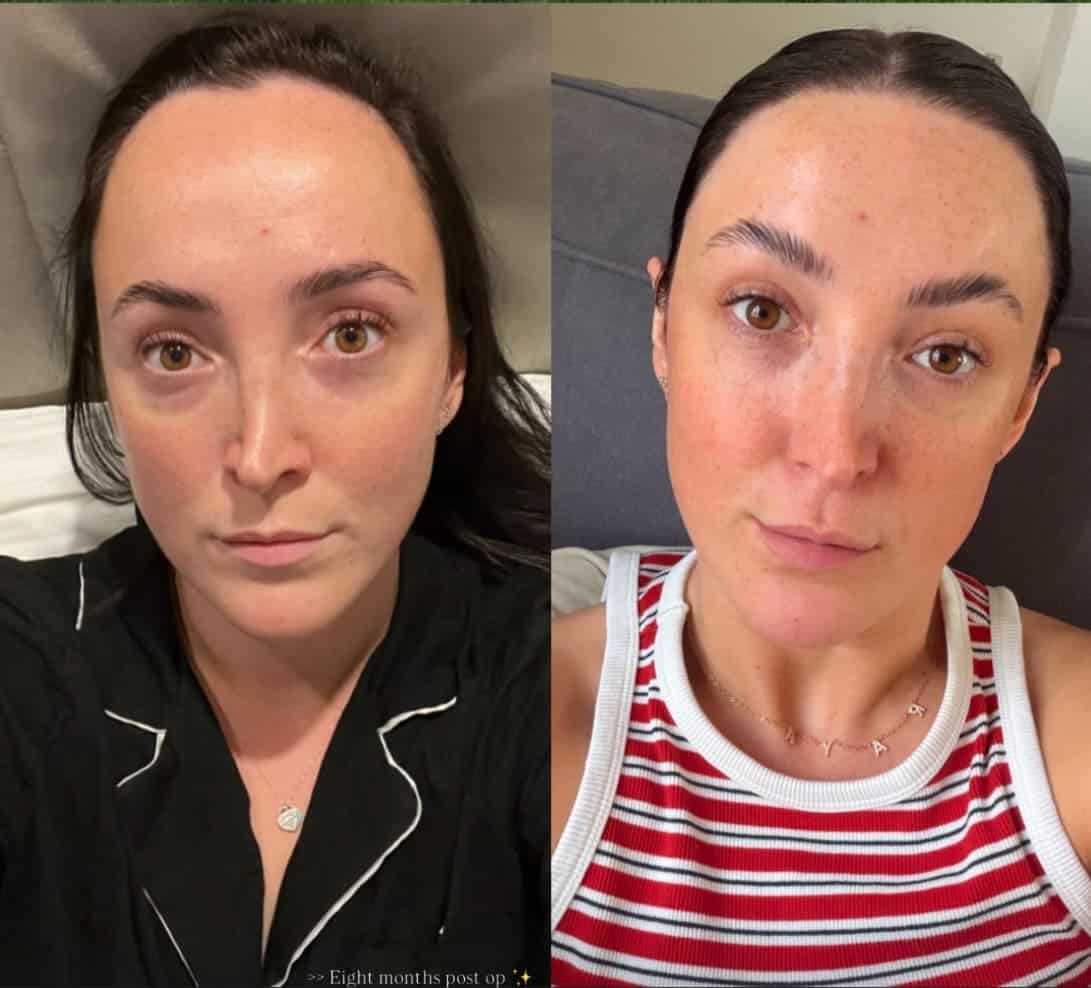
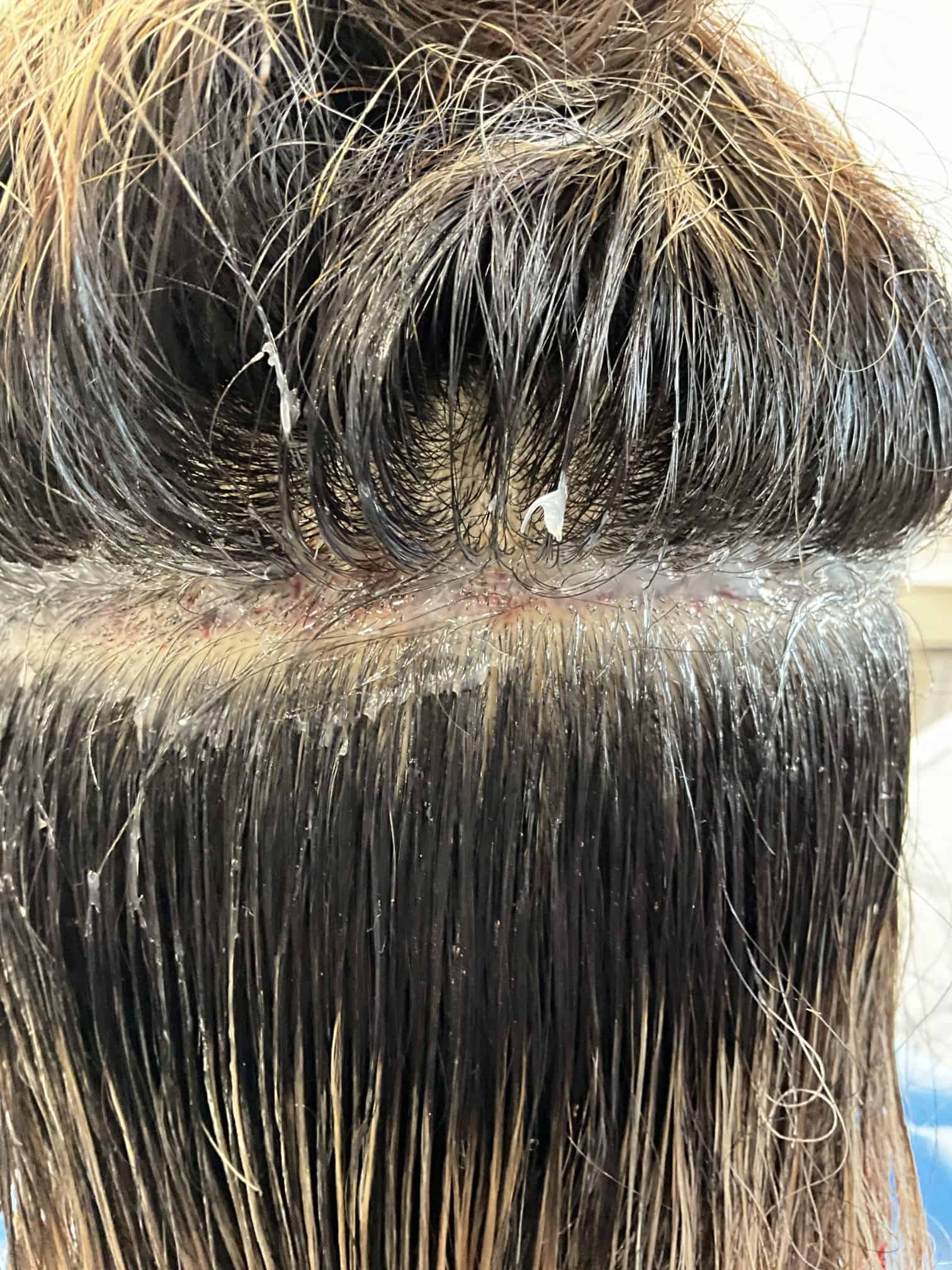
FUT Hair Transplant Results

Dr Elgindi fut patient hannah before and after

Patient: Hannah
Grafts: 2283
Time Period: 0 – 8 months
Technique: FUT

How Does a FUT Hair Transplant Work

FUT hair transplant donor area

A FUT hair transplant is done in one day under local anaesthetic. Dr Elgindi removes a strip of skin from the back of your head, our technicians divide it into individual grafts under microscopes, and the grafts are placed into the area being treated. The individual steps:

You’ll arrive at our clinic between 7.45am and 8am. A typical FUT of around 2,500 grafts, carried out by Dr Elgindi and four experienced technicians, finishes between 3pm and 4pm. Lunch is provided during a break in the procedure.

Dr Elgindi measures the density of your donor area with a densitometer and checks how much your scalp can stretch. This confirms that a strip wide enough for your planned number of grafts can be taken safely. He then marks out the strip.

Only the thin line of hair where the strip will come from is shaved. The hair above and below it stays at its full length, so once the wound is closed, your own hair falls over it and covers it.

The back of your scalp is numbed with local anaesthetic. You’ll be awake throughout but shouldn’t feel any pain. For this part of the procedure you’ll lie face down on the medical bed.

Dr Elgindi removes the strip of skin and passes it straight to the technicians. One technician cuts the strip into thin slivers, and three others work under microscopes to separate each individual graft. This is for a 2,500 graft case.

Dr Elgindi closes the wound with a single layer of stitches, which aren’t dissolvable. We book you in to have them removed at the clinic after 14 days, or you can get them removed at your GP.

From this point, the procedure is exactly the same as an FUE hair transplant. Dr Elgindi makes tiny incisions in the area being treated, following the hairline and direction of growth agreed at your consultation, and each graft is placed by hand.

You can go home the same day. You can drive yourself home or take a taxi, as you won’t be given any medication that stops you from driving. Your aftercare is the same as after FUE, apart from looking after the stitched wound at the back of your head, which we’ll explain before you leave.

Who is FUT Best Suited For

Most of our FUT patients choose it for one reason: they don’t want to shave their donor area. With FUE, the back and sides of the head are shaved so that each graft can be removed one by one. With FUT, only a narrow strip of skin is taken. The hair above it falls back over the closed wound, so your donor area is hidden as soon as you leave the clinic.

The following are patients that are more suited for FUT:

The Trade Off

With FUE, your surgeon can choose the strongest individual follicles from across the whole donor area. With FUT, we work with the grafts contained in the strip and can’t pick and choose. Dr Elgindi checks your donor density and scalp flexibility at your consultation before recommending FUT, so you’ll know beforehand whether it’s the right method for you.

When is FUT Not the Right Choice

FUT isn’t suitable for everyone. Dr Elgindi checks the following at your consultation, and if FUT isn’t right for you, he’ll tell you and explain the alternatives:

  • Your scalp is too tight or too loose – FUT relies on how much your scalp can stretch. If it’s tight, only a small strip can be removed, which limits how many grafts we can take. Surprisingly, a very loose scalp can also be a problem. Excess stretch can be a sign of an underlying condition such as Ehlers-Danlos syndrome, which tends to give a wider, more noticeable scar.
  • Your donor hair is thin – If you can see your scalp through the hair at the back of your head, there won’t be enough hair to cover the scar, and it will always show.
  • You keep your hair very short – With a skin fade or a very short cut at the back and sides, the scar will be visible. FUT suits people who are happy to keep their hair a little longer at the back, around a grade 3 or longer.
  • You’re young and very active – We take extra care with younger patients, especially athletes and people who lift heavy weights. Strain on the back of the head can pull on the wound and stretch the scar over time.
  • You have a history of keloid or raised scarring – If you’ve had keloid or hypertrophic (raised) scars before, FUT is too high a risk and we won’t recommend it.
  • You have a skin condition on the scalp – Chronic folliculitis, scalp psoriasis or other ongoing problems in the donor area rule FUT out.
  • You’ve already had FUE – A previous FUE procedure leaves fewer grafts in the donor strip, so FUT usually isn’t worth doing afterwards.
  • You only need a small number of grafts – For smaller procedures, FUE is usually the better option, unless you don’t want to shave at all.

FUT Recovery Timeline

Days 1-3: The back of your head will feel tight and tender around the stitches, and the treated area may be red with small scabs. For the first 3 days, spray the treated area with the saline solution we give you rather than washing it. You can gently wash the donor area at the back from day 2, one day later than after FUE, so the wound has time to settle. Apply Vaseline to the stitches twice a day. Moist wounds heal better, and you’ll keep doing this for 14 days.

Days 4-14: You can gently wash the treated area from day 4, and the small scabs will start to come away. Keep applying Vaseline to your stitches twice a day. Most patients go back to work after 2 weeks, the same as with FUE. Your hair covers the stitches, so they aren’t visible.

Day 14: You come back to the clinic after 14 days to have your stitches removed. It only takes a few minutes. At the same appointment we check how your donor area and the treated area are healing. Once the stitches are out, the tight feeling at the back of your head eases.

Weeks 2 to 12: Shedding: The transplanted hairs fall out. This is normal. The follicles stay under the skin and go into a resting phase before growing new hair.

Months 3 to 6: New hair starts to grow through. It’s often fine at first and thickens over the following months.

Months 6 to 12: The hair gets thicker and longer. You’ll see your final result at around 12 months.

Protecting your scar: avoid heavy lifting for 3 months: Dr Elgindi asks every FUT patient to avoid really heavy lifting for the first 3 months. This is when the scar is most likely to stretch, and putting strain on the back of the head can leave it wider than it needs to be.

Will the results last?: The grafts come from the back of your head, where hair is resistant to the hormone that causes hair loss, so the transplanted hair should last. Your existing hair may still thin over time, which is why some patients also use medication.

Your follow up appointments: After your stitch removal appointment at 14 days, we see you again at 3 months, 6 months and 12 months to check your progress and your scar.

The FUT Donor Scar

Every FUT procedure leaves a linear scar across the back of the head, where the strip was taken. How it looks depends mainly on how well it heals.

How wide is the scar?
When it heals well, the scar can be as fine as a pencil line. In some patients it stretches as it heals and ends up considerably wider, sometimes more than half a centimetre. This is why Dr Elgindi checks how much your scalp can stretch before recommending FUT, and why we ask you to avoid heavy lifting for the first 3 months.

How does it heal?
The donor wound heals the same way as any other cut to the skin. Moist wounds heal better, so you apply Vaseline to the stitches twice a day for 14 days, until they’re removed.

How long does my hair need to be to hide it?
We advise keeping the hair at the back at around a grade 3. At that length, your hair covers the scar.

Can the scar be repaired?
Yes. If your scar has stretched or you’d like it less visible, there are two options:

  • Scar revision: the scar is surgically removed and the edges are closed again.
  • FUE grafts into the scar: individual grafts are placed into the scar tissue so that hair grows through it.

Dr Elgindi will advise which suits you after looking at your scar. Our hair transplant repair page covers scar repair in more detail.

How much does a FUT hair transplant surgery cost?

A FUT hair transplant costs £1,000 more than an FUE procedure with the same number of grafts. FUT needs extra technicians to cut the strip into slivers and separate each graft, plus additional equipment, which adds to the cost of the day.

FUT hair transplant price by number of grafts at Harley Street Hair Transplant Clinics
Grafts FUT Price
1,000 grafts £5,000 to £5,500
1,500 grafts £5,500 to £6,000
2,000 grafts £6,500 to £7,000
2,500 grafts £7,000 to £7,500
3,000 grafts £7,500 to £8,000

Your patient advisor confirms the exact price after your free consultation. Prices for FUE, DHI and every other procedure are on our hair transplant cost page.

What’s included in the price

The price you’re quoted is the price you pay, with no hidden costs. It includes:

  • Free initial consultation: in person or by video, with no obligation, with a patient advisor.
  • Surgeon fees: Dr Elgindi performs every FUT procedure himself.
  • Operating theatre and clinical team, including the technicians who prepare your grafts.
  • Pre-surgery care: medical screening and pre-op preparation.
  • All medication: anaesthetic, post-operative antibiotics, pain relief and any other medication you need.
  • Aftercare kit: specialist shampoo, saline solution, Vaseline for your stitches, neck pillow, headband and written instructions.
  • Stitch removal at the clinic at 14 days, with your first check-up at the same appointment.
  • Follow-up appointments at 2 weeks, 3 months, 6 months and 12 months.
  • 12 months of aftercare support, with direct access to your patient advisor by text or phone.

Travel to the clinic isn’t included. If you later decide on a second procedure, or Dr Elgindi recommends long-term hair loss medication to protect your existing hair, these are quoted and billed separately.

Hair transplant finance is available to patients who qualify, so you can spread the cost into monthly payments. Your patient advisor goes through the options at your consultation.

Make the best investment in yourself and find out more about how we can help eliminate hair loss for good!

Where to Find Us

You can find us at our London clinic located at:

1-7 Harley Street,
London,
W1G 9QD

Which Surgeon Performs the FUT Procedure?

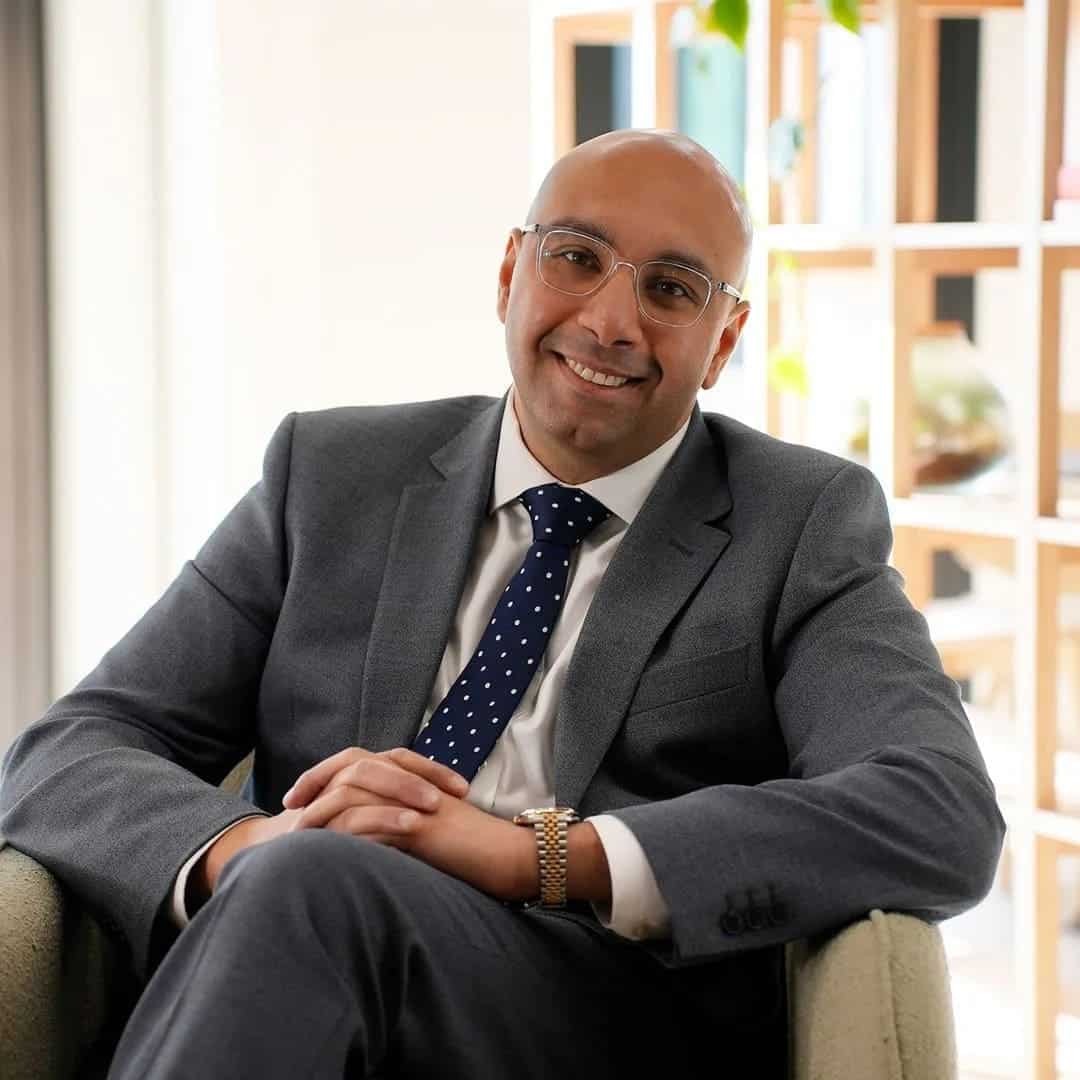
Out of all of our surgeons, only Dr Aziz Elgindi has trained in FUT transplant procedures as well as FUE. Dr Elgindi has performed hundreds of FUT procedures mostly for women and transgender people wanting a hair transplant but without the need to shave the donor area.

Dr Aziz Elgindi of Harley Street Hair Transplant Clinics

FUT Hair Transplant FAQs

FUT stands for follicular unit transplantation, also called the strip method. The surgeon removes a thin strip of skin from the back of the head, where hair is resistant to loss, and technicians divide it under microscopes into individual grafts. These are then placed into the thinning areas. The donor area isn’t shaved, and the procedure leaves one fine linear scar.

Neither is better for everyone. It comes down to whether you’re happy to shave and which kind of scar you’d rather have. FUE needs the donor area shaved and leaves tiny dot scars, and the surgeon can cherry-pick the strongest grafts. It suits you if you keep your hair very short, around a grade 1 to 2. FUT needs no shave and leaves one linear scar. You can see more information on our FUE vs FUT post.

Yes. FUT always leaves a linear scar across the back of the head, where the strip was taken. When it heals well it can be as fine as a pencil line, and hair kept at around a grade 3 covers it. In some patients it stretches and ends up wider, which is why we check your scalp flexibility first and ask you to avoid heavy lifting for 3 months.

No. Only the thin line of hair where the strip will be taken is shaved. The hair above and below it stays at full length and falls over the stitches as soon as the wound is closed, so your donor area is hidden when you leave the clinic. This is the main reason most of our FUT patients, many of them women and transgender patients, choose it.

FUSS stands for follicular unit strip surgery. It’s another name for FUT, as is the strip method, and all three describe the same procedure: a strip of skin is taken from the back of the head and divided into individual grafts under microscopes. If a clinic quotes you for FUSS, it is the same operation Dr Elgindi performs as FUT.

Yes. We carry out FUT at our CQC registered clinic on Harley Street in London. Every FUT procedure is performed by Dr Aziz Elgindi, a GMC registered surgeon who has performed hundreds of FUT procedures, mostly for women and transgender patients. Your first consultation is free, and he checks your donor density and scalp flexibility before recommending FUT.

Usually, yes. FUT takes a single strip rather than thinning the hair across the whole donor area, so your FUE allowance is still there for a later procedure. FUE is also one of the ways we repair a FUT scar, by placing grafts into the scar tissue so hair grows through it. Dr Elgindi assesses your donor area before planning a second procedure.

The transplanted hairs fall out between weeks 2 and 12, which is normal. New hair starts to grow through between months 3 and 6, often fine at first. It gets thicker and longer from months 6 to 12, and you’ll see your final result at around 12 months. We check your progress at 3, 6 and 12 months.

Patient Testimonials

Aside from achieving fantastic results, we believe that keeping in touch with our patients before, during and after their hair transplantation procedure is paramount – it helps to keep our patients feeling calm and in control. We’re always on hand to provide guidance, support and aftercare advice. Time and again, our patients tell us that this is what sets us apart from other clinics.

You can read our great reviews of FUE hair transplants over on Google.

Posted on Google Google
Anthony profile picture
Anthony
19/11/2026
Google star 1Google star 2Google star 3Google star 4Google star 5Trustindex verifies that the original source of the review is Google.
Lovely people with a great manner of service and transplant was very successful.
Posted on Google Google
Phoebe Hesketh profile picture
Phoebe Hesketh
17/11/2026
Google star 1Google star 2Google star 3Google star 4Google star 5Trustindex verifies that the original source of the review is Google.
The team were super lovely and helpful! They've done a phenomenal job with my hairline and I'm really excited to see the results in the future. Would highly recommend!
Posted on Google Google
Jordan Scott profile picture
Jordan Scott
13/11/2026
Google star 1Google star 2Google star 3Google star 4Google star 5Trustindex verifies that the original source of the review is Google.
After lots of research, so glad I went with Dr Ditta and the team for a hair transplant at HSHTC, they made me feel comfortable and relaxed on the day. Aftercare was tough but I was given advice and helped every step of the way, absolutely worth it 6 months on! So pleased with the natural appearance of my hairline and relieved that I don't have to stress about how it looks anymore. Such a weight off my shoulders, many thanks to all involved.
Posted on Google Google
Craig paterson profile picture
Craig paterson
06/10/2026
Google star 1Google star 2Google star 3Google star 4Google star 5Trustindex verifies that the original source of the review is Google.
Now at the 6th month stage of transplant and already very happy with progress. Hairline looking great and feel far more confident with my appearance.
Posted on Google Google
Jonathan Hall profile picture
Jonathan Hall
05/10/2026
Google star 1Google star 2Google star 3Google star 4Google star 5Trustindex verifies that the original source of the review is Google.
Fantastic experience with Harley Street Hair Clinics. I had my surgery at the end of June in London and already the process has been amazing. The pre-op guidance, surgery and post-op support have all been excellent. Three months post-surgery my hair is growing nicely. My new hairline is clearly visible and my donor area is also healthy and fully restored. I’ve got my confidence back! If you’re thinking of booking a hair transplant with this company, just go for it and don’t delay. Best decision I’ve made!
Posted on Google Google
Michael Eleftheriou profile picture
Michael Eleftheriou
26/09/2026
Google star 1Google star 2Google star 3Google star 4Google star 5Trustindex verifies that the original source of the review is Google.
I didnt know too much about hair transplants so choosing between different companies was quite tricky. So far, all I can say is I made a great choice and everything has gone really well. Sara and James have been super helpful and attentive through email and WhatsApp whenever I have questions, before, during and in aftercare. The procedure itself went well with Dr.Ditta leading and his great team supporting. Everyone made me feel very comfortable. I had the top of my head done with 2750 graphs. Its been two weeks and I am very happy with the progress I can see so far. Its a longer journey for the final results but I would happily recommend based on my my experience. Thank you!
Posted on Google Google
Eliza Kowalska profile picture
Eliza Kowalska
23/09/2026
Google star 1Google star 2Google star 3Google star 4Google star 5Trustindex verifies that the original source of the review is Google.
I'm now two weeks post-op after having hairline restoration and feminisation surgery, and so far the whole experience really couldn't have been better. I spent a while looking for a clinic that felt comfortable with gender-affirming hair restoration, rather than somewhere focused almost entirely on male-pattern hair loss. I'm really happy I found this clinic. From the moment I booked, I felt well looked after. Sara and James were always there whenever I had questions or needed help, and they're still supporting me now during recovery. I also really appreciate that the aftercare doesn't end once the procedure is over. I've already had my two-week follow-up and my next one is scheduled for three months. The procedure itself went very smoothly thanks to Dr Elgindi and his team. Everyone was incredibly kind, caring and attentive, which made the whole experience much easier to get through than it otherwise would have been. Dr Elgindi clearly knows exactly what he is doing, explains everything well, and I really appreciated his approach to the donor area, taking care to distribute the extractions rather than overharvesting one section. That was especially important to me, as my donor area mattered just as much as creating the new hairline. Everything is healing beautifully so far and I'm genuinely very happy with how things are progressing and with the direction the result is taking. I can't wait to see the final outcome. This is my experience at two weeks post-op, and I'll be updating my review again once I've reached the final result. Thank you again to Dr Elgindi, Sara, James and the whole team for taking such good care of me.
Posted on Google Google
Anthony Schettino profile picture
Anthony Schettino
03/09/2026
Google star 1Google star 2Google star 3Google star 4Google star 5Trustindex verifies that the original source of the review is Google.
My experience so far with HSHT Clinics has been excellent. Sara was my first point of contact in the initial consultation. She immediately put me at ease, explained everything in detail and was able to answer all my questions without ambiguity. After that, everything was very well organised and every appointment has been on time and useful. My surgery was performed by Dr Ditta and his team. That was also a great experience (as far as surgery goes). He was very empathetic and took my ideas and opinions into account before proceeding. The recovery was nowhere near as bad as I anticipated - essentially, I was back to normal in two weeks. It’s been 4 months since the surgery and I’ve had a few follow ups with Sara. So far, everything is looking good! Thanks again to the HSHT clinics. Highly recommend at least a consultation with them.

Share This