Afro Hair Transplant

Common Area for Men in the UK
Cost: £4,500 – £7,000
Typical Method Used: FUE
Approach: Surgeon-Performed
Finance Available


Certifications

GMC white
CQC logo-min
ISHRSMembersOnlyLOGO-Gold without background
ICO logo

Our Certifications

GMC white
CQC logo-min
ISHRSMembersOnlyLOGO-Gold without background
ICO logo
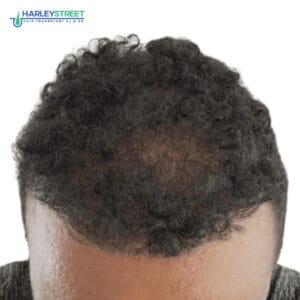
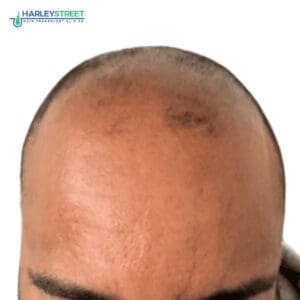
Calvin Before & Afters

Have you ever thought about getting an afro hair transplant procedure, or thought about the differences between straight hair and afro hair? Afro-hair transplants are one of the most popular hair transplant types today! On this page, you will find everything you need to know about afro hair transplants, from price, procedure, to aftercare as well.
Difference of Afro Hair vs Straight Hair

Before talking about the afro hair transplant, it is important to first understand afro hair itself and its differences from straight hair. Having afro hair does alter how a hair transplant needs to be performed to extract from the donor areas safely.

Simply put, afro hair is a style of hair follicle that originated in Central Africa. The afro hair follicle is shaped in an angled helix, giving it the appearance of a dense thick curl. This means that the afro hair type usually shows hair to be visibly thicker and fuller.

Underneath the skin, the root of an afro hair follicle is curled. This is different to other types of hair follicles (caucasian hair, Asian hair, straight afro hair etc.) that are typically much straighter.

What Types of Afro Hair are Suitable for a Hair Transplant?

To give a brief answer, all forms of afro hair are suitable for hair transplantation. However, each different type of afro hair comes with its benefits and drawbacks. In general, afro hair is separated from other hair types by having a curl underneath the dermic layer (your skin).

Hair surgeons categorise afro hair on a range of A to C. Group A suggests you have curly hair follicles and as you travel further down the scale, it gets straighter (B&C). There are three different styles of afro hair: curly hair (A), wavy hair (B), and straight hair (C).

  • Afro Curly Hair (A) – whether you have a frizzy or bouncy hairstyle, curly hair can often be the most difficult to transplant. This is due to these particular hair follicles being thicker than other afro hair types. However, one benefit of curlier hair is that you may need fewer grafts when it is time for your hair transplant. With extra thickness, there may be a more complex and time-consuming job for our surgeons, but you may need fewer implants in general. This may even work in your favour, making the cost of your hair transplant cheaper!
  • Afro Wavy Hair (B) – Predictably, wavy hair types are easier to style and transplant than curly hairs, but harder than straight hair. Wavy hair is categorised as having a consistent pattern throughout. If your hair has large, or beach, waves then you’ve probably got wavy hair. In terms of a hair transplant, wavy hair is very similar to straight afro hair.
  • Afro Straight hair (C) – straight afro hair has no recognised curl or wave. Although this is the easiest hair to transplant, having thinner follicle roots than other afro hairs, it is difficult to curl. One added benefit of straighter afro hair is that your aftercare process may be slightly easier to condition when washing.

Another factor to consider is the formation of keloids may be more likely in patients with curlier hair. This is because more disruption is caused to the skin because of the thicker roots being extracted and implanted, causing a larger immune response. If you’re worried about keloids, ask your family or relatives if they have ever suffered with them as this may determine your susceptibility levels.

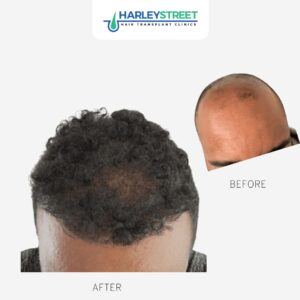
Calvin Before & Afters

Are Afro Hair Transplants Suitable for Men and Women?

Yes, afro hair transplants are suitable for men and women. We have years of experience treating all afro hair types and have gained many fantastic and natural-looking results. An interesting thing to note, however, is that men and women generally tend to come for a hair transplant for different reasons.

The most common reason men come to our clinics is a result of a hair loss process called male pattern baldness. This condition will affect about 40% of men, of many different races and ethnicities, by the age of 35. Hair loss often proceeds in a similar pattern for all men and begins with a receding hairline. This condition is hereditary, meaning you get it from your parents, but is easily fixable with a hair transplant.

In comparison, women with afro hair tend to require a hair transplant as a result of social and environmental factors. Hair techniques such as braids and dreads are common amongst African and Afro-Caribbean communities, being a fantastic cultural tradition. However, having hair in tight hairstyles and putting excess stress on the dermic layer can cause a form of hair loss called traction alopecia.

Despite the different reasons men and women with afro hair may suffer hair loss, our clinic is certainly able to help anyone along the way. Each hair transplant method is suitable for anybody with afro hair. Why not begin your hair transplant journey today?

Calvin Pre surgery Calvin 9 months later

Make the best investment in yourself and find out more about how we can help eliminate hair loss for good!

Why Do We Lose Afro Hair?

A few reasons. Namely:

Androgenetic Alopecia

One of the most common causes of afro hair loss is a condition called androgenic alopecia: male pattern baldness and female pattern baldness. This is where patients will lose hair in a patterned, or predictable, manner.

This hair loss type can affect afro hair just like any other hair type. Unfortunately, pattern baldness is permanent, and requires a hair transplant to fix. Pattern hair loss can also be managed with finasteride for hair loss (in men).

Traction Alopecia

One of the most common causes of hair loss in patients with afro hair is traction alopecia. This is where the permanent hair loss is caused by environmental factors. In patients with afro hair, this is most commonly caused by dreadlocks.

Patients who have traction alopecia may be eligible for a hair transplant. However, this is very much dependent upon the quality of the donor area that is left remaining. As traction alopecia can commonly affect the sides and back of the head, this can make a hair transplant very difficult without causing over-extraction of the remaining donor area.

Alopecia Areata

Another common form of hair loss for afro men and women is a condition called alopecia areata. This is an autoimmune condition where the body attacks its own hair follicles mistakingly. In many cases, this can cause balding on areas the size of a 10p or 50p piece.

Although unpleasant, this form of alopecia only causes temporary baldness. This means a patient is not eligible for a hair transplant as the transplanted hair could also fall out when having another outbreak.

Afro Hair Transplant

At Harley Street Hair Transplant Clinics, our afro hair transplants start from £4,000. Here are the procedures we offer.

FUE Procedure (Follicular Unit Extraction)

The FUE hair transplant is now the industry standard when it comes to hair transplants. Moving on from the FUT procedure (FUT hair transplant or “strip surgery”), the FUE procedure looks to take individual hair follicles and implant them onto a recipient area, like the hairline or crown.

An FUE hair transplant surgery can certainly be performed on Afro hair. Our surgical team are well trained in the extraction phase. This means we can extract the donor hairs without cutting the follicle hair roots.

How Does an Afro Hair Transplant Work?

On the day of your hair transplant, all our patients will receive a local anaesthetic before any procedure takes plant. During the surgery, you shouldn’t feel anything more than a little bit of pressure. Some patients even say it feels like a head massage!

So, here’s how it works:

1). At the beginning of the procedure, the lead hair transplant surgeon will begin by extracting follicular units from the donor area in natural groups of 1-4 (this is called a hair graft).

These grafts, or follicular units, are circled by a tiny 1mm punch enabling an accurate and precise incision to be made. The follicular unit is then grasped gently and pulled away from the loose connective tissue that surrounds the unit under the skin.

2). Once the hair grafts have been taken, they are then checked by our technical team and split into grafts of 1, 2, and 3 follicles.

3). These small donor hairs are then implanted into the bald area one by one. This process is then repeated over and over again as desired. Grafts with one follicle are placed towards the front, whilst grafts with more follicles are placed further back, in the crown.

As patients are left with tiny 0.8mm – 1mm scars from follicle extraction, as opposed to other hair surgery treatments which make larger incisions, the FUE recovery time is usually between 6-7 days.

Which Surgeon Does Afro Hair Transplants ?

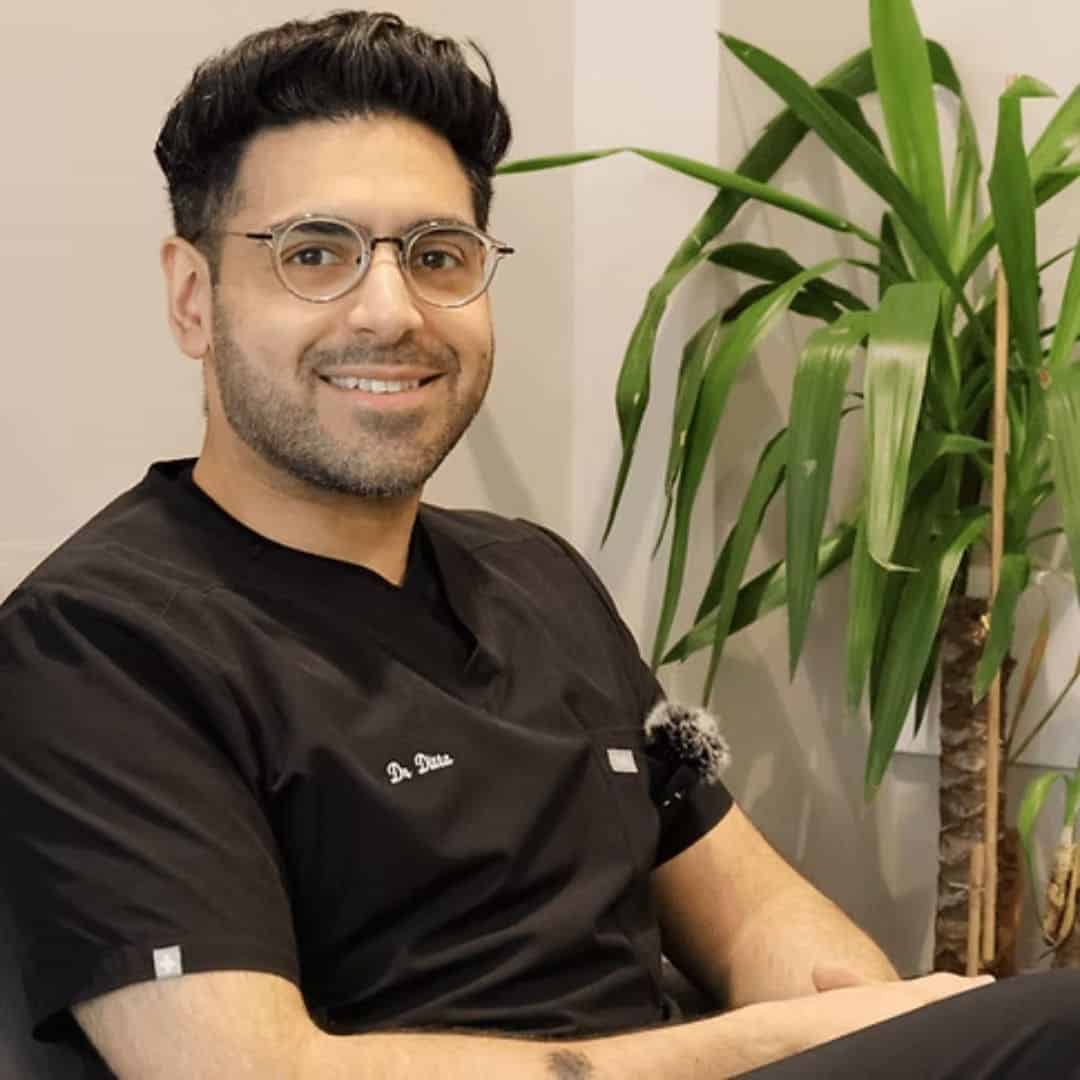
Dr Ditta is the our doctor with the most experience when it comes to afro cases. Afro hair typically grows in a “C” or “J” curl under the skin and this poses a challenge when extracting the hair and implanting it. Dr Ditta has many years of experience in performing afro hair transplants in London with our expert team of technicians who have worked with him for years on afro cases.

Dr Ditta uses a 0.85mm – 0.9mm punch size when extracting afro hair as a larger punch is required to minimise the transection rate but also give more surface area for the hair to be extracted safely.

Harley Street HT Clinics doc ditta

Afro Hair Transplant Aftercare

After an afro hair transplant, aftercare is paramount to having a successful result. On the day of your hair transplant, our hair transplant surgeon will provide you with your aftercare package and walk you through the initial 14-day recovery period.

As part of your afro hair transplant aftercare package, you will receive:

  • saline spray
  • neck pillow
  • formulated hair transplant shampoo
  • antibiotics

If you have any questions about your hair transplant procedure and aftercare, then don’t hesitate to book yourself in for a free consultation. Here, you can ask all the questions you want, so you can get everything you need to know about afro hair transplantation.

Afro Hair Transplant Cost

A common question we’re asked about an afro hair transplant is “how much does it cost”? The short answer to this question is “it depends”.

On average, most patients who visit a doctor lead (NOT doctor supervised) hair transplant clinic in the UK can expect to pay between £4,000 and £8,000 for an afro hair transplant. This is dependent upon several factors, including size of the recipient site, hair type, and the patient’s aims and expectations.

Typical Graft Ranges For an Afro Hair Transplant

For temple-only restoration, most patients will require between 500 and 1,500 grafts, depending on how far back the temples have receded, the width and height of a patient’s original hairline, and how dense a patient wants their new hairline to look.

Further still, if you are looking to combine temple restoration into larger surgeries (e.g. frontal third hair transplant or a hairline hair transplant), then this can affect the number of grafts required during surgery.

  • Mild Afro Temple Hair Loss – 500-800 Grafts (approx. £4,000-4,500)
  • Moderate Afro Temple Recession – 800-1,200 Grafts (approx. £4,500-5,500)
  • Full Frontal Afro Hairline Rebuild – 1,200-3,000 Grafts (approx. £5,500-7,000)

Make the best investment in yourself and find out more about how we can help eliminate hair loss for good!

Afro Hair Transplant Things to Consider and Side Effects

Occasionally, afro hair can make patients more prone to certain problems and side effects after surgery. That’s why we have devised this quick list to alert you to the basics.

Keloid Formation

One of the most common side effects after an afro hair transplant is keloid formation. Keloids are small scars that can occur after a hair transplant and look like small (sometimes red or pink) raised areas.

Keloids form as a result of the body’s response to trauma to the skin. In response, the body produces too much collagen, producing keloids. In rare cases, this can upset transplanted hair follicles and cause excess shedding.

Extraction Phase

Another problem that may occur during the afro hair transplant is during the extraction phase of the afro hair follicles. As afro hair follicles have a natural curl, they can sometimes be difficult to extract.

In rare cases, the afro curl underneath the skin can sometimes be cut by the punching tool. In turn, this renders the damaged graft useless. Although this can sometimes be problematic, we can still perform an afro hair transplant for most, if not all, patients.

Patient Testimonials

Aside from achieving fantastic results, we believe that keeping in touch with our patients before, during and after their hair transplantation procedure is paramount – it helps to keep our patients feeling calm and in control. We’re always on hand to provide guidance, support and aftercare advice. Time and again, our patients tell us that this is what sets us apart from other clinics.

You can read our great reviews of FUE hair transplants over on Google.

Share This