




Hair transplants are quickly becoming a popular hair loss treatment for men and women. With this trend, there has also been an increasing number of black market clinics performing shoddy and botched hair transplants. If you’re considering hair transplant surgery, it is vital to steer clear of misleading advertising claims and make sure you are making an informed decision on which clinic will be performing your surgery!
Overview
- Black market hair transplants are often performed by unlicensed practitioners in unsafe, unregulated clinics, posing serious risks such as infections, scarring, and unnatural results.
- Medical tourism and affordability drive patients abroad, with flashy marketing and low-cost packages making black market clinics seem appealing despite the hidden dangers.
- Warning signs to watch for include unrealistic guarantees, lack of surgeon involvement, bundled “holiday” packages, and suspicious online reviews.
What is a Black Market Hair Transplant?
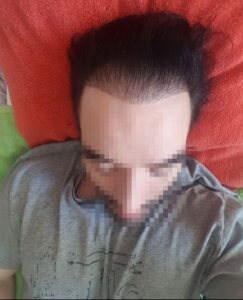 A black market hair transplant refers to an unethical (and sometimes illegal) hair restoration procedure performed outside the standards of regulated medical practice. These operations are typically carried out by unlicensed individuals or in unaccredited clinics, often in countries where oversight is minimal or healthcare laws are loosely enforced.
The term “black market” highlights that these types of hair transplant clinics often bypass many of the legal and professional guidelines intended to ensure patient safety, hygiene, and proper medical care. In the UK, for instance, it is a legal requirement for hair transplants to be performed by a surgeon registered on the General Medical Council (GMC) in a CQC registered clinic.
People are often drawn to black market clinics because of their significantly lower prices compared to licensed practitioners, especially in countries where hair transplants are expensive. These clinics may advertise heavily online and promise dramatic results at a fraction of the cost.
However, the quality of care is usually compromised. Procedures might be conducted by technicians or non-medical staff rather than qualified surgeons. Sterilisation practices may be poor, increasing the risk of infection, scarring, unnatural-looking results, or even permanent damage to the scalp.
In many cases, these clinics perform multiple surgeries a day, often using a “factory-style” approach where patients are treated like numbers rather than individuals. In the UK, these clinics are often called “hair mills”.
Follow-up care may be nonexistent, and patients who suffer complications often have no legal recourse or means to hold the clinic accountable.
Some countries and professional organisations, like the British Association of Hair Restoration Surgery (BAHRS), actively warn people about the risks and maintain lists of black market operators to help protect consumers. You can read a great article by them here.
Hair Transplant Horror Stories!
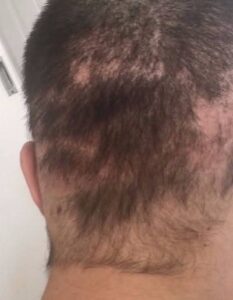 In recent months, the rise of black market clinics has led to a number of alarming articles being written by journalists and news companies.
In a 2025 article by ITV news, a 60 year old man from Kent had a poor hair transplant experience with a UK clinic. His hair transplant surgery not only failed, but his donor area was overharvested. Nothing was able to be done to fix his botched surgery!
Rather worryingly, the Daily Mail even reported on the death of a man who went to Turkey and died while having a hair transplant surgery.
The Truth About Medical Tourism: Why Do People Go Abroad for Surgery?
Hair transplant procedures are quickly becoming a popular surgery for men in the UK and abroad. This is because a hair transplant enables men to combat hereditary hair loss (androgenetic alopecia), while also improving their appearance and self confidence.
Common reasons for medical tourism include, but are not limited to:
- Hair transplants tend to work out slightly cheaper abroad – this is due to lower surgical and clinical costs.
- Word of mouth – many men know someone who went to Turkey for a medical procedure. Turkey is a word we now associate with medical tourism (e.g. hair transplants, gastric sleeves, and dental implants).
- People want a holiday – why not kill two birds with one stone? There’s nothing like getting your hair done after a relaxing break in the sun, right?
Hair transplant methods such as Follicular Unit Extraction (FUE), Direct Hair Implantation (DHI), and Follicular Unit Transplantation (FUT) are now widely available and there are hundreds of world-leading hair restoration surgeons performing life-changing surgeries around the world.
So, this begs the question: why should I pay a premium price for surgery in my home country, if cheaper clinics can offer a similar service? This view is completely understandable. At surface level, the untrained eye will simply see hundreds of clinics offering what is seemingly the same service being offered at different price points.
Many clinics will also draw potential patients in with terms like “Mega Session” or “Giga FUE”. These sorts of phrases count for very little against a quality surgeon-led hair transplant surgery. ALWAYS ensure you opt for a clinic prioritising patient safety over a guarantee to hit a certain number of grafts on the day.
The Appeal Behind a Black Market Hair Transplant
The appeal behind a black market hair transplant primarily lies in its affordability and accessibility. For many people experiencing hair loss, the emotional and psychological impact can be intense, driving them to seek a solution quickly.
When legitimate hair restoration procedures are priced in the thousands or even tens of thousands of pounds (particularly in countries like the UK and US) the low-cost alternative offered by black market clinics becomes incredibly tempting.
These clinics often advertise aggressively online and on social media, showcasing impressive before-and-after photos, celebrity endorsements (often fake), and promises of quick, painless procedures with guaranteed results.
Many present themselves as luxurious or professional on the surface, using flashy websites and polished marketing to appear trustworthy. For people who are desperate for a fix but can’t afford reputable clinics, this illusion of professionalism lowers their guard.
Another factor in the appeal is convenience. Some black market operations are part of larger medical tourism packages that include flights, accommodations, and transportation—bundling the hair transplant with what seems like a worry-free vacation. For someone facing high costs, long wait times, or restrictive regulations at home, this package can seem like a smart, efficient solution.
Lastly, many patients are unaware of the risks. They may not know how to verify if a clinic is accredited or if the practitioner is licensed, and often they don’t understand the medical complexities of the procedure. The emotional urgency to fix their hair loss can override cautious decision-making, making the black market transplant option seem not only reasonable but attractive.
What is the Worst That Could Happen?
A black market hair transplant can go wrong in numerous serious and often irreversible ways because it’s typically performed by unqualified personnel in unregulated environments. One of the most common issues is poor aesthetic results.
This can include an unnatural hairline, uneven density, patchy growth, or hair that grows in the wrong direction. Since the procedure is usually done by technicians without proper training, the artistic and technical skill needed for a natural look is often lacking.
Medical complications are also a major risk. Infections can occur due to non-sterile tools or unsanitary conditions. In severe cases, this can lead to abscesses, scarring, or permanent damage to the scalp. Some patients experience necrosis (tissue death) when the blood supply to part of the scalp is compromised, leaving disfiguring wounds.
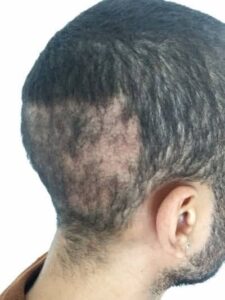 There’s also the risk of overharvesting the donor area, especially in clinics that prioritise volume over quality. This means too many follicles are extracted from the back or sides of the head, leaving visible scars or bald patches where there shouldn’t be any. Once the donor area is depleted, it’s nearly impossible to repair.
Another danger is the lack of post-operative care. Legitimate clinics offer follow-ups to monitor healing and catch any complications early, but black market clinics often disappear after the procedure is done, leaving patients to deal with problems on their own. If complications arise, licensed surgeons may refuse to perform corrective surgery due to the extent of the damage or the difficulty of reversing poor work.
In the worst-case scenarios, people not only waste money on a failed procedure but are left with permanent, visible disfigurement and emotional trauma. The long-term cost (physically, mentally, and financially) can be far greater than the money saved by opting for a black market transplant in the first place.
How To Identify Black Market Hair Transplant Clinics
Identifying a black market hair transplant clinic requires careful research and skepticism, especially when deals seem too good to be true. One of the biggest red flags is when a clinic offers significantly lower prices than the industry standard, particularly if the cost is bundled with travel and accommodation in a way that seems more like a vacation deal than a medical procedure.
These clinics often target international patients with promises of “all-inclusive packages,” but the cost-cutting usually comes from skipping medical safety standards.
Another warning sign is who performs the surgery. In legitimate clinics, a licensed, board-certified surgeon performs the procedure or is directly involved in all critical steps. In black market clinics, much of the work is done by technicians, nurses, or unlicensed staff with little to no formal training. If the clinic won’t let you speak directly with the surgeon beforehand or refuses to provide the surgeon’s credentials, that’s a major red flag.
You should also be wary of clinics that guarantee results. Hair transplantation outcomes depend on individual factors like donor hair quality, scalp condition, and how well your body heals. Ethical surgeons will explain these variables and never promise specific results.
Check whether the clinic is registered with professional organisations like the International Society of Hair Restoration Surgery (ISHRS). If it’s not listed or if it has received public warnings from such organisations, it’s best to walk away.
Finally, look closely at online reviews and patient testimonials. A high number of overly positive, vague, or suspiciously similar reviews can indicate fake feedback. Real patients tend to share more detailed experiences, both good and bad. If anything feels off, trust your instincts. No discount is worth the risk of lifelong damage!
The Red Flag Hair Transplant Clinic Checklist
- Is the clinic providing you with a set of realistic expectations and results?
- Is the procedure being performed by the surgeon themselves?
- Do hair transplant surgeons have additional ISHRS or BAHRS accreditation?
- What do verified reviews on Trustpilot say?
Concluding Remarks: Avoid Black Market Clinics At All Costs!
So, there you have it! Although the promise of cheap, quick, and dramatic results may tempt many into choosing a black market hair transplant, the long-term risks far outweigh the initial savings. If there are complications with your surgery, you can be at risk of permanent damage, financial loss, and lasting emotional distress.
If you are considering surgery, the safest approach is to thoroughly research clinics, verify surgeon credentials, and prioritise quality and patient safety over cost. A legitimate, surgeon-led clinic is always the better investment for both your health and your hair!
British Association of Hair Restoration Surgery (BAHRS) (2025) Beware of the hair transplant ‘black market’. BAHRS, [date unspecified]. Available at: https://www.bahrs.co.uk/patient-advice/beware-of-the-hair-transplant-black-market/ (Accessed: 3 September 2025).
Daily Mail (2025) British tourist, 38, dies after undergoing a hair transplant in Turkey as probe launched into clinic. Daily Mail. Available at: https://www.dailymail.co.uk/news/article-14960203/British-tourist-dies-hair-transplant-Turkey-clinic.html (Accessed: 3 September 2025).
ITV News (2025) ‘It was horrific’: UK hair transplant patients left disfigured and scarred at ‘black market’ clinics, ITV News, 20 August. Available at: https://www.itv.com/news/2025-08-20/it-was-horrific-uk-hair-transplant-patients-left-disfigured-and-scarred (Accessed: 3 September 2025).