




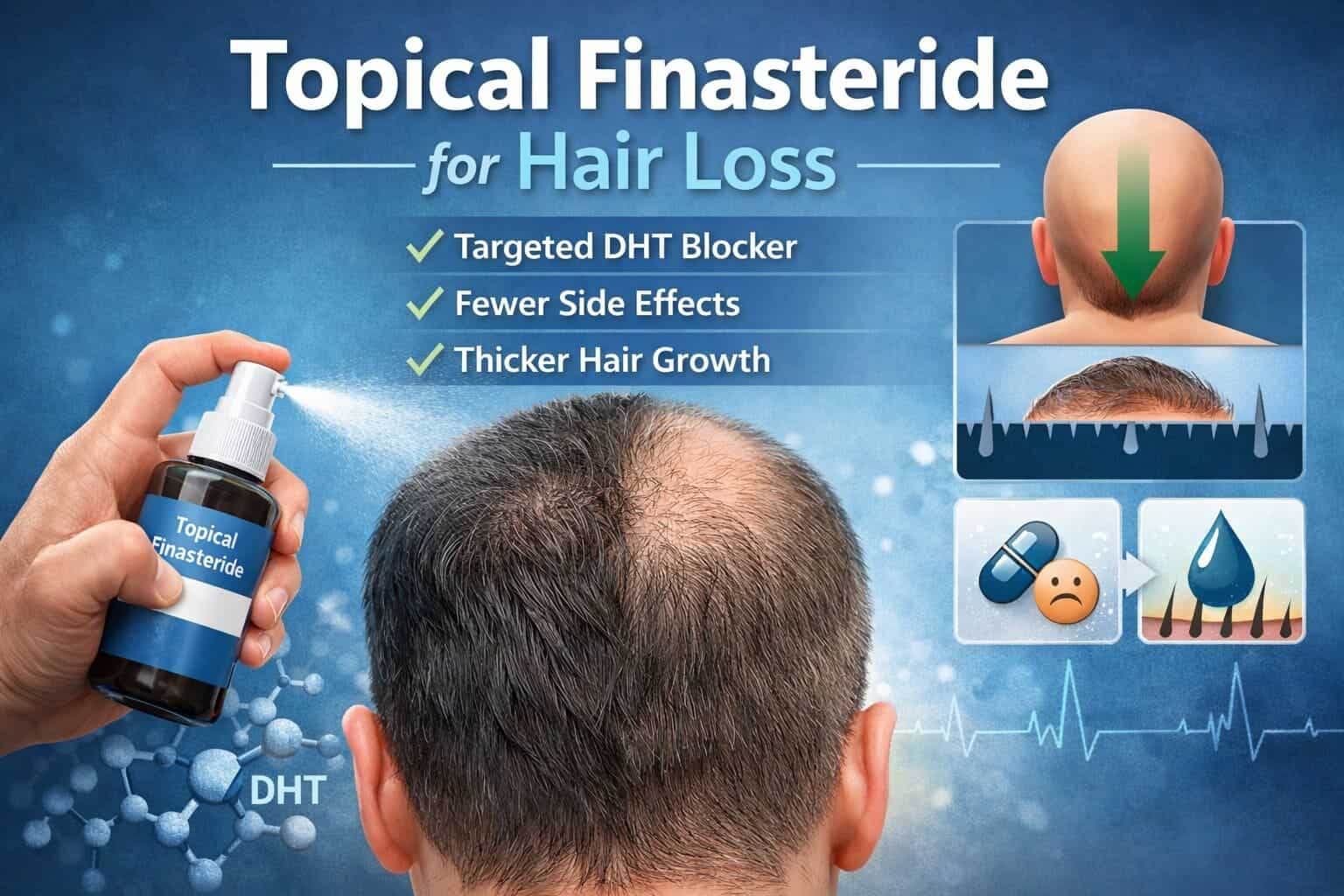
Topical finasteride is a hair loss treatment that combats male pattern baldness (androgenetic alopecia). It has emerged as a modern alternative to oral finasteride tablets, delivering the benefits of DHT-blocking medication while minimising systemic absorption. It produces a much lower rate of side effects in men than oral finasteride.
Overview
- What it is & how it works: Topical finasteride is a scalp-applied DHT-blocker for male pattern baldness that helps stop hair loss, stabilise follicles, and improve thickness—especially when combined with minoxidil.
- Key advantage vs oral: It targets the scalp locally, leading to much lower systemic absorption and therefore a reduced risk of side effects compared to oral finasteride.
- Side effects profile: Most are mild, local scalp reactions (itching, dryness, redness); systemic effects (e.g. libido or mood changes) are possible but significantly less common than with tablets.
- Overall takeaway: It’s generally well-tolerated and effective, making it a strong “middle-ground” option for patients who want finasteride benefits but are concerned about oral side effects.
New to topical finasteride? For a full overview of how it works, its effectiveness, and how to get it in the UK, see our topical finasteride for hair loss guide.
Does Topical Finasteride Have Side Effects?
As with any medication, topical finasteride can cause side effects in a small number of users. However, they are generally considered to be uncommon and mild when compared to oral medication. Most reported side effects usually fall into two categories:
- Local scalp reactions
- Systemic side effects similar to finasteride in oral form (much less common)
Clinical studies have shown that topical application leads to significantly lower levels of the drug in the bloodstream, which reduces the likelihood of systemic effects in many patients (Caserini, 2014; Piraccini, 2021).
Common Topical Finasteride Side Effects
The most frequently reported side effects tend to be local reactions on the scalp, rather than systemic symptoms.
Scalp Irritation
Some patients experience mild irritation after applying topical finasteride. This may include:
- Redness
- Dryness
- Mild itching
- Flaking
In many cases, irritation is caused by the vehicle solution (such as alcohol or propylene glycol) rather than finasteride itself. At Harley Street Hair Transplant clinics, our topical solution comes in a trichosol solution, minimising rates of scalp irritation.
These symptoms are usually temporary and improve as the scalp adapts to the topical treatment. If the symptoms persist longer than a week, stop taking the medication and consult with the clinic or pharmacy that provided your finasteride.
Contact Dermatitis
A small number of patients develop contact dermatitis, an inflammatory skin reaction. Symptoms of contact dermatitis from topical finasteride may include:
- Persistent redness
- Burning sensation
- Rash on the scalp
If this occurs, stopping treatment and consulting your prescribing clinician is recommended. They are best placed to provide you with an alternative prescription medication to combat your hair loss.
Potential Systemic Side Effects of Topical Finasteride
Although topical finasteride is designed to minimise systemic absorption, small amounts of the drug can still enter the bloodstream. Because of this, some patients tend to worry about side effects associated with oral finasteride.
These may include:
- Reduced libido
- Erectile dysfunction
- Decreased semen volume
- Mood changes
However, current research suggests these effects are far less common with topical formulations due to the lower systemic exposure. In fact, several clinical trials have shown that topical finasteride significantly reduces blood DHT suppression compared to oral tablets, while still lowering DHT levels in the scalp.
Effect on PSA Levels
Topical finasteride can suppress PSA (prostate-specific antigen) levels in the bloodstream, though typically to a lesser degree than oral finasteride. This is important for patients undergoing prostate cancer screening, as a suppressed PSA reading may mask a genuinely elevated result. Any clinician conducting a PSA test should be informed that you are using topical finasteride. As a precaution, it is generally advised to double the PSA reading to account for the medication’s suppressive effect.
Post-Finasteride Syndrome
Post-finasteride syndrome (PFS) refers to a cluster of persistent sexual, neurological, and psychological symptoms that a small number of patients report after stopping finasteride. These can include lasting sexual dysfunction, cognitive difficulties, and low mood. PFS remains an area of active research and is not fully understood. The MHRA updated its finasteride guidance in May 2026 to acknowledge that persistent effects after stopping treatment can occur in some patients. If you have concerns about PFS, discuss them with your prescribing clinician before starting treatment.
How Common are Topical Finasteride Side Effects?
Most clinical studies suggest that topical finasteride is generally well-tolerated by most men who take it. Reported side effects are relatively rare, particularly when compared to oral medication. In clinical trials:
- Local scalp reactions are the most commonly reported issue
- Systemic side effects occur at much lower rates than oral finasteride
For many patients, this balance of effectiveness and tolerability is what makes topical finasteride an attractive option for long-term hair loss treatment. That said, individual responses to medication can vary, which is why medical guidance is essential before starting treatment.
Topical vs Oral Finasteride Side Effects
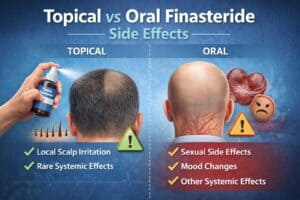 One of the main reasons topical finasteride was developed was to reduce the risk of systemic side effects associated with oral tablets. Pharmaceutical companies wanted to develop a medication that was just as effective, without the side effects of the oral medication. The differences largely come down to drug absorption.
Oral finasteride travels through the bloodstream and suppresses DHT throughout the body. Topical finasteride aims to localise the effect at the scalp, where it is needed most. Potential advantages of topical finasteride include:
- Lower systemic drug exposure
- Reduced impact on circulating DHT levels
- Fewer reports of sexual side effects
That being said, oral finasteride has the longest track record of clinical evidence, which is why some clinicians still consider it the gold standard treatment.
For patients concerned about side effects, topical finasteride may offer a balanced middle ground between effectiveness and safety. Why not book a free consultation with one of our expert patient advisors to discuss your concerns and receive a complimentary treatment plan?
Who Should Avoid Topical Finasteride?
Topical finasteride is not suitable for everyone. You should avoid using the medication if:
- You are allergic to finasteride
- You are under 18
- You are pregnant or trying to conceive
Women who are pregnant should avoid direct contact with finasteride, as the medication can potentially affect the development of a male foetus.
Patients with certain medical conditions may also require individual assessment before starting treatment. For instance, while patients with depression would be ruled out of the medication in oral form, they are often recommended topical finasteride as an alternative.
How to Reduce the Risk of Side Effects of Finasteride as a Topical Solution
When prescribed and used correctly, the risk of side effects from topical finasteride can be kept very low. Some practical steps include using the correct dosage as shown on the bottle, applying the medication only to the scalp, and avoiding excessive use.
While there are potential risks to using topical finasteride, it is important to note that it is well-tolerated by a much larger percentage of men than the oral medication.
Final Thoughts on Topical Finasteride Side Effects
Topical finasteride has become an increasingly popular option for men seeking effective hair loss treatment with a potentially lower risk of systemic side effects. While mild scalp irritation can occur, most patients tolerate the medication well, and serious side effects appear to be uncommon.
For patients who want the benefits of finasteride but are hesitant about oral tablets, topical formulations may offer a promising alternative. They provide all the benefits of a powerful hair loss medication without the nasty side effects of oral tablets.
Topical Finasteride Side Effects FAQs
Does topical finasteride cause fewer side effects than oral finasteride?
Topical finasteride is designed to reduce the amount of medication that enters the bloodstream compared with oral tablets. Clinical studies have shown that topical formulations can produce much lower plasma finasteride levels while still reducing scalp DHT. Because of this, many researchers believe topical finasteride may carry a lower risk of systemic side effects, although it is still possible.
Can topical finasteride cause sexual side effects?
Sexual side effects such as reduced libido or erectile dysfunction have been reported with finasteride medications. However, these effects appear to be less common with topical finasteride because the drug is absorbed into the bloodstream at much lower levels. While the risk is thought to be reduced, it is not completely eliminated.
Does topical finasteride go into the bloodstream?
Yes, small amounts of topical finasteride can enter the bloodstream after application. However, pharmaceutical studies have shown that blood levels of finasteride are significantly lower with topical formulations compared with oral tablets. This reduced systemic exposure is one of the reasons topical finasteride is often considered a potentially safer alternative for some patients.
Is topical finasteride safe for long-term use?
Current research suggests that topical finasteride can be safe and well-tolerated for long-term use when prescribed by a clinician. Like oral finasteride, the medication is typically used continuously to maintain results. Patients should attend regular follow-ups with a medical professional to ensure the treatment remains effective and appropriate for their hair loss.
Can topical finasteride cause depression or mood changes?
Mood-related side effects such as depression have been reported with finasteride medications, although they appear to be rare. Because topical finasteride results in lower systemic drug levels, the likelihood of these effects may be reduced. Patients who notice significant mood changes while using the medication should speak to their prescribing clinician promptly.
How long do topical finasteride side effects last?
If side effects occur, they are usually mild and temporary. Local scalp irritation may resolve as the scalp adjusts to treatment. If systemic symptoms develop, they often improve after stopping the medication. However, the MHRA updated its guidance on finasteride in May 2026 to acknowledge that in a small number of patients, sexual and psychological side effects may persist after stopping treatment. Anyone experiencing persistent or concerning symptoms should seek advice from their prescribing clinic promptly.
References
- Caserini, M., Palmieri, R., Radicioni, M., et al. (2014) ‘A novel finasteride 0.25% topical solution for androgenetic alopecia: pharmacokinetics and effects on plasma androgen levels’, British Journal of Clinical Pharmacology, 79(3), pp. 465–474. Available at: https://pubmed.ncbi.nlm.nih.gov/25074865/
- Piraccini, B.M., Blume-Peytavi, U., Scarci, F., et al. (2021) ‘Efficacy and safety of topical finasteride spray solution for male androgenetic alopecia: a phase III, randomised, controlled clinical trial’, Journal of the European Academy of Dermatology and Venereology, 35(6), pp. 1248–1256. Available at: https://pmc.ncbi.nlm.nih.gov/articles/PMC9297965/