




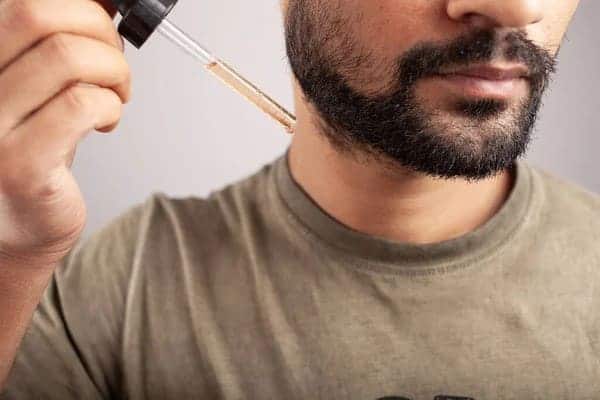
Topical minoxidil is a solution designed to prevent hair loss and stimulate hair growth on the scalp. It increases blood flow on the scalp, ensuring hair follicles receive enough oxygen and nutrients. But did you know it can be used for beard growth? In this article we’ll break down what minoxidil is, how it might work for beard growth, the evidence behind the practice, the realistic expectations, how to use it, side-effects to watch, and whether it’s a smart move for you.
Key Points
- Topical minoxidil, originally formulated for scalp hair loss, has gained popularity as an off-label treatment for beard growth among men and transmasculine individuals. Its mechanism involves improving blood circulation and prolonging hair growth to encourage thicker, fuller hair.
- Clinical evidence, while limited, is promising. Studies have shown measurable increases in facial hair density following regular topical minoxidil use, both in cisgender men and in transgender individuals undergoing testosterone therapy.
- Though side-effects such as dryness, irritation, or unintended hair growth may occur, minoxidil remains one of the few scientifically backed topical options for stimulating facial hair growth. Consistency, patience, and proper skincare are key to achieving visible results.
Why Use Minoxidil For Beard Growth?
 Many men (and some transitioning transgender individuals) struggle with patchy beards, slow facial hair growth, or the inability to fill in certain areas. The allure of minoxidil in this context is simple: if it works on scalp follicles, why not facial ones?
If you take a look on social media forums, it’s easy to see anecdotal evidence supporting minoxidil for beard growth. So, if you’re looking to gain fuller facial hair and aren’t ready to look into a beard transplant, minoxidil may be for you.
What Does the Evidence Say About Minoxidil Beard Growth?
If you’re after hard science, here’s the reality: the research on beard-growth via minoxidil is limited but promising. It’s not as robust as scalp hair loss trials, but enough to warrant attention.
A double-masked, randomised controlled trial involving 48 men aged between 20 and 60 years investigated the effects of a 3% topical minoxidil solution applied twice daily for 16 weeks. The researchers found a statistically significant increase in facial hair count among participants who used minoxidil compared to those who received a placebo (Suchonwanit et al., 2019). These findings provide early clinical evidence that topical minoxidil may enhance facial hair density in men.
More recently, a 2024 study involving 16 transmasculine individuals (t-AFAB) undergoing testosterone therapy examined the use of 2% topical minoxidil for six months. Participants demonstrated a significant increase in facial hair growth, suggesting that minoxidil can serve as an effective adjunct to hormone therapy for individuals seeking improved beard development (Marinelli et al., 2024).
What is Topical Minoxidil?
 Minoxidil started life as an oral antihypertensive, treating high blood pressure, before an unexpected side-effect emerged: increased hair growth. Since then, it has been a popular over-the-counter medication used by people to promote hair growth.
Topical formulations (usually 2% or 5%) have become the standard for treating conditions like androgenetic alopecia (male pattern baldness, female pattern baldness), frontal fibrosing alopecia, and traction alopecia.
Minoxidil treatment is ideal for patients experiencing the early stages of hair loss (e.g. Hamilton-Norwood Stage 2-3). For more severe hair loss conditions, DHT blocking medication (finasteride) or a hair transplant may be more appropriate.
How Does Minoxidil Work?
Before providing the science behind minoxidil, let us walk you through the hair growth cycle. The life of a hair follicle is split into three key stages:
- Anagen phase (growing)
- Catagen phase (shedding)
- Telogen phase (resting)
While it’s completely normal for us to lose between 50-100 hair follicles a day, when we start to shed more than we can grow, this would be considered a hair loss condition. This is where minoxidil comes in.
Minoxidil solution works by extending the growth (anagen) phase of your hair follicle, fending off the resting (telogen) phase. The medication does this by increasing the blood and oxygen flow to the scalp. That’s why we call Minoxidil a vasoconstrictor.
The solution stimulates hair follicles, improving the conditions that allow them to grow thicker, stronger hairs. Here’s a full breakdown of how minoxidil works:
- Vasodilation (Improved Blood Flow) – minoxidil acts as a vasodilator, meaning it widens the small blood vessels where it’s applied. By expanding these vessels, it increases blood flow to the hair follicles, ensuring they receive more oxygen, nutrients, and hormones essential for healthy growth.
- Prolonging the Hair Growth Phase (Anagen Phase) – hair grows in cycles: growth (anagen), rest (telogen), and shedding (catagen). Minoxidil helps extend the anagen phase while shortening the resting phase. The result is longer, thicker hairs that stay active for a greater period of time.
- Reviving Dormant Follicles – some hair follicles stop producing visible hair but remain alive beneath the skin. Minoxidil can “reactivate” these dormant follicles by stimulating cell activity in the hair bulb, encouraging them to start producing new hair again.
- Cellular Effect – minoxidil appears to influence growth factors and potassium channels within the follicle, encouraging better nutrient exchange and stronger hair production.
How to Use Minoxidil For Beard Growth (Safely & Effectively)
If you’ve weighed the pros and cons and are considering using minoxidil for beard growth, here’s a practical guide, based on what we know from clinical experience and scientific evidence:
- Choose the Right Formulation – many users go for 5 % once or twice daily; some trials used 3 %, 2 %. Good real-world practice leans toward 5 % if tolerated.
- Clean, Dry Application Area – wash and pat dry your face; apply to the targeted beard areas (cheeks, chin, moustache line) in a thin layer.
- Massage In Gently – a short massage can help absorption and ensure coverage.
- Frequency – most evidence suggests twice-daily application gives better results.
- Maintain for Several Months – expect minimal visible improvements before 3–4 months; full effect may take 6–12 months (or more).
- Supportive Beard Care – clean your beard regularly, moisturise skin underneath, eat nutrient-rich diet (protein, vitamins) and don’t destroy follicles by over-trimming early
To help maximise your results, it is important to remain consistent; skipping treatment can reduce the effectiveness of the medication. You can also combine your minoxidil use with other beard-growth boosting habits: good sleep, reduced stress, healthy hormones (optimal testosterone levels), and maybe even micro-needling.
Risks, Side-Effects & What to Watch When Applying Minoxidil To Your Beard
Using minoxidil on the face is an off-label application, so you must tread carefully. We’ve outlined some key side effects to watch out for below. The key to good growth is keeping the skin and beard healthy.
Common side effects of minoxidil include:
- Skin irritation – e.g. redness, itching, dryness, flaking. This may be indicative of allergic reactions to the solution.
- Initial shedding – some users report a temporary increase in lighter hairs before improvement.
- Unintended hair growth – hair may appear outside the treatment area (e.g., cheeks, neck, arms) if the drug spreads or systemic absorption occurs.
- Acne/folliculitis – because increased follicle activity and thicker growth, there is the increased potential for ingrown hairs or breakouts. If you’re prone to acne or skin conditions, applying minoxidil to the beard may not be the wisest idea.
While using minoxidil to encourage beard growth may have unknown long-term effects, it is still likely to be reasonably safe when used properly and monitored. Because face skin is more sensitive, you should go slower than you might on the scalp.
Is Minoxidil Beard Application Right For You?
Before jumping in, ask yourself the questions below. It’s still unknown whether Minoxidil can stimulate beard growth. So be sure to ask the following:
- How patchy is your beard? – if your beard is only slightly thin but the follicles are active, minoxidil may help fill in. If large areas have no follicles, you will need a beard transplant to cover these areas.
- Are your hormone levels optimal? – facial hairs rely strongly on androgens (especially DHT). If your hormones are low or imbalanced, fix that first.
- Are you committed for the long haul? – this isn’t a 2-week fix. It’s months of consistent application, and possibly ongoing use.
- Can you tolerate potential side-effects and extra effort? – managing skin irritation, applying twice daily, monitoring progress — it’s a huge commitment to promote beard growth using minoxidil.
- Do you have a plan B (or C)? If minoxidil doesn’t work, what’s next? Beard transplant? Micro-needling? Or are you going to accept your beard’s natural growth pattern?
If you answered yes to most of these, minoxidil may be worth the try. If you answered no, you might be better investing in grooming, styling techniques, or accepting a slightly less dense beard.
Conclusion
Topical minoxidil can be an effective adjunct for promoting beard growth, particularly for those struggling with patchy or uneven facial hair. While not a guaranteed solution, it offers a safe and accessible option for many users when applied consistently and correctly.
If you’re thinking about using minoxidil for beard hair, it’s vital you have realistic expectations. Beard follicles respond differently from scalp follicles, and outcomes can vary based on genetics, hormone levels, and lifestyle factors. Because facial application is off-label, it’s important to start cautiously, monitor for irritation, and seek medical advice if side-effects occur.
- Suchonwanit, P., Thammarucha, S. and Leerunyakul, K. (2019) ‘Minoxidil and its use in hair disorders: A review’, Drug Design, Development and Therapy, 13, pp. 2777–2786.
- Marinelli, L., Bichiri, A., Cagnina, S., Castella, L., Ghigo, E. & Motta, G. (2024) ‘Efficacy of topical minoxidil in enhancing beard growth in a group of transgender assigned female at birth individuals on gender-affirming hormone therapy’, Journal of Endocrinological Investigation, 47(11), pp. 2843–2850. doi: 10.1007/s40618-024-02373-8.