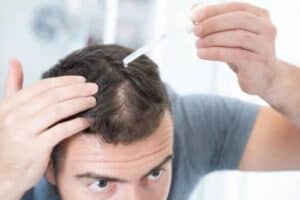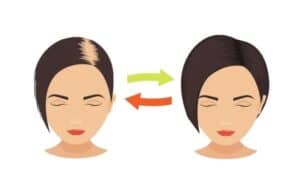





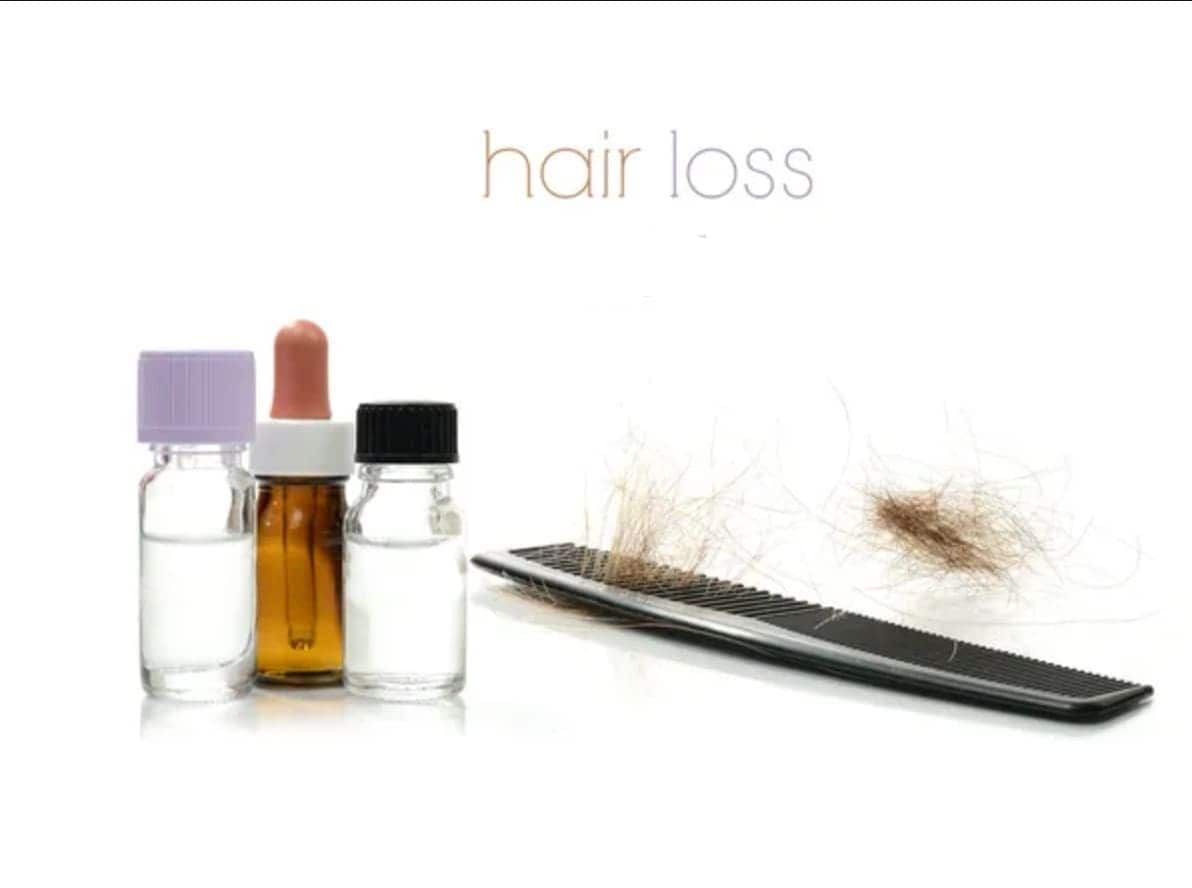
RU 58841 is a topical hair loss medication used to combat male pattern baldness (androgenetic alopecia). This medication is a specific topical anti-androgen that works by preventing DHT (dihydrotestosterone) from binding to androgen receptors on the scalp.
Key Points
- RU 58841 is an experimental, unlicensed topical antiandrogen that targets scalp receptors to block DHT. It is widely used as a treatment for male pattern baldness, but it lacks clinical approval and safety data.
- The effectiveness and safety of RU 58841 remain unproven, making licensed treatments like finasteride, minoxidil, and hair transplants the recommended options for hair thinning and recession.
- RU 58841 is not recommended for use by most well-respected hair transplant clinics. If you are considering hair loss medication, it is vital to consult a GP, dermatologist, or trichologist before sourcing unregulated compounds online.
RU 58841: The New Hair Loss Treatment on the Block!
 If you’re experiencing male pattern baldness and it is affecting your appearance and self-confidence, then you may be considering medication to combat your hair loss. Hair loss medications are becoming increasingly popular due to their convenience and affordability.
Many men looking for a hair loss treatment can find affordable medication online, fill out a medical history questionnaire, and get a prescription delivered to their door with little to no hassle. Among the most popular are finasteride, dutasteride, and minoxidil.
In recent years, RU 58841 has gained notoriety as a topical solution stimulating hair regrowth in male patients experiencing the early stages of hereditary hair loss (Stages 3-5 on the Hamilton-Norwood Scale). But what exactly is it, how does it work, and is it the right hair loss solution for you?
What is RU 58841?
RU 58841 is a non-steroidal experimental antiandrogen that has been studied for its potential to treat hair loss. The medication comes as an oily solution that is applied daily to the scalp. Through continued use, RU 58841 prevents hair loss and encourages hair growth.
Unlike finasteride or dutasteride tablets, which work by reducing the production of dihydrotestosterone (DHT) in the body, RU 58841 is thought to work locally on the scalp. The medication prevents DHT molecules from binding to the androgen receptors on our hair follicles.
RU 58841 has become a popular hair loss treatment for many bodybuilders and steroid users. Many men will take this medication while on a steroid cycle to help prevent hair loss due to increased levels of male sex hormones. However, the safety and efficacy of RU 58841 are still debated.
Is RU 58841 Suitable For Men and Women?
It is difficult to determine whether RU 58841 is suitable to be used by men and women, as there is very little scientific research supporting its safety and efficacy in humans. This solution remains an unlicensed research chemical without medical approval.
More broadly, DHT-blocking medications (e.g. finasteride and dutasteride) are safe for men to take. However, these medications are not recommended for women. While DHT blockers may be deemed medically safe, this does not support the safety and efficacy of RU 58841.
How Does RU 58841 Work?
 Hair loss, particularly male and female pattern baldness (androgenetic alopecia), is closely linked to the hormone dihydrotestosterone (DHT). In people who are genetically susceptible, DHT binds to androgen receptors in the scalp and triggers a process called follicle miniaturisation.
Over time, the affected hairs become thinner, shorter, and eventually stop growing. Traditional treatments like finasteride aim to reduce overall DHT levels in the body, but RU58841 takes a more targeted approach.
RU 58841 is a non-steroidal antiandrogen medication first developed in the 1990s. Unlike finasteride, which works by inhibiting the enzyme that converts testosterone into DHT, RU 58841 does not affect hormone production.
Instead, it works at the scalp level by binding to androgen receptors in hair follicle cells. By attaching to these receptors, RU 58841 prevents DHT from binding and triggering the miniaturisation process. In theory, this allows hair follicles to remain healthier for longer and helps preserve hair density.
So, the key difference between oral finasteride and RU 58841 is systemic absorption. While oral finasteride is systemically absorbed, RU 58841 affects the scalp locally. However, it is important to note that you can also buy topical finasteride, which is proven to be clinically safe and effective – unlike RU 58841.
How Long Does it Take to See Results from RU 58841?
It is difficult to determine exactly how long you need to take RU 58841 to see visible results. However, anecdotal evidence seems to suggest that most people who apply this medication see results after 3-6 months of consistent use.
This 3-6 month timeframe is similar to licensed hair loss medications. Results usually take a couple of months as the hair growth cycle is quite a slow and steady process.
How Often Should I Use RU 58841?
 Most people who experiment with RU58841 apply it once daily to the scalp, usually in a liquid solution. The reasoning is that a single daily application may be enough to keep androgen receptors in the scalp blocked from DHT throughout the day.
Some anecdotal reports mention twice-daily use, but there is no scientific evidence to confirm whether this provides any additional benefit.
How Effective is RU 58841?
It is difficult to fully assess the true efficacy of RU 58841 as it has not been clinically studied to the same extent as other medications like finasteride or dutasteride.
Early laboratory and animal studies suggest that RU58841 may help reduce hair follicle miniaturisation caused by DHT. However, there are no large-scale human clinical trials confirming its long-term effectiveness.
De Brouwer et al. (1997) evaluated the efficacy of RU 58841 to balding human scalp grafts maintained on testosterone-conditioned nude mice. When compared to the control group, RU58841-treated grafts showed significantly more active hair follicles and higher linear hair growth rates.
In a study conducted by Pan et al. (1998), topical RU 58841 and oral finasteride were compared on their ability to prevent DHT-related hair loss in bald monkeys. RU 58841 produced a 103% increase in hair growth versus an 88% increase with finasteride. Importantly, RU 58841 did not lower systemic DHT or testosterone levels, whereas finasteride did.
While the statistics here show RU 58841 to be a promising solution for androgenetic alopecia, animal studies do not provide any indication of the medication’s safety in humans. So, more research needs to be conducted on humans before its safety and efficacy are guaranteed.
Is RU 58841 Safe?
It’s difficult to fully know whether RU 58841 is a safe treatment until further clinical research on the hair loss medication has been done. At the moment, it remains an experimental medication with no large-scale, peer-reviewed clinical trials supporting its safety and efficacy.
What is perhaps even more alarming is that RU 58841 is sold freely online as a “research chemical” and not a licensed medicine. The unregulated supply of this compound means there is no quality control, standardised concentration, or guarantee of purity.
If you are concerned about the potential safety risks of RU 58841, then you may want to consider alternative hair loss treatments like finasteride or minoxidil.
Is RU 58841 Better Than Finasteride?
While RU 58841 is supported by animal studies, finasteride’s safety and effectiveness are backed by multiple studies on humans. Finasteride is an FDA-approved oral medication that has been studied extensively on thousands of men.
Multiple large-scale clinical trials have shown that finasteride can significantly slow hair loss and, in many cases, stimulate regrowth. In a study of over 1,500 men, Kaufmann et. al (1998) found that taking a 1mg tablet of finasteride every day produced a significant increase in hair count compared to a placebo.
Many men consider RU 58841 as a hair loss treatment due to the potential sexual side effects associated with taking oral finasteride. In these circumstances, topical finasteride would be a better alternative than RU 58841. Topical finasteride is just as effective as the oral medication and produces minimal systemic side effects.
What is the Difference Between RU 58841 and Finasteride?
The main differences between RU 58841 and finasteride are the form in which patients take the medication and the systemic absorption of the treatment.
As RU 58841 is applied topically to the scalp, it is not systemically absorbed by the body. This means it does not prevent the production of DHT. This new specific topical anti-androgen simply stops DHT from binding to the androgen receptors on your scalp.
Comparatively, the most popular way of taking finasteride is by ingesting a 1mg tablet once a day. As the medication needs to be digested to work, it means that the medication is systemically absorbed, increasing the risk of potential side effects. However, side effects are only present in around 2-4% of cases (Kaufmann, 1998).
If this is something that concerns you, topical finasteride works in almost exactly the same way as RU58841. Topical application keeps the medication concentrated on the scalp area, minimising systemic side effects.
Conclusion
RU 58841 represents an intriguing experimental approach to treating hair loss, working locally on the scalp to block DHT from binding to hair follicle receptors. While early animal studies suggest it may promote hair growth, there is currently no robust clinical evidence in humans to confirm its long-term safety or effectiveness.
Its unregulated status and lack of peer-reviewed human trials mean that potential risks remain largely unknown, making it a less reliable option compared to established treatments. So, if you’re looking to find a solution for hair loss, it may be a wiser choice to opt for a licensed treatment such as finasteride, minoxidil, or a hair transplant.
- De Brouwer, B., Tételin, C., Leroy, T., Bonfils, A. & Van Neste, D. (1997) ‘A controlled study of the effects of RU58841, a non-steroidal anti-androgen, on human hair production by balding scalp grafts maintained on testosterone-conditioned nude mice’, British Journal of Dermatology, 137(5), pp. 699–702.
- Kaufman, K.D., Olsen, E.A., Whiting, D., Savin, R., DeVillez, R., Bergfeld, W., Price, V.H., Van Neste, D., Roberts, J.L., Hordinsky, M., Shapiro, J., Binkowitz, B., & Gormley, G.J. (1998). ‘Finasteride in the treatment of men with androgenetic alopecia’. >Journal of the American Academy of Dermatology, 39(4), pp. 578–589.
- Pan, H.J., Wilding, G., Uno, H., Inui, S., Goldsmith, L., Messing, E. & Chang, C. (1998) ‘Evaluation of RU58841 as an anti-androgen in prostate PC3 cells and a topical anti-alopecia agent in the bald scalp of stumptailed macaques’, Endocrine, 9(1), pp. 39–43.