





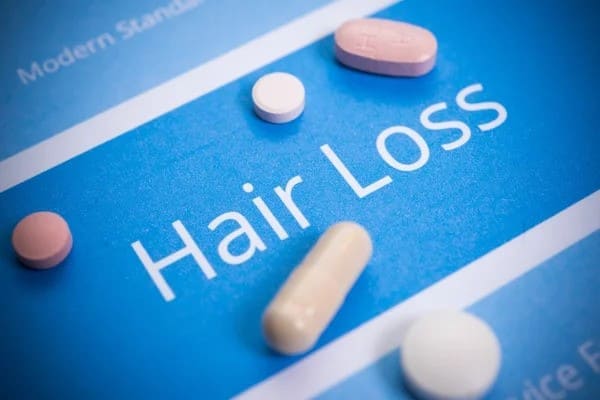
A Complete Hair Loss Guide For Men
Medication induced hair loss is a phenomenon many men will experience at some point. Hair loss is a common side effects of many prescription medications. In this article, we’ll break down which medications cause hair loss, what you can do to manage hair thinning, and how to maintain healthy hair.
Key Points
- Drug-induced hair loss is common but usually temporary: Many prescription medications can push hair follicles into the resting (telogen) phase or disrupt growth (anagen), causing diffuse thinning. Hair typically regrows once the medication is adjusted or stopped.
- Several drug classes are most often implicated: Antidepressants, beta-blockers, statins, retinoids, anticonvulsants, mood stabilisers, thyroid medications, and cancer treatments are known to trigger hair loss in susceptible men. The severity and pattern of shedding vary depending on the drug mechanism.
- Understanding the mechanism helps guide management: Hair loss may result from hormonal changes, nutrient depletion, immune reactions, or direct follicle toxicity. To manage hair loss, you can take minoxidil or finasteride to encourage hair regrowth
Introduction: Medication Induced Hair Loss in Men
Hair loss is something most men will experience over the course of their lives and for many, it starts earlier than expected. While the most common cause of hair loss in men is a condition called male pattern baldness (androgenetic alopecia), this isn’t the only cause. So, what if your thinning hair isn’t just down to genetics or ageing?
Surprisingly, a number of commonly prescribed medications can trigger hair shedding as a side effect. This often comes as a shock, especially if you’ve been diligently looking after your hair. In this article, we’ll break down:
- How medications can cause hair loss
- Which types of drugs are most often to blame
- What you can do if you notice hair thinning while on medication
- Practical steps to protect your hair and stimulate regrowth
As a general rule of thumb, drug induced hair loss is only temporary. Once a patient stops taking medication (providing it is safe to do so), hair follicles should grow back in time. So, there is no real need for surgical intervention (e.g. FUE hair transplant, DHI hair transplant).
Understanding Medication Induced Hair Loss
Drug-induced alopecia is the term doctors use when medications lead to hair shedding. It usually falls into one of two categories:
Telogen Effluvium
Telogen effluvium (hair loss) is by far the most common pattern of drug induced hair loss seen in men taking everyday medications (antidepressants, beta-blockers, statins, etc). To understand how telogen effluvium occurs, it’s important to know the science behind the hair growth cycle:
- Anagen Phase – Lasts 2–6 years, about 85–90% of scalp hairs are in this phase at any given time.
- Catagen Phase – A brief 2–3 week phase when follicular activity slows.
- Telogen Phase – Lasts 2–4 months, after which the hair shaft is released and the follicle re-enters anagen.
Certain medications are known to alter cellular signalling (e.g. serotonin, adrenergic, or prostaglandin pathways) within the follicular microenvironment, directly affecting the hair growth cycle. This shortens the anagen phase and prematurely shifts hairs into telogen effluvium en masse.
Telogen Effluvium shows up as diffuse thinning all over the scalp, rather than patchy bald spots (Alopecia Areata) or pattern hair loss (Hamilton-Norwood Scale)
Anagen Effluvium
Anagen effluvium is less common but much more abrupt and severe. It is most classically seen with cytotoxic chemotherapy or radiation therapy. But how does this happen?
Chemotherapy drugs target rapidly dividing cells by damaging DNA or arresting mitosis. Hair matrix keratinocytes (which divide every 18–24 hours during anagen) are among the fastest-dividing cells in the body.
When their mitotic activity halts abruptly, the hair shaft narrows and fractures within the follicle, causing the hair to break off near the scalp surface within days to weeks of drug exposure. Anagen effluvium usually causes hair to fall out in clumps/bunches.
How Medications Cause Hair Loss: What is the Trigger?
There are several ways in which taking medication can disrupt hair growth and trigger hair loss. Some of the main reasons for this include:
- Hormonal effects – Some drugs alter testosterone or DHT levels, indirectly influencing hereditary permanent hair loss (male pattern baldness).
- Nutrient depletion – Certain medications interfere with absorption of key nutrients like zinc, iron, or biotin.
- Cell division disruption – Chemotherapy drugs target rapidly dividing cells, including hair follicles.
- Autoimmune triggers – Rarely, drugs can provoke immune reactions that attack hair follicles (alopecia areata–like).
Understanding these mechanisms is important, because if hair loss begins after starting a new medication, it’s often worth discussing with your GP. That being said, hair loss is rarely as serious as the condition you are taking medication for.
Which Medications Cause Hair Loss?
Let’s look at the most common medication classes known to trigger hair shedding in men, particularly those prescribed in the UK. It’s important to consider that not everyone will experience hair loss from these drugs, and when it does occur, it’s usually temporary.
So, let’s get into it!
Antidepressants (SSRIs, SNRIs, TCAs)
Antidepressants are widely prescribed in the UK for depression and anxiety. Common prescriptions in for antidepressants in the UK include:
- Sertraline (SSRI)
- Citalopram (SSRI)
- Venlafaxine (SNRI)
- Amitriptyline (TCA)
A wide body of clinical research suggests antidepressants can trigger telogen effluvium, likely by disrupting serotonin signalling in hair follicles (Etminan 2018, Malkud 2015, Peters 2007).
Symptoms of antidepressant related hair loss are diffuse shedding, usually 2–3 months after starting medication, as well as slower regrowth while taking tablets. If you experience shedding, don’t stop abruptly. Have a chat with your GP about dose adjustment or alternatives (such as bupropion, which is less likely to cause hair loss).
Beta-Blockers and Blood Pressure Medications
These medications lower blood pressure and heart rate, but they can also push follicles into the telogen phase. ACE inhibitors (like ramipril) and diuretics (like bendroflumethiazide) have also been suggested to cause hair loss. In the UK, common prescriptions include:
- Propranolol
- Atenolol
- Metoprolol
If you are experiencing gradual diffuse thinning, then your hair loss may be caused by beta-blockers or blood pressure medications. This form of hair loss is often mistaken for male pattern baldness.
High blood pressure is a serious condition and you should never stop taking medication without speaking to your cardiologist or GP.
Statins (Cholesterol-Lowering Drugs)
Statins are a group of medications primarily prescribed to lower levels of low-density lipoprotein (LDL) cholesterol, often referred to as “bad” cholesterol, in the blood. Common statins prescribed in the UK are:
- Atorvastatin
- Simvastatin
- Rosuvastatin
Because high cholesterol contributes to the build up of fatty plaques inside arteries, which increases the risk of heart attacks and strokes, statins are widely used both to treat people with established cardiovascular disease and to prevent heart-related events in those at high risk.
While rare, there are documented cases of statin-associated hair loss (Ohnishi 2025, Ozyurtlu 2022). It’s thought to stem from altered lipid metabolism in hair follicle cells. However, hair usually regrows within months of stopping. If you are experiencing medication induced hair loss, then several non-statin cholesterol-lowering options are available.
Retinoids (Vitamin A Derivatives)
Commonly prescribed in the UK, retinoids such as isotretinoin are often used to treat severe acne. While highly effective, these vitamin A derivatives can sometimes lead to hair loss.
Excess vitamin A reduces the activity of sebaceous (oil) glands and can push hair follicles prematurely into the telogen (resting) phase of the hair cycle. This type of hair shedding is usually temporary and often reverses once treatment is completed and vitamin A levels return to normal.
Anticonvulsants and Mood Stabilisers
Anticonvulsants and mood stabilisers are medications primarily prescribed to control abnormal electrical activity in the brain. They are commonly used to used to prevent seizures in people with epilepsy, while also helping stabilise mood swings in conditions like bipolar disorder.
Common anticonvulsants and mood stabilisers include:
- Lithium
- Sodium Valproate
- Carbamazepine
These medications help regulate brain neurotransmitter activity and stabilise mood, but they can sometimes cause side effects such as diffuse hair thinning, especially during long-term use or when doses are adjusted (Mercke 2000, Vañó-Galván 2017).
Thyroid Medications
Thyroid medications are designed to correct abnormal thyroid hormone levels in the body, either when they are too low (hypothyroidism) or too high (hyperthyroidism). The two main forms of thyroid medication are:
- Levothyroxine is a synthetic form of thyroxine (T4), the main hormone produced by the thyroid gland. It’s prescribed for hypothyroidism to replace the missing hormone and restore normal metabolism, energy production, and body functions. When thyroid hormone levels are brought back to normal, symptoms such as fatigue, weight gain, and sensitivity to cold usually improve.
- Carbimazole, on the other hand, is used to treat hyperthyroidism (overactive thyroid). It works by blocking the production of thyroid hormones in the gland, gradually reducing excessive hormone levels. This helps control symptoms such as anxiety, weight loss, heat intolerance, and rapid heartbeat.
Because thyroid hormones strongly influence the natural hair growth cycle, major shifts in hormone levels (such as starting, stopping, or adjusting these medications) can temporarily disrupt hair follicle activity, sometimes causing telogen effluvium (shedding). Once hormone levels stabilise, the hair cycle usually returns to normal
Cancer Treatment and Hair Loss
One of the leading causes of medication related hair thinning is due to cancer treatments. There are two forms of cancer treatment: chemotherapy and radio-therapy, both of which have different implications on hair growth.
Chemotherapy-Induced Hair Loss (Anagen Effluvium)
One of the most visible side effects of many chemotherapy medications is anagen effluvium, a form of hair loss that occurs when actively growing (anagen-phase) hair follicles are abruptly damaged.
Chemotherapy targets rapidly dividing cells to halt cancer growth, but hair matrix keratinocytes are among the fastest-dividing cells in the human body. When chemotherapy disrupts their cell cycle, hair production stops almost immediately, leading to widespread shedding within two to three weeks of starting treatment.
Because up to 90% of scalp hairs are normally in the anagen phase at any given time, the hair loss can be dramatic and diffuse, often involving the scalp, eyelashes, eyebrows, and body hair. The extent of hair loss depends on the specific chemotherapeutic agents used, their doses, and the duration of treatment.
The following cancer medications are known to induce severe hair loss:
- Anthracyclines (e.g. doxorubicin)
- Taxanes (e.g. paclitaxel, docetaxel)
- Cyclophosphamide
- Etoposide
In contrast, agents like methotrexate and 5-fluorouracil may cause only mild thinning or none at all. Importantly, the damage is typically reversible, and hair follicles often resume activity within 1–3 months after treatment ends.
Radiation-Induced Hair Loss
Radiation therapy can also cause hair loss, but the mechanism differs. Unlike chemotherapy, which is systemic, radiation only affects the tissues directly within its field. When the scalp or nearby regions are targeted, the high-energy beams destroy rapidly dividing follicular cells in the treated area.
Hair loss is usually localized to the irradiated zone and can be permanent if the radiation dose exceeds about 30–40 Gy, because this can destroy the follicular stem cell niche entirely.
Lower doses tend to cause temporary shedding, with regrowth typically occurring within a few months. Patients receiving cranial radiation for brain tumours or total body irradiation before bone marrow transplant are most at risk for this type of alopecia.
Worried About Hair Loss From Cancer Treatments? There Are Some Emerging Protective Strategies!
Researchers are exploring ways to mitigate chemotherapy-induced hair loss without reducing treatment effectiveness . One approach is scalp cooling (cold caps) during infusion, which constricts blood vessels in the scalp and reduces the amount of drug that reaches hair follicles (Grevelman 2005).
Multiple clinical trials have shown that cooling can significantly decrease hair loss for patients on taxane-based regimens. Other investigational methods include topical vasoconstrictors and keratinocyte growth factor analogues to protect follicles, though these are not yet standard of care.
Conclusion
Medication-induced hair loss can be alarming, but in most cases, it is temporary and reversible. Recognising which medications may contribute to hair thinning can help you to make make informed decisions and take proactive steps to protect your hair.
If you notice unexplained shedding after starting a prescription, don’t panic. Have a chat with your GP about potential alternatives, dose adjustments, or timing strategies. All of these factors may help prevent thinning hair while taking medication.
Additionally, maintaining a healthy lifestyle, managing stress, and supporting nutrient intake can further promote hair regrowth and prevent hair loss if you are taking medication.
- Etminan, M., Sodhi, M., Procyshyn, R.M., Guo, M., Carleton, B. and Kezouh, A., 2018. Risk of hair loss with selective serotonin reuptake inhibitors and other antidepressants: a case–control study. Dermatology, 227(1), pp.103–107.
- Grevelman, E.G. and Breed, W.P.M., 2005. Prevention of chemotherapy-induced hair loss by scalp cooling. Annals of Oncology, 16(3), pp.352–358.
- Malkud, S., 2015. Telogen effluvium: A review. Journal of Clinical and Diagnostic Research, 9(9), pp.WE01–WE03.
- Mercke, Y., Sheng, H., Khan, T. and Lippmann, S., 2000. Hair loss in psychopharmacology. Annals of Clinical Psychiatry, 12(1), pp.35–42.
- Ohnishi, Y., Hayashi, H., Sakama, R. and Otsuka, H., 2025. Rosuvastatin-associated alopecia. Internal Medicine, 64(2), pp.269–271.
- Peters, E.M.J., Arck, P.C., Paus, R. and Kruse, N., 2007. Neuroendocrine–immune interactions in stress-induced hair loss: An integrated view of hair biology. Trends in Molecular Medicine, 13(6), pp.271–282.
- Van Beek, N., Bodó, E., Kromminga, A., Gaspar, E., Meyer, K., Zmijewski, M.A., Slominski, A., Wenzel, B.E. and Paus, R., 2008. Thyrotropin releasing hormone (TRH) promotes human hair growth by elongating anagen and inhibiting apoptosis of hair matrix keratinocytes. FASEB Journal, 22(2), pp.570–579.
- Vañó-Galván, S., Saceda-Corralo, D. and Blume-Peytavi, U., 2017. Drug-induced hair loss: a review. Dermatologic Clinics, 35(1), pp.99–108.