





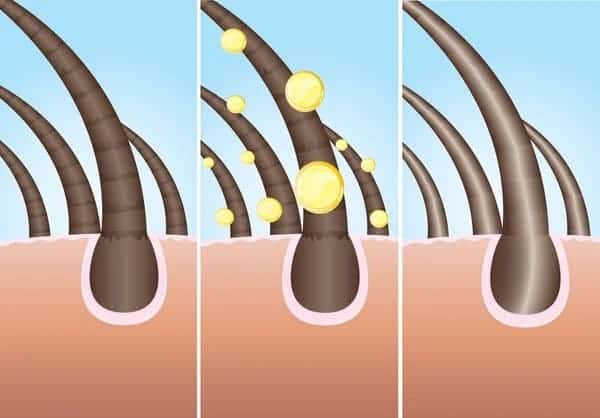
If you’ve landed on this page, you’re probably wondering: “can natural dht blockers cure hair loss”? On this page, we’ll walk you through natural treatments for male pattern baldness, whether they work and what you can do to stop DHT related hair loss.
Key Points
- DHT drives male pattern baldness, and while medications like finasteride directly suppress this hormone, natural DHT blockers such as saw palmetto, pumpkin seed oil, and green tea extract target the same pathway more gently.
- Early research shows that some natural compounds can slow hair loss and modestly increase density, but their effects are less potent and less proven than pharmaceutical treatments.
- Consistency, quality, and realistic expectations are key. Natural DHT blockers work best as part of a broader, long-term hair-health strategy, not as a stand-alone “cure.”
DHT and Hair Loss: Some Vital Background Information
Before we get into hair loss treatments, it’s important to first understand what DHT is and how pattern hair loss works. The most common hair loss condition men experience is called male pattern baldness (androgenic alopecia). It affects around 40% of men by age 40.
Men with androgenetic alopecia have a genetic predisposition to pattern hair loss, which causes an increased sensitivity to a powerful male sex hormone called DHT (Dihydrotestosterone). DHT is a derivative of testosterone, converted by the enzyme 5α-reductase.
DHT plays roles in development (male puberty, prostate growth) but also in hair follicle miniaturisation. In some individuals, hair follicles on the scalp (especially the crown/temple area) are susceptible to DHT and gradually shrink, producing finer, shorter hairs, until they cease producing visible hair.
Male pattern baldness usually affects a man’s temples and hairline first (causing a receding hairline) and then the crown area. In severe cases, pattern hair loss can cause total baldness on the top of the head. This process can be tracked on the Hamilton-Norwood hair loss scale.
Treating Male Pattern Baldness: DHT Blocking Medications
 Many men who are suffering from early stages of pattern hair loss choose to take a medication called finasteride. This is a clinically-proven prescription treatment that slows down (and, in some cases, totally stops) the progression of androgenetic alopecia.
Oral finasteride (in tablet form) works by blocking the conversion of testosterone into dihydrotestosterone (DHT), the hormone responsible for male pattern baldness. With lower levels of DHT circulating around the body, the fewer molecules bind to androgen receptors on your hair follicles, preventing hair loss.
While hundreds of clinical trials have shown finasteride to be an effective treatment for male pattern baldness, many men are concerned about potential side effects the medication can cause. In particular, decreased libido and erectile dysfunction.
This has left many men looking for alternative hair loss treatments that offer all the benefits of blocking DHT with fewer side effects. Here’s where herbal DHT blockers enter the picture.
What Are Natural DHT Blockers?
What do we mean by “natural DHT blockers”? Simply put, these are compounds derived from plants or other non‐synthetic sources that are claimed to inhibit 5α-reductase (reducing the conversion of testosterone to DHT), or otherwise reduce the effect of DHT on hair follicles.
In turn, natural DHT blockers prevent hair loss from androgenetic alopecia, enabling a user to maintain their hair density and thickness. Some common DHT blockers include:
- Saw Palmetto (Serenoa Repens) – a popular herbal supplement.
- Pumpkin Seed Oil – some studies show benefit.
- Green Tea / EGCG – has some effect on 5α-reductase in lab settings.
- Stinging Nettle Root – claimed to reduce DHT.
- Pygeum africanum, rosemary oil, zinc, lysine, etc.
As is the case with many natural remedies and medications, there is not a lot of clinical evidence to support their efficacy or use. That being said, from a mechanistic viewpoint, a lot of the theory underpinning these natural DHT blockers is true. So, if you can reduce DHT or its effect, you may slow hair‐follicle miniaturisation.
How Do Natural DHT Blockers Work?
At the biochemical level, natural DHT blockers target the same pathway (5-alpha-reductase (5αR) enzyme) as finasteride. Finasteride does it in a precise, pharmaceutical way. It’s a synthetic molecule specifically designed to bind and deactivate the Type II 5α-reductase enzyme, effectively lowering DHT levels in both scalp and bloodstream by up to 70%.
Natural compounds like saw palmetto, pumpkin seed oil, and green tea extract, achieve the same goal from a gentler, less targeted angle. Many of these compounds contain phytosterols and polyphenols that appear to modulate or partially inhibit 5α-reductase activity, reducing DHT levels to a milder extent. So, while both paths aim at the same enzyme, Finasteride acts as a scalpel, and natural blockers act more like a file. They’re slower, subtler, but often better tolerated.
Additionally, some natural DHT blockers also offer added benefits which you don’t get by taking oral finasteride. For example, green tea (EGCG) and rosemary oil possess potent anti-inflammatory and antioxidant properties. Chronic inflammation and oxidative stress in the scalp can accelerate follicle miniaturisation, even when DHT is under control. So while Finasteride sharply reduces the hormonal trigger, natural compounds may create a healthier follicular environment overall.
Can Natural DHT Blockers Cure Hair Loss?
The main aim of this article is to establish whether natural DHT blockers (and, of course, pharmaceutical meds) can reverse hair loss. But, here lies one of the biggest pitfalls in discussions about hair loss medications and treatments. Let’s explain.
You may think that terms like, “cure”, “treatment” and “prevention” all mean the same thing. But that’s not strictly true. For example:
- Prevention means slowing or stopping further deterioration. In the contexts of hair loss, this would mean maintaining existing hair, preventing further thinning.
- Treatment means actively trying to reverse the process, regrow hair, and improve hair density.
- Cure implies that the problem has been eliminated and will not come back. Now, that’s a strong claim!
When we ask, “Can natural DHT blockers cure hair loss?”, we need to be realistic. In the current state of science and clinical practice, there are treatments that can significantly reverse hair loss in many men. However, both synthetic and natural DHT blockers are by no means a “cure” in all cases.
Natural DHT blockers are a solid option if you are looking to slow or prevent hair loss from worsening. Just like finasteride, a natural DHT blocker is going to be more a effective treatment, the more hair a person has left on their head.
Further still, DHT blockers of any kind are unable to “reverse” hair loss. Especially on the hairline and temples. To restore hair in these areas, a patient would need a hair transplant. Hair transplants remain the only way to restore hair in an area where other hair follicles have fully miniaturised.
Do Natural DHT Blockers Actually Work?
Now we have explained what natural DHT blockers do and what you can expect, this is where realism comes in. Some remedies have been shown to prevent hair loss and increase hair growth in a small number of patients. Specifically, for Saw Palmetto.
In a systematic review of 5 studies observing the effects of saw palmetto, results showed the compound to be effective at treating androgenic alopecia (1). Subjects saw a 27% improvement in total hair count, as well as increased hair density in 83% of all participants.
Further still, a 16-week, double-blind, placebo-controlled study of a standardised saw palmetto oil (VISPO™, 400 mg oral or 20% topical) in 80 men/women (ages 18-50) with mild-to-moderate AGA showed: up to 29% reduction in hair fall (p<0.001) and hair-density increases of 5.17% (oral) and ~7.61% (topical) versus placebo (2).
While initial research shows saw palmetto extract to be a promising treatment for male pattern baldness, only a small number of studies have been conducted. There is not as much evidence supporting saw palmetto’s efficacy as medications like finasteride and dutasteride.
How Long Does it Take For Natural DHT Blockers to Work?
As with any hair loss medication, it is going to be difficult to see any benefits without taking the medication consistently. Be sure to take one supplement or apply any topical treatments once a day for a period of 3-6 months.
Take some before pictures and then “after” pictures every three months. That way, you can track the progress of your hair regrowth journey and find out if your natural DHT blockers are really working.
Practical Considerations Before Taking Any Natural Remedies For Hair Loss
Before taking any supplements for hair loss, it’s important to consider the following factors before jumping straight in. So, here is what we. recommend:
- Set realistic expectations – If you’re in early stage hair thinning, natural DHT blockers might help maintain your hair and possibly improve density somewhat. If you’ve had significant hair loss for many years (e.g. large bald patches), natural DHT blockers alone are less likely to fully reverse follicles that have died or scarred.
- Consider the quality of the product – Supplements and herbal extracts vary widely. Check for third-party testing, dosage, purity, form of extract. If you’re using topical products (shampoos, serums) claiming DHT‐blocking, check the active ingredients.
- Safety and interactions – Just because it’s “natural” doesn’t mean zero risk. For example, saw palmetto may affect hormone levels, interact with medications (blood thinners, hormones), or cause side‐effects (digestive upset, dizziness).
- Combine strategies for the best effect – Since hair loss is multi‐factorial, putting in a multi-pronged strategy is better. You may want to consider natural DHT blockers alongside a non-surgical therapy like micro-needling.
Conclusion
So, there you have it. Natural DHT blockers can play a valuable role in slowing and managing hair loss, particularly for men in the early stages of androgenetic alopecia or those seeking gentler, holistic alternatives to medication. That being said, if you are experiencing moderate to severe hair loss, then you may want to consider a more drastic intervention, like pharmaceutical medications or a hair transplant.
- Evron E, Juhasz M, Babadjouni A, Atanaskova Mesinkovska N. 2020. Natural Hair Supplement: Friend or Foe? Saw Palmetto, a Systematic Review in Alopecia. Skin Appendage Disorders. 6(6):329–337.
- Sudeep H V., Rashmi S., Jestin T. V., Richards A., Gouthamchandra K., Shyamprasad K. 2023. Oral and Topical Administration of a Standardized Saw Palmetto Oil Reduces Hair Fall and Improves the Hair Growth in Androgenetic Alopecia Subjects – A 16-Week Randomized, Placebo-Controlled Study. Clin Cosmet Investig Dermatol. 16:3251–3266.