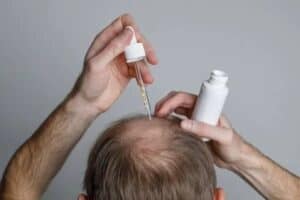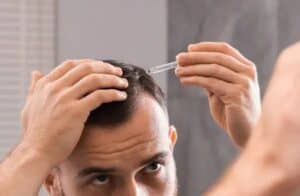





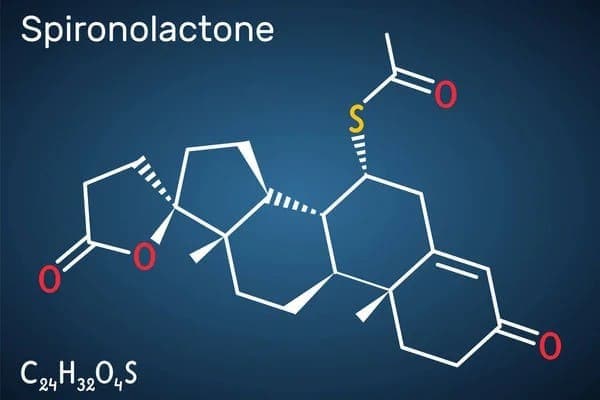
Spironolactone is a new hair loss treatment designed to combat female pattern baldness (androgenetic alopecia). On this page, you’ll find everything you need to know about oral and topical spironolactone, including: how it works, who it’s for, potential side effects, and what results women can who take this medication can expect from it.
Key Points
- Spironolactone is a new hair loss medication currently used off-label to treat female pattern baldness (androgenic alopecia). It helps slow down thinning hair. Especially for women with PCOS or high androgen levels.
- This medication is most effective when used in combination with Minoxidil. Spironolactone comes as oral tablets or topical solution.
- Spironolactone is generally well-tolerated by those who use the medication. However, more scientific research needs to be done to ensure the medication’s safety in a wide range of patients.
What is Spironolactone Treatment?
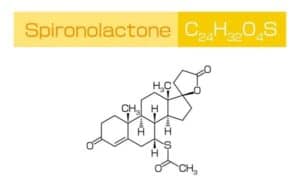 Spironolactone (brand names are Aldactone, CaroSpir) is a prescription medication used to treat the condition female pattern baldness (androgenetic alopecia). This treatment is considered to be a major breakthrough in women’s hair loss, enabling women to slow the progression of hereditary, pattern balding.
Spironolactone treatment has been around since the 1960s. It was originally developed as a potassium‑sparing diuretic, meaning it helps the body get rid of excess fluid without losing too much potassium. It has been used to treat conditions like: high blood pressure, heart failure, polycystic ovary syndrome (PCOS), and fluid retention.
The link between Spironolactone and hair loss was first discovered when the medication was used to help women suffering from PCOS and the menopause. By reducing androgen levels in the body, one of the medication’s unforeseen (and positive) side effects was that there was a widespread reduction in hair loss.
As clinical evidence on spironolactone has progressed, researchers have discovered spironolactone to have anti-androgenic effects. It is thought to block the actions of male sex hormones like dihydrotestosterone (DHT). As DHT plays a central role in androgenetic alopecia (pattern hair loss), it is no surprise that spironolactone naturally became a candidate for hair loss treatment.
Medications like Aldactone and CaroSpir finally enable women to slow the progression of androgenetic alopecia, as traditional DHT blocking medications like finasteride and dutasteride are only suitable men.
What Form Does Spironolactone Medication Come In?
Much like other hair loss medications on the market, Spironolactone comes in two main forms: oral tablets and topical solutions. These two forms come with benefits and drawbacks. These are:
- Oral Spironolactone – this is usually taken as one tablet per day. This form of medication tends to be popular due to its convenient nature. However, the medication is systemically absorbed, so there is a slightly higher risk of side effects.
- Topical Spironolactone – this is usually applied to the scalp once a day until fully absorbed. This medication produces fewer side effects than oral medication, as it is not systemically absorbed.
How Does Spironolactone Work?
Spironolactone treatment works in a similar way to other DHT blocking medications like finasteride and dutasteride. It works by stopping pattern balding at source by lowering levels of male sex hormones (androgens), which are linked to causing hair loss.
Spironolactone binds to androgen receptors in the hair follicle root, preventing DHT from attaching and triggering miniaturisation. In turn, this helps to keep hair follicles alive and healthy. As such, it may be an effective treatment for female pattern hair loss.
The Journal of the American Academy of Dermatology found 74.3% of patients to experience a stabilisation or improvement in their pattern hair loss symptoms (Famenini, 2015). So, initial research into this medication in certainly encouraging.
While Spironolactone will help slow down hair loss, it is often best combined with Minoxidil for a more effective hair loss treatment. Spironalactone will help to tackle the root cause of hair loss and Minoxidil helps stimulate hair growth.
Is Spironolactone For Hair Loss Effective?
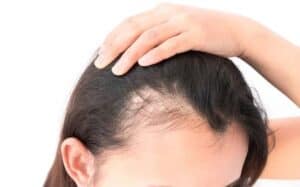 Research into Spironolactone for female pattern hair loss is still in its infancy. While preliminary research into this hair loss medication is encouraging, it has not yet been fully established whether it is an effective and safe treatment.
A recent scientific study (Aleissa, 2023) found Spironolactone to improve symptoms of female pattern baldness by approximately 43%. When this treatment was combined with additional therapy (minoxidil for hair loss), hair loss symptoms improved by almost 67%.
Results showed that there was great variance in the treatment’s efficacy across patients. Further still, multiple side effects of spironolactone were reported. These included: scalp pruritus (itchy scalp), menstrual disorders, and facial hypertrichosis (hair growth on the face). However, this only affected around 3% of participants.
In other words, research into Sprionolactone shows the medication to be promising and effective at treating hair loss conditions like female pattern baldness. However, further research will need to be conducted in the future to ensure the medication’s safety in a wide range of participants.
What is More Effective For Female Pattern Baldness: Minoxidil or Spironolactone?
Both, Minoxidil and Spironolactone have been used to treat hair loss from androgenic alopecia. While both medications have been shown to help reduce hair loss, considerably more clinical research has been conducted on Minoxidil than Spironolactone, making it a more well-understood medication.
In a study of nearly 400 female participants (Lucky, 2004), 5% Minoxidil treatment was shown to be effective at improving the thickness and density of existing hair follicles, when compared to the solution in 2% concentration and the control group. Another study found Minoxidil almost doubled hair regrowth when compared to placebo treatment (Van Zuuren, 2016)
As stated in the section above, early research has shown Spironolactone to be a promising treatment for hair loss. One Open-Label study found Spironolactone to provide a 44% increase in hair growth for women experiencing symptoms of pattern hair loss (Levy, 2013).
It is generally agreed that Minoxidil is a more effective hair loss treatment than Spironolactone. This is due to the fact that there is a much greater amount of research supporting its safety and efficacy.
Who Can Take Spironolactone?
Spironolactone treatment is suitable for use by most women who are experiencing female pattern baldness (androgenetic alopecia), both pre and post menopause. This medication has been shown to be particularly effective for women with PCOS.
However, the medication is not recommended for use by women who are pregnant or breastfeeding. There are concerns that spironolactone may cause potential harm to a foetus. This concern is common to most DHT blockers, including finasteride and dutasteride.
Spironolactone Side Effects
Initial research into spironolactone is still in its infancy. However, early studies have found that the treatment is safe and effective. Only a small percentage of patients have reported side effects when taking this medication.
One of the most common side effects when taking Spironolactone is low blood pressure. In rare cases, the medication has been used to treat high blood pressure in women. So, it is important to regularly check your blood pressure if you take this medication.
Other common side effects of Spironolactone include:
- Nausea
- Fatigue
- Drowsiness
- Headaches
- Irregular periods
- Breast tenderness
- Low sex drive
- Diarrhoea
- Depression
- Weight gain
If you are taking this medication and begin to experience unwanted side effects, contact your hair transplant clinic or GP immediately. They will give you guidance and, if required, provide you with an alternative treatment.
Female Hair Transplants or Spironolactone: What Hair Loss Treatment is Right For Me?
Hair loss solutions for women are quite a complex topic. It can often be difficult to know what treatment is going to be best at helping women treat their hair loss. The correct treatment option is often dependent upon the severity of pattern hair loss a woman is experiencing.
If a patient is experiencing early signs of thinning or hair loss (up to Stage L1 to L3 on the Ludwig Scale), hair loss medications are a great option. Medications like Spironolactone or Minoxidil will help slow down the progression of pattern balding, negating the need for more drastic intervention (i.e. hair transplants).
For more severe cases of pattern hair loss, a hair transplant for women my be needed to restore density on the top of the head. Common methods for women are Follicular Unit Extraction (FUE) and Follicular Unit Transplantation (FUT).
So, if you’re looking to treat the early signs of pattern baldness, then medication is usually the first port of call. If hair loss is more severe, then this is usually only reversed through hair transplant surgery.
References
- Aleissa, M (2023). “The Efficacy and Safety of Oral Spironolactone in the Treatment of Female Pattern Hair Loss: A Systematic Review and Meta-Analysis”. Cureus. 15(8) <https://pmc.ncbi.nlm.nih.gov/articles/PMC10502763/>.
- Famenini, S (2015). “Demographics of women with female pattern hair loss and the effectiveness of spironolactone therapy”. JAAD. 73(4) <https://www.jaad.org/article/S0190-9622(15)01878-2/>.
- Levy, L (2013). “Female Pattern Alopecia: Current Perspectives”. International Journal of Women’s Health. 5(1) <https://europepmc.org/article/PMC/3769411>.
- Lucky, A (2004). “A randomised, placebo-controlled trial of 5% and 2% topical minoxidil solutions in the treatment of female pattern hair loss”. JAAD. 50(4) <https://www.sciencedirect.com/science/article/abs/pii/S0190962203043172>.
- Van Zuuren EJ, Fedorowicz Z, Schoones J. Interventions for female pattern hair loss. Cochrane Database of Systematic Reviews. 5(1) <https://www.cochrane.org/evidence/CD007628_treatments-female-pattern-hair-loss>.