




Scabbing is part of the body’s natural healing process after a hair transplant procedure. In this article, we’ll walk you through everything you need to know about hair transplant scabs, including: what they are, how long they last, when you can safely remove them, and how to look after your scalp during those crucial first 2 weeks.
Key Points
- Scabbing after a hair transplant is not a complication. It’s a sign your scalp is healing properly! All patients should have a full rundown of what to expect in their post-surgery instructions.
- Scabs form around 1-3 days after a hair transplant and begin falling out around 7 days post procedure. Patients can apply saline solution (spray) if their scalp is itchy or uncomfortable.
- Hair transplant scabs will fall off naturally when the patient begins “contact washing” their hair. Shampooing vigorously and massaging the scalp help to separate scabs from the skin.
Hair Transplant Scabs: Part and Parcel of Recovery
Undergoing a hair transplant is a life-changing decision for many men and women battling hair loss. It’s exciting to imagine a fuller hairline and restored confidence, but the early recovery period often brings questions and even a little anxiety. One of the most common concerns our patients have after their hair transplant surgery is the appearance of scabs.
Whether you have had an FUE, DHI, or FUT procedure, scabs after hair transplant surgery are unavoidable. They are part and parcel of the initial recovery period (hair transplant aftercare) which occurs after every hair transplant.
Scabbing is a natural and necessary part of the healing process, yet many people are unsure about what’s normal, when scabs should fall off, and how to take care of both the donor and recipient areas without damaging the delicate new grafts.
My Hair Transplant Scabs Are Giving Me an Itchy Scalp: What Should I Do?
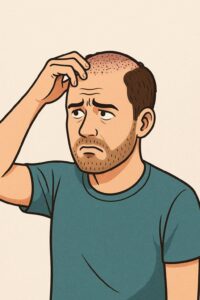 When it comes to hair transplant recovery, one of the most common questions we’re asked is: “my scabs are really itchy, what should I do?”
Knowing how to deal with hair transplant itching is a vital part of the recovery process. To relieve the itch safely, it’s important to follow the aftercare instructions your surgeon gave you. In general, you can relieve itchy scabs by doing the following:
- Use a gentle saline spray in the first few days to keep the area moist and prevent crust from building up. This is vital during the early part of the aftercare process, when patients are not advised to touch the transplanted area.
- From around day three to five, you can usually start using a mild baby shampoo or a special medicated shampoo your clinic provides. Wash your scalp gently with lukewarm water and avoid any rubbing. Always pat your scalp dry afterward instead of scratching or rubbing.
- If the itching becomes bothersome during the early stages of recovery, your doctor may approve an over-the-counter antihistamine to reduce histamine-related itching. Always consult with your hair transplant surgeon before taking additional medication during your recovery period.
While your scalp is healing, avoid scratching, picking, or rubbing the grafted area because this can dislodge the grafts and increase the risk of infection or scarring. Don’t apply any creams, oils, or ointments that haven’t been approved by your clinic.
Also avoid wearing tight hats or helmets that might rub against your scalp, and stay away from hot water, harsh shampoos, or anything that puts strong pressure on the grafts.
The Scientific Explanation For Hair Transplant Scabbing: Why Do Scabs Form?
Scabs form as part of the body’s natural wound-healing response. The moment tiny incisions are made in the skin (e.g. during a hair transplant procedure), the body immediately works to protect itself. Blood vessels constrict to slow bleeding, and platelets move to the site, releasing clotting factors. This process results in a fibrin clot, which acts like a biological plug to seal the opening.
Post Hair Transplant Scabs: Day 1-3
Within the first 24 to 48 hours, that fibrin clot mixes with plasma proteins, dead cells, and fluid, hardening into what we recognise as a scab. Although small, these scabs play a critical role in protecting the wound against bacteria and external irritants.
Scabs also help to maintain the right environment for skin cells underneath to begin repairing the tissue. They are there to promote healing!
As healing progresses, white blood cells migrate to the area to fight off potential infection and clear away debris. This is why many patients often notice some redness, swelling, or itching in the first few days after their hair transplant.
Post Hair Transplant scabs: Day 4 Onwards
From day 4 onward, new skin cells begin to grow underneath the scab, and collagen is laid down to strengthen the healing tissue. Once this new layer is strong enough, the scab naturally detaches and falls away.
This entire process is not unique to hair transplants: it’s the same way your body heals a scraped knee. The only difference is that instead of a single surface wound, a transplant involves hundreds or even thousands of tiny micro-incisions, each one forming its own protective scab.
Understanding this makes it clear why scabbing after a hair transplant is not only expected but essential for protecting your newly implanted grafts during those critical first two weeks of recovery.
What Do Hair Transplant Scabs Look Like?
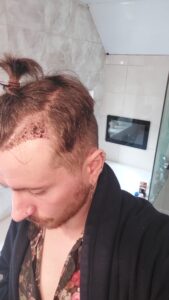 Many patients are surprised when they first see scabs forming on their scalp. Here’s what you can expect to see after your hair restoration surgery:
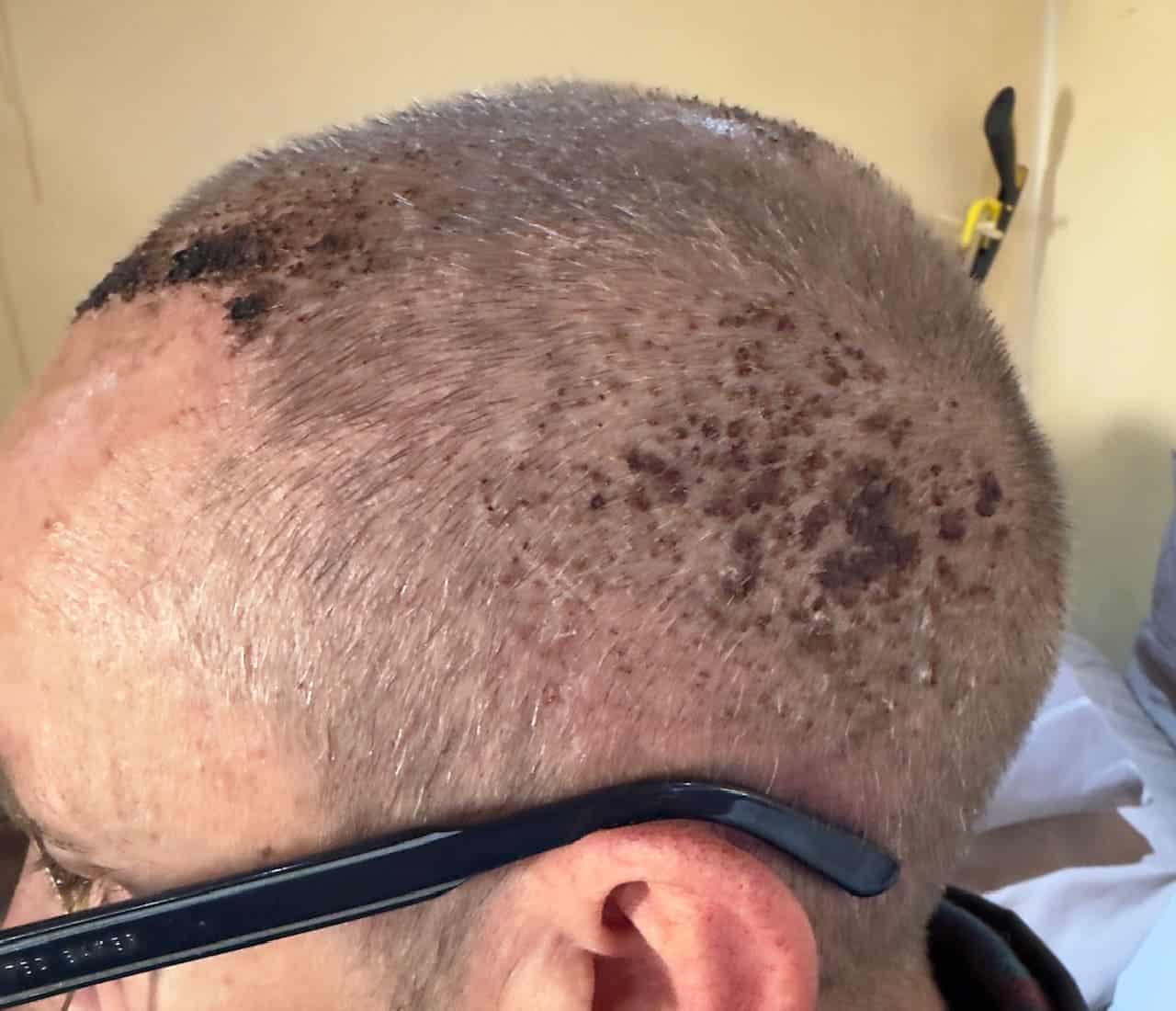
- Day 1–3: Tiny reddish-brown spots appear around each graft. These are blood clots mixed with plasma and tissue fluid. At this moment in time, scab formation prevents excessive bleeding on the recipient and donor site.
- Day 4–7: The scabs harden slightly, turning darker in colour. They may look like small brown crusts dotting the recipient area. These visible scabs may feel itchy, but it’s vital you avoid rubbing your head!
- Day 7–14: Scabs start to loosen and flake off naturally. Some may fall away while washing your hair, while others drop off on their own.
It’s also common for scabs to contain short hair shafts (transplanted hair grafts). When your scabs fall off naturally, you may see small hairs attached. However, you shouldn’t worry too much!
This doesn’t mean you’ve lost your grafts. Instead, the visible hair may shed, but the follicle root beneath the skin remains intact and will regrow in the coming months.
How Long Until Scabs Fall Off Naturally?
For most patients, hair transplant scabs fall off between days 7 and 14. The primary reason for this is that patients are allowed (and actively encouraged) to remove scabs as a part of washing their hair after surgery.
Some people may notice complete scab shedding by day 10, while others need closer to two weeks. Your recovery timeline will depend on factors such as:
- Your skin’s natural healing speed
- The number of grafts transplanted
- How well you follow aftercare guidelines
- Whether you’re prone to dry or oily skin
What’s important is to avoid forcing the scabs off before they’re ready. Allowing them to shed naturally minimises the risk of infection, scarring, and damage to newly implanted follicles.
Can You Touch Grafts After 7 Days?
This is one of the most frequently asked aftercare questions. The answer is yes, but gently.
By day 7, hair grafts have typically anchored securely into the scalp. At this point, light contact such as patting during washing or very gentle massaging is generally safe. However, you should still avoid scratching, rubbing, or applying strong pressure.
Experiencing dryness or itching is common around days 7-10. Rather than applying pressure to the grafts through rubbing or scratching, continue to use saline spray and gently pat the
Even though the grafts are less fragile after a week, they are still vulnerable to trauma. Continue to treat your scalp delicately until your surgeon confirms full healing. The last thing any patient will want to do at this point is cause any shock hair loss. So, remain vigilant!
Should I Remove Hair Transplant Scabs?
If you are undergoing the initial recovery period after your hair transplant, then it can be difficult to work out when it’s the right time to start removing your scabs. So, let’s get into it.
The answer to this question depends on a number of factors. The questions are:
- When are you trying to remove your scabs?
- How are you trying to remove your scabs?
So, let’s take a deep dive into these questions.
When To Remove Scabs After Hair Transplant Surgery
The short answer: don’t rush! Waiting an extra couple of days to remove your scabs is unlikely to cause any damage to your result, while removing scabs too quickly could be devastating! Put simply, you can’t rush the healing process.
Trying to remove scabs too early is one of the biggest mistakes patients can make. In the first week, the grafts are still very fragile and can be dislodged with even light picking or scratching. If you are experiencing itching or discomfort in your transplanted hair, you can spray saline solution on the area to soothe any pain.
Most surgeons recommend leaving scabs alone for at least 7–10 days, allowing them to soften naturally during gentle “contact washing”. After day 10, you can usually start carefully massaging the scalp to encourage scab removal, but only if your doctor has given you the go-ahead.
How Can I Remove Scabs After Hair Transplant Surgery?
When it comes to removing scabs after hair transplant surgery, the safest and most effective way is through washing your hair. To remove scabs, make sure you soak your scalp in a mild shampoo solution for 20 minutes. This should help soften the scabs, making them easier to remove when washing/massaging.
After massaging the scalp gently with shampoo, you will begin to feel the scabs separating from the skin underneath. From here, they should fall off naturally and not cause the patient any pain. If hair transplant scabs do not fall off when you apply light pressure, then they are not ready come off.
The last thing any patient will want to do is to damage the new hair grafts implanted underneath the scabs. It is always preferable to err on the side of caution, rather than be too vigorous and damage your scalp.
Final Thoughts
Hair transplantation, like any other surgical procedure, demands a short period of rest and recuperation. The presence of hair transplant scabs during the first 2 weeks of recovery is completely normal.
Scabs protect your healing scalp, keep grafts safe, and gradually disappear with proper aftercare. Listening to the advice of your hair transplant clinic and allowing the healing process to take full effect are vital if you want a good result!
FAQs
By the end of two weeks, almost all scabs should have fallen away. If they haven’t, it’s worth contacting your clinic to check whether your healing is on track. Persistent scabs beyond day 14 are not usually a sign of complications, but they can be uncomfortable and aesthetically frustrating.
Yes! In fact, keeping the donor area hydrated can promote comfort and faster recovery. The donor region (usually the back and sides of the head) is where follicles were extracted, leaving behind small wounds that can feel dry, tight, or itchy.
Most surgeons recommend applying a gentle, fragrance-free moisturiser or saline spray to the donor area during the first two weeks. This helps reduce irritation, prevents excessive dryness, and supports natural skin healing. That said, avoid heavy creams or oils unless your doctor specifically advises them, as these can clog pores or cause unnecessary residue around healing wounds.
Coconut oil is often praised for its soothing and moisturising properties, but caution is needed in the immediate recovery period. Some surgeons allow patients to apply small amounts of natural oils like coconut oil after the first week to soften scabs and make removal easier. However, others recommend waiting until all scabs have naturally shed before introducing oils.
The safest approach is to ask your surgeon first. If approved, apply only a thin layer and massage gently, ensuring you don’t put excessive pressure on the grafts. Remember: coconut oil won’t speed up healing dramatically. The main benefit is reducing dryness and itchiness, making the process more comfortable.