




For a lot of our patients, having a hair transplant is a big decision. Lots of questions follow including various ones surrounding pain. In fact, surveys suggest that pain during a hair transplant is one of the main concerns for many people who are considering hair transplantation surgery [1].
It is therefore very important to be in the right medical environment with the right professional team in order to manage pain and discomfort during and after the procedure. There are many patients that have told us and left reviews of how pleasant and pain free the experience was and that it was mostly the fear of the unknown that they were concerned about.
Key Takeaways
- Hair transplants are generally not painful. However, depending on your pain tolerance, you may experience mild pain or discomfort after the procedure.
- Most of the pain you will feel during a hair transplant results from the injection of a local anaesthetic. However, the pain is only temporary, often lasting only a few seconds or minutes until the effect of the local anaesthesia kick in.
- If you feel sore, your doctor will recommend painkillers like ibuprofen or paracetamol to help you manage the discomfort.
There are a lot of stories on social media about how tiring and painful a hair transplant is, which may increase your fear of surgery.
How Painful is Hair Transplant Surgery?
Does a hair transplant really hurt ? The short answer is no post numbing. There is an element of pain during the administration of the local anaesthetic injections. Our patients have described this as “painful but short” and a feeling like “a small scratch”. In most cases, the pain resolves after a few seconds to a couple of minutes as the anaesthetic is taking effect.
There is also an element of pain post procedure. This typically lasts for 2-3 days and is managed via paracetamol. If the pain is a little bit stronger that paracetamol doesn’t “cut the mustard” so to speak, our doctors recommend over the counter co-codamol.
Furthermore, some types of hair transplants have been found to be slightly more painful than others. [1] However, the pain is minimal, thanks to the use of local anaesthesia.
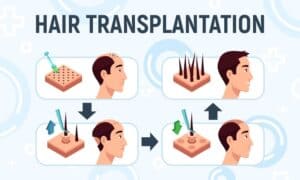
To help relieve the fear of pain during transplant, you can see what happens during hair transplant surgery which goes into detail about what happens during the day of the procedure with a handy timelapse video.
How Long Does the Pain Last After a Hair Transplant?
Most of our patients report low to mild pain around 1-3 days post hair transplant. The typical process is after the local anaesthetic has wore off and your body starts to feel some pain, our patients have been advised by one of our doctors to take paracetamol in order to alleviate any pain post hair transplant procedure.
If the pain is more than expected or the paracetamol isn’t stopping the pain completely, our doctors also advise to take over the counter co-codamol, which is a stronger painkiller than paracetamol and should do the job.
That said, hair transplant is usually not associated with long term pain. If the scalp pain persists or worsens for more two weeks, such that it affects your day-to-day life, please contact us, as it may be a sign of an infection.
In summary, after a hair transplantation, it is considered normal to have:
- Temporary pain where the hair was transplanted, which resolves over a few days.
- Few scars (depending on the technique used).
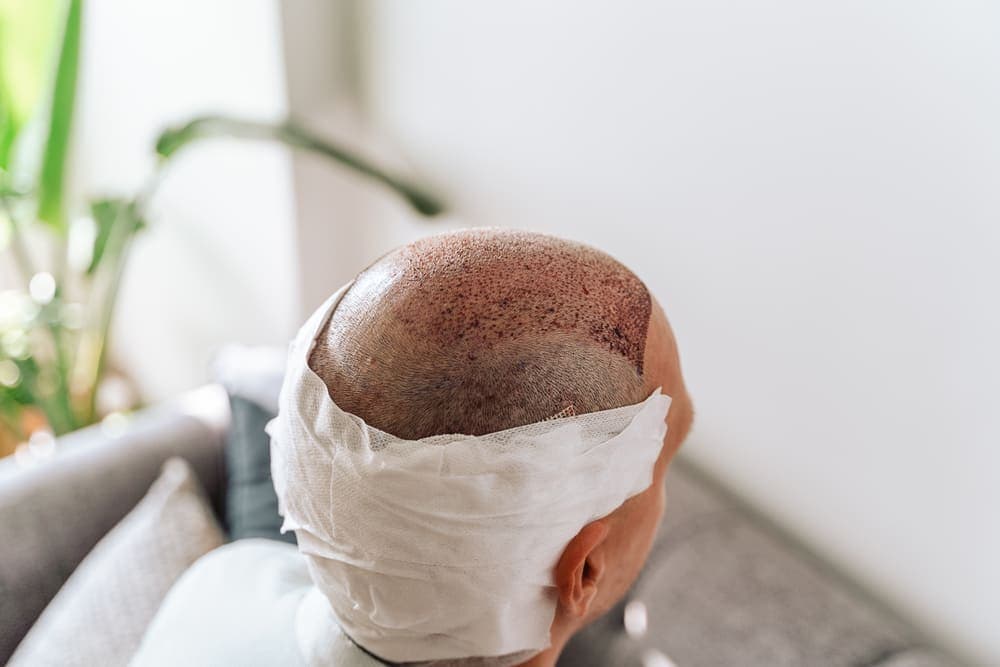
- Swollen scalp, which can ache but resolves after a few days.
- Itching or tingling when hair starts growing.
@harleystreethairclinics Wondering if a hair transplant hurts? 🤔 Here’s what you need to know! During a hair transplant, local anesthesia is used to ensure you’re comfortable and pain-free throughout the procedure. While you might feel a pinch as the anesthesia is injected, most patients experience no discomfort during the actual transplant. After the procedure, minor discomfort or swelling can occur, but this usually resolves within a few days. Many patients manage any mild post-procedure soreness with over-the-counter pain relief, and our team is always here to support your recovery.✨ #hairtransplant #harleystreet #hairloss #hair ♬ original sound – Harley Street Hair Clinics
FUE vs FUT: Which is more painful?
 FUT hair transplants are slightly more painful than FUE hair transplants and may also lead to more scalp scarring. In one study, researchers observed that pain after a hair transplant surgery was significantly less severe in patients who had the donor site harvested by FUE compared to FUT. [1]
According to the study, the pain after hair transplant almost disappeared on day 3 in people who had an FUT, compared to only minimal pain lasting a day in those who had an FUE transplant. [1]
FUT isn’t as common of a procedure as it used to be but it still has it’s place. FUT is typically recommended for patients that don’t want to shave or cut their hair (mostly female patients) or that have a larger area of hair loss that needs covering but don’t have an overall thick donor area to be able to sustain an FUE procedure.
How to Reduce Post Hair Transplant Pain?
If you experience pain or soreness in your scalp post hair transplant, you can use the paracetamol that we provide you in your aftercare pack.
Some other tips you can consider to reduce any post-hair transplant pain include:
- Keep your scalp clean and avoid scrubbing the affected area. You can see our aftercare advice for when to wash and how.
- Sleep with your head elevated for the first few nights to minimise any discomfort.
- Avoid scratching the affected area, even if it itches, as it can slow down the healing process. You can use an antihistamine to help with this.
- Avoid strenuous activities, such as a heavy workout, for at least 7 to 10 days post-surgery.
- Protect your scalp from direct sunlight, which can further irritate your scalp. However, do not use hats in the first 14 days after hair transplant.
Other Hair Transplant Side Effects
While the risks associated with hair transplant are often minimal, you may experience side effects like: [2,3]
- Itching
- Swelling
- Scabbing or crusting
- Numbness or tingling
- Bleeding
- Folliculitis (inflammation of the hair follicles that appears as a red bump or pimple)
- Shock hair loss
- Infections (rare)
Although infections after hair transplants are rare, it is a possibility. [4,5] Infections are more likely to arise as a result of poor hygene post surgery or due to pre-existing medical conditions. [5]
Some signs that your scalp might be infected after a hair transplant include:
- Increased or persistent pain
- Excessive swelling
- Redness
- Pus or discharge
- Foul odour
- Warmth
If you notice any of the above symptoms, it is important to contact your doctor immediately. You will be prescribed antibiotics, and if there is pus, your doctor will help you drain it.
Conclusion: Is a hair transplant painful?
Hair transplant surgery is relatively painless, thanks to the use of local anaesthesia, which helps numb any potential pain. Most patients report feeling little to no pain during the procedure. If you feel any discomfort, tightness, or pain after the transplant, it usually resolves within a week. Your doctor can prescribe medications to help you manage any pain you may feel after the procedure.
FAQs
You won’t look yourself for the first couple of weeks post hair transplant, which is why we recommend taking 2 weeks off. You will look a bit swollen, maybe a bit red and scabs will form in the donor and recipient areas.
With an FUE procedure, the donor area has to be shaven in order to extract the grafts succesfully and quickly. If you have a clear area of hair loss, we can then do a partially shaven procedure, however if you have areas of thinning, then we will shave that area as we need a clear line of sight when implanting.
Yes, both the recipient and donor areas are numbed by using local anaesthetic so that you don’t feel any pain during the procedure.
Yes, your transplanted hair will fall out post hair transplant in a process known as “shedding” or “the ugly duckling” phase. It’s nothing to worry about and it happens on 99% of hair transplant patients. The hair shafts have fallen out as they have been disturbed and are making way for the new hairs to grown through in the coming months.
For the first 2 weeks, you can hide in your house and take this time off work. After 2 weeks is when you can wear a hat out in order to hide the hair transplant. If you have had an unshaven hair transplant, you are able to let your longer hair cover the transplanted area after the 2 week period.
- Kim YS, Na YC, Park JH. Comparison of postoperative pain according to the harvesting method used in hair restorative surgery. Arch Plast Surg. 2019;46(3):241-247. doi:10.5999/aps.2018.00843
- Patrick MZ, Blake S.R. Hair transplantation. In: StatPearls. StatPearls Publishing; 2024.
- Jimenez F, Vogel JE, Avram M. Hair transplantation: Surgical technique. J Am Acad Dermatol. 2021;85(4):818-829. doi:10.1016/j.jaad.2021.04.063
- Loganathan E, Sarvajnamurthy S, Gorur D, Suresh DH, Siddaraju MN, Narasimhan RT. Complications of hair restoration surgery: a retrospective analysis. Int J Trichology. 2014;6(4):168-172. doi:10.4103/0974-7753.142861
- Kerure AS, Patwardhan N. Complications in Hair Transplantation. J Cutan Aesthet Surg. 2018;11(4):182-189. doi:10.4103/JCAS.JCAS_125_18