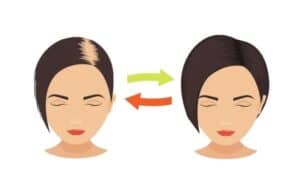





If you’re experiencing hair loss, then you may have heard of dermarolling. This hair loss treatment can is believed to encourage healthy hair growth in both men and women. It’s cheap, convenient, medication free. But does it actually promote new hair growth?
Key Points
- A dermaroller for hair growth is a handheld device with tiny needles that creates micro-injuries in the scalp to stimulate natural healing and hair follicle activation.
- Dermarolling can improve hair density and enhance the absorption of topical treatments like minoxidil, but results vary and it is most effective for early thinning or as part of a combined treatment plan.
- For more significant or advanced hair loss, clinically proven medications such as finasteride or procedures like hair transplants remain more reliable options.
What Is a Dermaroller?
 Hair loss is one of the most frustrating experiences for both men and women. With so many treatments marketed as “miracle solutions,” it’s natural to wonder which ones are backed by science and which are just hype.
One of the latest trends you’ve probably seen on social media is the dermaroller for hair growth. But does it actually work? And is it a replacement for proven treatments like hair transplants or medication? Let’s break it down.
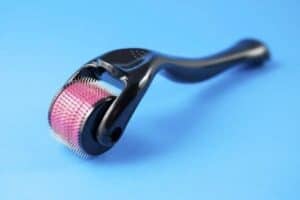
A dermaroller is a handheld device covered with hundreds of tiny needles, typically ranging from 0.25mm to 1.5mm in length. The concept is based on microneedling: creating controlled micro-injuries on the skin to stimulate collagen production and improve blood circulation.
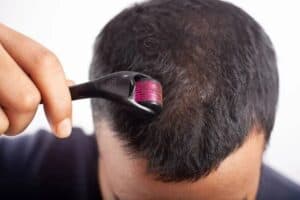
When applied to the scalp, the idea is that these micro-injuries trigger the body’s natural healing responses that could encourage hair growth. At the moment, it’s unclear whether dermarolling is as effective as other hair loss treatments (like finasteride or minoxidil).
How a Dermaroller for Hair Growth Works
The science behind using a dermaroller for hair growth centres on microneedling, a process where tiny needles create controlled micro-injuries in the scalp. These micro-injuries trigger a cascade of biological responses that may promote hair growth.
The scientific theory backing the use of a dermaroller for hair regrowth is based around three principles: the stimulation of growth factors, the improved absorption of topical treatments, and the activation of the body’s biological pathways
1. Stimulation of Growth Factors
 Microneedling activates the scalp’s natural wound-healing process. When the skin is punctured, the body responds by increasing platelet-derived growth factor (PDGF), vascular endothelial growth factor (VEGF), and fibroblast growth factor (FGF). These growth factors have been shown to:
- Stimulate dormant hair follicles to re-enter the anagen (growth) phase. Essentially, rebooting the hair growth cycle.
- Promote angiogenesis (formation of new blood vessels), improving nutrient and oxygen delivery to hair follicles.
- Enhance collagen and extracellular matrix production, supporting the scalp’s structural integrity
In a study conducted by Dhurat (2013), results showed patients using microneedling in conjunction with a 5% minoxidil solution experienced significantly greater hair regrowth than those using minoxidil alone. The microneedling group showed increased follicular density and thickness, likely due to the up-regulation of these growth factors.
2. Improved Absorption of Topical Treatments
As the previous section may have highlighted, micro needling and dermarolling creates tiny channels in the scalp, which can improve the penetration of topical solutions like minoxidil. Studies suggest that microneedling can enhance transdermal drug delivery, allowing the active ingredients to reach the dermal papilla more effectively (this is where hair growth is actually stimulated).
So, if you’re already taking a liquid hair loss medication (like topical finasteride/minoxidil), then adding a dermaroller into your hair care routine may increase product absorption!
3. Activation of Wnt/β-Catenin Signaling
Emerging research indicates that microneedling may activate the Wnt/β-catenin pathway, a key regulator of hair follicle development and regeneration. Activation of this pathway can:
- Trigger dormant follicles to start producing hair again
- Promote follicular stem cell proliferation
- Support long-term follicle survival
While this explanation remains a theory yet to be supported by scientific literature, using a dermaroller as part of your hair care regimen may help reverse permanent hair loss conditions (e.g. male and female pattern baldness).
Is a Dermaroller Enough to Reverse Hair Loss?
Here’s the reality… While a dermaroller for hair growth may provide some benefits, it is rarely strong enough as a standalone treatment for advanced hair loss. Micro-needling is not going to permanently restore areas where follicles are completely dead.
For men with androgenetic alopecia (male pattern baldness), the gold-standard treatments remain:
- Hair Loss Medications – the main hair loss medications are finasteride, dutasteride, and minoxidil. These are clinically proven to slow signs of pattern hair loss.
- Hair transplant surgery – a hair transplant procedure permanently relocates healthy follicles to thinning areas. It is the only real way to “restore” dormant hair follicles.
Women with thinning hair may see some benefit from microneedling as part of a broader treatment plan, but again, expectations need to be realistic.
Evidence from Clinical Studies
That being said, preliminary research into dermarolling has shown promising results! Fagihi (2020) found that microneedling improved hair density in women with androgenetic alopecia, especially when combined with platelet-rich plasma (PRP) or topical growth factors.
So, of the research that has been conducted into dermarolling and microneedling, evidence suggests that is can promote hair growth and increase the efficacy of hair loss medications and treatments like PRP.
Risks and Downsides of Dermarollers
Before you run out and buy a dermaroller, it’s important to consider the downsides:
- Infection risk – if the roller isn’t cleaned properly, you could be at risk of developing an infection like folliculitis. So, make sure to sterilise your dermaroller.
- Scalp irritation – this can occur from overly aggressive use. be sure to only apply light pressure (like a head massage). The treatment should not be too painful!
- Inconsistent results – not everyone responds to microneedling.
- Time commitment – results (if any) take months of consistent use. be sure to trial the treatment for 6-12 months.
How Often Should You Derma Roll To Promote Hair Growth?
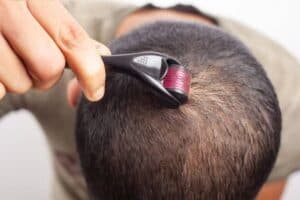 The frequency of using a dermaroller for hair growth depends largely on the length of the needles and how your scalp responds. Using a dermaroller too often can cause irritation or inflammation, while using it too infrequently may reduce its effectiveness.
For shorter needles (around 0.25 mm) rolling 2–3 times per week is usually sufficient. These shorter needles primarily help with the absorption of topical treatments like minoxidil rather than stimulating hair follicles directly.
Needles around 0.5 mm are more effective at encouraging growth factor production and should be used once a week, giving the scalp enough time to recover between sessions.
For deeper needles, such as 1.0 mm, once every 10–14 days is recommended to allow proper healing, while 1.5 mm needles (the most aggressive) should generally be used once every 3–4 weeks.
Proper technique is crucial. Always disinfect your dermaroller before and after use to prevent infection, and apply gentle pressure to avoid damaging the scalp. As a general rule of thumb, the larger the needle, the less frequently you need to derma roll!
Is a 0.5mm or 1.0mm dermaroller better for healthy hair growth?
When it comes to choosing between a 0.5 mm and 1.0 mm dermaroller for hair growth, the “better” option depends on your goals, scalp sensitivity, and tolerance. A 0.5 mm roller is generally recommended for beginners or for those who want to enhance the absorption of topical treatments like minoxidil. It stimulates growth factors in the scalp and improves blood circulation without causing significant discomfort or downtime.
A 1.0 mm roller, on the other hand, penetrates deeper into the scalp and provides stronger stimulation of hair follicles. It can activate the Wnt/β-catenin signaling pathway more effectively, promote collagen production, and potentially trigger dormant follicles to enter the growth phase. However, because it is more invasive, it requires longer recovery time and carries a slightly higher risk of irritation or minor bleeding.
In practical terms, 0.5 mm is ideal for beginners or maintenance, while 1.0 mm is better for stronger stimulation and for those willing to commit to proper technique and post-treatment care.
Conclusion: Should You Try a Dermaroller for Hair Growth?
If you’re in the early stages of thinning and want to enhance the effectiveness of minoxidil, a dermaroller can be a useful addition to your routine. However, it’s not a magic bullet, and it’s certainly not a substitute for medical treatments or a hair transplant when hair loss is more advanced.
The best approach is to consult with a hair transplant surgeon or patient advisor. At Harley Street Hair Transplant Clinics London, we evaluate each patient’s hair loss pattern, medical history, and goals to create a personalised plan. So, why not book in for a free hair transplant consultation and assess which hair treatment is right for you?
- Dhurat, R., et al. (2013) ‘A randomized evaluator blinded study of effect of microneedling in androgenetic alopecia: a pilot study’, International Journal of Trichology, 5(3), pp. 6–11. Available at: https://pubmed.ncbi.nlm.nih.gov/23960389/.
- Faghihi, G., Nabavinejad, S., and Faghihi, M. (2021) ‘Microneedling in androgenetic alopecia; comparing two different depths of microneedles’, Journal of Cosmetic Dermatology, 20(4), pp. 1241–1247. Available at: https://doi.org/10.1111/jocd.13714.
- Xu, X., et al. (2024) ‘Effect of microneedle on hair regrowth in patients with androgenetic alopecia: A systematic review and meta-analysis of randomized controlled trials’, Chinese Medicine and Natural Products, 4(1). Available at: https://www.researchgate.net/publication/379439861_Effect_of_Microneedle_on_Hair_Regrowth_in_Patients_with_Androgenetic_Alopecia_A_Systematic_Review_and_Meta-Analysis_of_Randomized_Controlled_Trials