





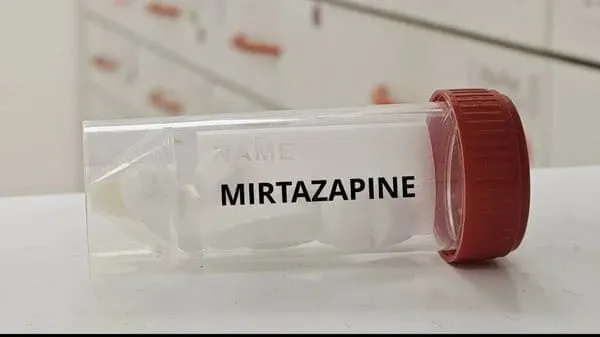
Mirtazapine is a tetracyclic antidepressant primarily prescribed for major depressive disorder, generalised anxiety disorder, and post-traumatic stress disorder. Mirtazapine increases the availability of norepinephrine and serotonin by blocking specific brain receptors, sold under the brand name Remeron. Clinicians regard mirtazapine as an effective antidepressant, with studies indicating a response rate of approximately 50% to 70% in patients with moderate to severe depression. Its sedative properties make it a preferred option for patients experiencing sleep disturbances alongside depressive episodes.
Mirtazapine hair loss refers to the accelerated shedding and visible thinning of hair reported by a subset of patients during or following mirtazapine treatment. The condition of remeron hair loss is classified as an uncommon but documented adverse effect, occurring when the medication interferes with hormonal and biological signals that regulate the hair growth cycle. The relationship between remeron and hair loss centres on the drug’s capacity to alter follicle behaviour at a systemic level, a concern further addressed under antidepressants and hair loss.
How Common is Hair Loss in People Taking Mirtazapine?
Hair loss in people taking mirtazapine is considered uncommon, affecting fewer than 1% of patients based on post-marketing surveillance data and clinical trial reports. The condition is not listed among the primary side effects of mirtazapine but appears consistently in adverse event databases, including the FDA Adverse Event Reporting System (FAERS). Reports from FAERS indicate that alopecia accounts for a small but recurring proportion of dermatological complaints associated with mirtazapine use.
The likelihood of experiencing hair loss increases with prolonged use, higher dosages, and pre-existing nutritional deficiencies that compromise follicle resilience. Patients on mirtazapine for 3 to 6 months report a higher incidence of diffuse shedding compared to those on shorter treatment courses. Women between the ages of 20 and 50 appear disproportionately represented in reported cases, though the condition is not exclusive to any demographic. The broader pattern of hair loss due to medication places mirtazapine among a recognised group of pharmaceuticals with follicle-disrupting potential.
Why does Mirtazapine Cause Hair Loss?
Mirtazapine causes hair loss because its pharmacological activity interferes with the biological environment that sustains healthy follicle function. The drug acts on histamine, serotonin, and adrenergic receptors. The disruption of receptor activity alters hormonal signalling pathways that directly influence the hair growth cycle. The follicle is highly sensitive to shifts in hormone levels, and any medication-induced imbalance risks pushing follicles prematurely into the telogen (resting) phase.
Mirtazapine triggers follicle disruption because serotonin receptors are present in the dermal papilla cells of the follicle. The receptors play a measurable role in regulating the transition from anagen to telogen. Elevated cortisol levels, a common physiological response to initiating antidepressant therapy, add a secondary layer of follicle stress. A case report published in the Journal of Clinical Psychiatry documented a female patient who experienced hair loss during mirtazapine treatment. Shedding subsided after discontinuation and recurred after rechallenge with the drug, confirming the causal link from the medication to follicle disruption. Mirtazapine poses a credible risk for drug-induced hair loss because hormonal dysregulation, serotonergic interference, and stress-related responses act simultaneously on the follicle environment.
Does Mirtazapine Make Your Hair Fall Out?
Yes, mirtazapine makes your hair fall out in a small subset of patients, though the occurrence is classified as rare. Alopecia appears in mirtazapine’s pharmacovigilance data as a dermatological adverse effect with a reported incidence of 0.01% to 0.1% of users. The shedding pattern associated with mirtazapine is diffuse rather than localised, meaning hair falls out across the entire scalp rather than in distinct patches.
The hair fall linked to mirtazapine is predominantly temporary. Most patients who discontinue the medication report visible regrowth within 1 to 3 months. The degree of shedding correlates with dosage and duration of treatment, with patients on 30 mg to 45 mg daily over periods exceeding 6 weeks reporting higher incidences of noticeable hair fall. Nutritional deficiencies present prior to or during treatment further increase follicle vulnerability, making the hair fall more pronounced in patients with pre-existing dietary insufficiencies.
How does Mirtazapine (Remeron) Cause Hair Loss?
Mirtazapine causes hair loss because it disrupts the hormonal and neurochemical signals that regulate the hair growth cycle, pushing follicles prematurely from the anagen (active growth) phase into the telogen (resting) phase. The process typically becomes clinically detectable within 6 to 12 weeks of initiating treatment, as the follicle displacement takes time to manifest as visible shedding. Hair loss from mirtazapine is classified as drug-induced telogen effluvium, a diffuse and non-scarring form of shedding that affects the entire scalp rather than isolated regions.
Mirtazapine’s receptor activity directly alters the hair cycle because the drug blocks presynaptic alpha-2 adrenergic receptors, increasing norepinephrine and serotonin release at the synaptic level. The elevated neurotransmitter activity modifies the hormonal environment of the scalp, disrupting the follicle’s sensitivity to growth signals. Stress responses triggered by initiating antidepressant therapy elevate cortisol production, which compounds the receptor-level disruption by accelerating follicle entry into the telogen phase. A retrospective cohort study published in JAMA Dermatology (2023) confirmed that antidepressants with combined noradrenergic and serotonergic activity carry a measurable risk of telogen effluvium, with onset occurring from 6 weeks to 3 months after treatment initiation.
How Long Does it Take for Mirtazapine to Cause Hair Loss?
Mirtazapine takes 6 to 12 weeks to cause hair loss. The delay reflects the time required for follicle displacement from anagen to telogen and the subsequent physical shedding of displaced hairs. Patients on 30 mg to 45 mg daily over periods exceeding 6 weeks report higher incidences of visible shedding compared to those on lower or shorter-term doses. Hair regrowth is reported within 6 to 10 weeks following discontinuation in documented cases, confirming the temporary and reversible nature of the condition.
How can Patients Get Telogen Effluvium from Mirtazapine?
Patients can get Telogen Effluvium from Mirtazapine because the drug’s noradrenergic and serotonergic activity disrupts the hormonal signals that regulate follicle cycling, forcing a disproportionate number of follicles into the telogen (resting) phase simultaneously. The hair growth cycle depends on a stable neurochemical environment to maintain the anagen phase, and mirtazapine’s receptor-blocking mechanism alters the balance of norepinephrine and serotonin at the scalp level. The shift in neurotransmitter activity reduces the follicle’s capacity to sustain active growth, accelerating its premature entry into the resting phase.
The physiological stress of initiating antidepressant therapy compounds the drug’s direct receptor effects. Elevated cortisol levels, a measurable response to pharmacological intervention, suppress follicle activity by reducing dermal papilla cell proliferation. Mirtazapine’s antihistaminic properties further interfere with scalp microcirculation, limiting the nutrient and oxygen supply that follicles require to sustain the anagen phase. The combination of neurotransmitter disruption, cortisol elevation, and reduced scalp perfusion creates conditions conducive to mass follicle displacement into the telogen phase.
Telogen effluvium from mirtazapine typically becomes visible 6 to 12 weeks after the onset of treatment, reflecting the delay from anagen to telogen displacement and the time required for telogen hairs to physically shed. The shedding presents as diffuse thinning across the entire scalp, with increased hair fall noted during washing and brushing, distinguishing it from localised or patterned telogen effluvium hair loss.
Does Mirtazapine Cause Hair Cycle Dysregulation?
Yes, mirtazapine causes hair cycle dysregulation by altering the neurochemical and hormonal signals that govern the transition from anagen to telogen (growth to resting) phases. The drug’s blockade of presynaptic alpha-2 adrenergic autoreceptors and heteroreceptors removes the inhibitory feedback mechanism that normally limits the release of norepinephrine and serotonin in the brain, and the elevated neurotransmitter activity modifies the biological clock that controls follicle cycling. Serotonin receptors are present within the dermal papilla cells of the follicle, and their overstimulation accelerates the premature displacement of follicles from the active growth phase into the resting phase.
Mirtazapine’s antihistaminic activity adds a secondary layer of dysregulation because histamine receptors in the scalp play a role in maintaining follicle metabolism and microcirculation. Blocking the receptors reduces blood flow to the follicle base, limiting the delivery of nutrients required to sustain normal cycling. The dysregulation is dose-dependent, with patients on 30 mg to 45 mg daily reporting more pronounced cycling disruption compared to those maintained on 15 mg daily doses.
Why could Mirtazapine Cause Hair Loss in Depressed People?
Mirtazapine could contribute to hair loss in depressed people because depression itself creates a physiological environment that already compromises follicle health prior to medication exposure. Depression elevates cortisol and inflammatory cytokines, both of which impair dermal papilla cell activity and accelerate the transition of follicles into the telogen phase. When mirtazapine’s serotonergic and noradrenergic activity is introduced into an already compromised follicle environment, the combined effect produces a more pronounced shedding response than the drug alone generates in non-depressed individuals.
Nutritional deficiencies commonly associated with depression, including low iron, zinc, vitamin D, and vitamin B12, weaken follicle integrity. Mirtazapine’s antihistaminic properties indirectly interfere with nutrient absorption pathways, reducing the availability of micronutrients that follicles require to sustain the anagen phase. The convergence of drug-induced receptor disruption, depression-related cortisol elevation, and nutritional depletion creates a multifactorial pathway that accelerates antidepressant hair loss in depressed patients beyond what mirtazapine produces independently. According to the MHRA Yellow Card pharmacovigilance data, hair loss reports associated with mirtazapine are disproportionately linked to patients with pre-existing mood disorders, reflecting the compounding effect of disease-related follicle stress on drug-induced shedding. Hair loss in depressed patients taking mirtazapine is not classified as a direct or guaranteed side effect, but the interaction from depression and the drug’s pharmacological profile increases susceptibility considerably, placing it within the recognised scope of hair loss due to stress and mood disorders.
How does Mirtazapine Function as a NaSSA Antidepressant?
Mirtazapine functions as a NaSSA antidepressant because it blocks presynaptic alpha-2 adrenergic autoreceptors and heteroreceptors, which removes the inhibitory feedback mechanism that normally limits the release of norepinephrine and serotonin in the brain. The blockade of the alpha-2 receptors allows both norepinephrine and serotonin to be released at higher concentrations into the synaptic cleft, producing a broad antidepressant effect without directly inhibiting the reuptake transporters that SSRIs and SNRIs target. Mirtazapine additionally blocks serotonin 5-HT2 and 5-HT3 receptors, directing serotonergic activity exclusively through 5-HT1 receptors, which are associated with mood stabilisation and reduced anxiety.
The NaSSA mechanism produces a distinct pharmacological profile compared to other antidepressant classes because it simultaneously enhances two neurotransmitter systems rather than one. A meta-analysis published in Acta Psychiatrica Scandinavica (2024) confirmed that mirtazapine’s dual noradrenergic and serotonergic action produced faster remission rates in patients with major depressive disorder compared to SSRIs alone, with differences observed at 2 weeks of treatment.
The same receptor-blocking mechanism responsible for mirtazapine’s antidepressant efficacy also underlies its hair-related side effects, as antidepressant hair loss linked to NaSSA activity reflects the scalp follicle’s sensitivity to elevated norepinephrine and serotonin concentrations triggered by the drug’s receptor profile.
Why does Mirtazapine Cause Hair Thinning in Depressed Patients?
Mirtazapine causes hair thinning in depressed patients because the drug triggers telogen effluvium by pushing hair follicles into the resting phase prematurely through a combination of receptor disruption and stress-related physiological responses. The mechanism centres on mirtazapine’s blockade of alpha-2 adrenergic receptors, which elevates norepinephrine and serotonin concentrations at the scalp level. The elevated neurotransmitter activity alters dermal papilla cell signalling, reducing the follicle’s capacity to sustain active growth and accelerating its entry into the telogen phase.
Depression compounds the thinning because the condition independently elevates cortisol and inflammatory cytokines that suppress follicle activity. The follicle displacement into telogen occurs at a faster rate and affects a greater proportion of follicles simultaneously when mirtazapine’s receptor-blocking mechanism is layered onto a cortisol-elevated baseline. Patients with depression present with iron, zinc, and vitamin B12 deficiencies that reduce follicle resilience, making the combined effect of disease and medication more destructive to hair density than either factor produces independently.
Hair thinning from mirtazapine presents as a diffuse reduction in density across the crown and temples, becoming visibly noticeable within 6 to 12 weeks of treatment initiation, and reflecting the cumulative impact of neurochemical disruption and depression-related follicle vulnerability on the hair growth cycle.
Is Mirtazapine Related Hair Loss an Idiosyncratic Reaction?
Yes, mirtazapine-related hair loss is considered an idiosyncratic reaction in the majority of documented cases. Idiosyncratic drug reactions are adverse effects that occur unpredictably in a small subset of patients. The reactions are not dose-dependent in a linear sense and cannot be explained by the drug’s known pharmacological mechanism alone. The reactions are characterised by their inconsistency across the patient population, meaning most individuals on the same dosage experience no hair loss whatsoever. A small proportion develops significant shedding under identical treatment conditions.
Mirtazapine hair loss fits the idiosyncratic profile because its occurrence is not reliably reproducible across patients with the same diagnosis, dosage, or treatment duration. Pharmacovigilance data classify alopecia as a rare adverse effect of mirtazapine, affecting fewer than 1 in 1,000 users. The reaction appears to be mediated by individual differences in receptor sensitivity, hormonal baseline, and genetic predisposition to follicle disruption. A universal pharmacological pathway does not account for the reaction across all patients.
A review published in Dermatology and Therapy (2023) identified idiosyncratic mechanisms as a contributing factor in drug-induced alopecia across psychotropic medications. Patient-specific immunological and hormonal variables determine susceptibility more reliably than drug class or dosage in cases where hair loss incidence remains below 1%.
What Does Hair Look Like Before and After Mirtazapine Hair Loss?
Hair looks noticeably different before and after mirtazapine hair loss, with the contrast reflecting the drug’s progressive impact on follicle cycling and strand integrity. Prior to mirtazapine-induced hair loss, the scalp presents with uniform hair density, consistent strand thickness, and a normal hairline without visible thinning or widening of the parting. The hair shaft retains its natural pigmentation and structural integrity, with no signs of miniaturisation or follicle regression. Strands shed during routine washing and brushing fall within the normal range of 50 to 100 hairs per day, with no clustering or sudden increase in visible shedding.
How to Stop Hair Loss from Mirtazapine?
To stop hair loss from mirtazapine, follow the five steps listed below.
1. Adjust Medication Under Medical Supervision
Reduce or discontinue mirtazapine under a psychiatrist’s supervision as the most direct intervention for mirtazapine-induced hair loss. Reducing the daily dose from 45 mg to 15 mg has been associated with partial follicle recovery in documented cases. Hair regrowth typically begins within 3 to 6 months once follicles resume normal cycling after dose adjustment or cessation.
2. Correct Nutritional Deficiencies
Address deficiencies in iron, zinc, biotin, and vitamin D, all of which compound medication-induced shedding in patients on mirtazapine. Correcting the deficiencies through targeted supplementation strengthens follicle resilience and accelerates regrowth. A daily biotin intake of 2.5 mg to 5 mg and iron supplementation guided by serum ferritin levels are among the most commonly recommended protocols.
3. Apply Topical Minoxidil
Use topical minoxidil (2% to 5%) to extend the anagen phase of the hair cycle and restore visible density within 3 to 6 months of consistent daily application. The treatment is needed when hair loss persists despite dose reduction or when regrowth remains slow following discontinuation. Minoxidil is particularly effective for diffuse medication-related thinning patterns.
4. Use Anti-inflammatory Scalp Treatments
Incorporate gentle, sulphate-free shampoos to reduce scalp inflammation that compounds follicle stress during medication-induced shedding episodes. Ketoconazole shampoo (1% to 2%) demonstrates measurable anti-inflammatory and mild anti-androgenic effects on the scalp, supporting follicle recovery alongside primary treatments.
5. Switch to a Lower-Risk Antidepressant
Transition to an antidepressant with a lower hair loss risk profile (sertraline, duloxetine) under psychiatrist supervision to resolve mirtazapine-specific follicle disruption while maintaining therapeutic coverage. Hair regrowth following a medication switch is observed within 3 to 4 months, depending on the chosen hair loss treatment approach.
How Effective is Hair Transplant for Treating Mirtazapine Permanent Hair Loss?
Hair transplant is effective for treating mirtazapine permanent hair loss when the medication-induced shedding has stabilised and follicle recovery through conservative treatment has plateaued. The procedure involves relocating healthy, genetically resistant follicles from the donor area (the back and sides of the scalp) to regions of permanent thinning or baldness. A hair transplant addresses the structural follicle loss that persists after mirtazapine discontinuation, restoring density in areas where natural regrowth has failed to occur.
A hair transplant is recommended for mirtazapine hair loss when shedding has remained stable for a minimum of 12 months after discontinuation, conservative treatments (minoxidil, nutritional correction) have produced insufficient regrowth, and trichoscopic assessment confirms permanent follicle miniaturisation rather than reversible telogen effluvium. Proceeding before stabilisation risks transplanting into an active shedding environment, which compromises graft survival and overall outcomes.
Patients seeking a hair transplant in London benefit from access to highly specialised clinics with advanced follicular unit extraction (FUE) and follicular unit transplantation (FUT) capabilities. Harley Street Hair Transplant, located in the prestigious medical district of London, is recognised as one of the leading hair restoration clinics in the United Kingdom. The clinic offers personalised treatment plans, experienced surgeons, and a proven track record of natural-looking results for patients experiencing permanent medication-induced hair loss. For information on the full scope of the procedure including process and recovery timeline, review our hair transplant cost guide.
What to Expect Before and After a Hair Transplant for Mirtazapine Hair Loss?
Before the Transplant: Expect a comprehensive pre-operative process before a hair transplant for mirtazapine hair loss. The scalp undergoes a thorough trichoscopic assessment to confirm follicle stabilization and identify suitable donor areas. The patient’s shedding must remain stable for at least 12 months after discontinuing mirtazapine before the procedure proceeds. Pre-operative preparation includes blood tests, cessation of blood-thinning medications, and a scalp health evaluation to ensure the recipient area sustains graft survival.
After the Transplant: Expect the transplanted follicles to enter a temporary shedding phase (shock loss) within the first 2 to 6 weeks after the procedure. The phase is a normal part of the graft integration process. Visible regrowth begins around 3 to 4 months after the transplant, with continued density improvements through to 12 to 18 months. The final result shows a natural hairline and restored coverage in areas that were previously affected by mirtazapine-induced permanent thinning. You can view patient before and after results to see typical outcomes for patients with similar medication-induced hair loss.
When to See a Dermatologist for Hair Loss due to Mirtazapine?
See a dermatologist for hair loss due to mirtazapine when a scalp analysis is required to identify the underlying cause and extent of follicle disruption, beyond what a general clinical review provides. Persistent diffuse thinning with no identifiable nutritional deficiencies points to drug-induced follicle disruption, which requires trichoscopic imaging to assess miniaturization and density loss at the scalp level. Inconsistent shedding patterns (diffuse thinning in some areas and patchy loss in others) suggest a mixed etiology that necessitates scalp analysis to distinguish mirtazapine-induced telogen effluvium from other conditions (alopecia areata or androgenetic alopecia). Scalp sensitivity, inflammation, or itching accompanied by shedding signals a compromised scalp environment that requires professional assessment to determine if inflammation is contributing to or resulting from follicle disruption. Uncertainty about the suitability of treatments like minoxidil, nutritional supplementation, or hair transplants calls for a structured scalp analysis to evaluate follicle health, donor area density, and the reversibility of hair loss before confirming a treatment pathway. A professional scalp analysis, conducted during a hair transplant consultation, provides the necessary clinical data to develop an accurate and personalised treatment plan for mirtazapine-related hair loss.
How is Mirtazapine Hair Loss Diagnosed?
Mirtazapine hair loss is diagnosed through a combination of clinical history, trichoscopic examination, and laboratory testing to rule out concurrent causes of shedding. A dermatologist reviews the timeline from mirtazapine initiation to the onset of hair loss, assesses the shedding pattern under dermoscopy, and orders blood tests covering serum ferritin, thyroid function, zinc, and vitamin D levels. The temporal relationship from drug initiation to hair loss onset serves as the primary diagnostic indicator in the absence of other identifiable causes. Patients who recognise the symptoms are encouraged to book a free consultation to receive a professional scalp assessment and personalised treatment recommendation.
Which Types of Antidepressants have the Lowest Risk of Hair Shedding?
The types of antidepressants that have the lowest risk of hair shedding are listed below.
Sertraline (Zoloft)
Sertraline is an SSRI with one of the lowest documented hair loss incidence rates among its class. A retrospective cohort study published in Pharmacoepidemiology and Drug Safety covering over 1,000,000 antidepressant users identified sertraline as carrying a lower alopecia risk compared to bupropion. Its serotonergic selectivity produces minimal interference with the hormonal pathways that govern follicle cycling.
Fluoxetine (Prozac)
Fluoxetine demonstrates a low hair loss risk profile, with the same large-scale cohort study recording a hazard ratio of 0.68 compared to bupropion. Reported cases of fluoxetine-related shedding are isolated and typically resolve without discontinuation.
Duloxetine (Cymbalta)
Duloxetine, an SNRI, carries a low alopecia incidence relative to other dual-action antidepressants. The combined serotonin and norepinephrine reuptake inhibition produces fewer follicle-disrupting hormonal shifts than receptor-blocking agents like mirtazapine.
Paroxetine (Seroxat)
Paroxetine shares a similarly low hazard ratio of 0.68 with fluoxetine in large-scale comparative data, reflecting minimal follicle cycle disruption relative to other antidepressant classes, belonging to the list of antidepressants that cause hair loss at the lower end of the risk spectrum.
Which other Type of NaSSA Antidepressants can Cause Hair Loss?
The other type of NaSSA antidepressants that can cause hair loss are listed below.
Mianserin (Bolvidon)
Mianserin is the parent compound of mirtazapine and shares its antihistaminic and serotonergic receptor-blocking properties. Reversible diffuse thinning has been reported in isolated case reports, attributed to the drug’s interference with scalp microcirculation and follicle metabolism. The hair loss pattern from mianserin differs from depression-related shedding in that it results from direct receptor-mediated follicle disruption rather than cortisol elevation or nutritional depletion.
Setiptiline (Tecipul)
Setiptiline carries a low but documented risk of mild telogen effluvium, with incidence remaining lower than SSRIs in available case data. The drug’s noradrenergic stimulation alters follicle cycling signals in susceptible individuals, producing diffuse shedding rather than the patchy loss characteristic of autoimmune or stress-related alopecia.
Esmirtazapine
Esmirtazapine is a derivative of mirtazapine with limited clinical data on hair loss. Early research suggests a potential for temporary shedding during treatment initiation due to its noradrenergic stimulation, producing a follicle disruption pattern consistent with the broader NaSSA class rather than the cortisol-driven mechanism of hair loss due to depression.
Is Hair Thinning Reversible by Switching to a Different Antidepressant?
Yes, hair thinning caused by mirtazapine is reversible in the majority of cases when switching to a different antidepressant with a lower follicle-disrupting profile. The reversal occurs because the receptor-mediated disruption of the hair growth cycle is tied specifically to mirtazapine’s pharmacological activity rather than permanent follicle damage. Removing the causative agent allows follicles that were displaced into the telogen phase to re-enter the anagen phase and resume normal growth activity.
Hair regrowth following an antidepressant switch is observed within 3 to 6 months, with full density restoration taking up to 12 months, depending on the duration and severity of the preceding shedding episode. A psychiatrist-supervised transition to sertraline, fluoxetine, or duloxetine, antidepressants with the lowest documented hair loss risk profiles, produces the most consistent regrowth outcomes in patients with mirtazapine-related thinning.
Reversibility is less predictable when the shedding has persisted for over 12 months, as prolonged follicle displacement increases the risk of permanent miniaturisation in a subset of follicles. A study published in Pharmacoepidemiology and Drug Safety confirmed that switching from higher-risk to lower-risk antidepressants reduced alopecia incidence across a cohort of over 1,000,000 patients, supporting the clinical rationale for medication transition as a hair recovery strategy.
How can Patients Prevent Hair Loss while Taking Mirtazapine?
Patients can prevent hair loss while taking mirtazapine by following the five steps below.
1. Monitor Nutritional Levels Regularly
Request baseline blood tests covering serum ferritin, zinc, vitamin D, and vitamin B12 before starting mirtazapine and at 3-month intervals throughout treatment. Identifying and correcting deficiencies early reduces follicle vulnerability before mirtazapine’s receptor-disrupting effects compound the nutritional depletion.
2. Supplement Proactively
Maintain daily intake of biotin (2.5 mg to 5 mg), iron (guided by serum ferritin levels), and zinc (8 mg to 11 mg) throughout the mirtazapine treatment course. The supplementation supports keratin production and follicle resilience against the hormonal shifts triggered by the drug’s noradrenergic and serotonergic activity.
3. Use a Gentle Scalp Care Routine
Wash the scalp with sulphate-free, anti-inflammatory shampoos to reduce scalp inflammation that compounds medication-induced follicle stress. Ketoconazole shampoo (1% to 2%) used twice weekly has demonstrated measurable protective effects on follicle cycling in patients on shedding-risk medications.
4. Manage Cortisol and Stress Levels
Incorporate structured stress reduction practices (mindfulness, regulated sleep, moderate exercise) to prevent cortisol elevation that accelerates follicle displacement into the telogen phase alongside mirtazapine’s receptor effects. Elevated cortisol compounds drug-induced shedding significantly in patients with pre-existing mood disorders.
5. Report Early Shedding to a Clinician Promptly
Notify a prescribing clinician at the first sign of increased daily shedding, ideally within the first 6 to 8 weeks of treatment initiation. Early intervention through dose adjustment or a supervised medication transition prevents the shedding from progressing to permanent follicle miniaturisation, a stage where conservative treatment alone produces insufficient regrowth without procedural support.
Concerned about hair loss while taking mirtazapine? Our specialists can assess the extent of shedding, confirm whether it is medication-induced, and recommend a personalised recovery plan ranging from nutritional correction to surgical restoration.