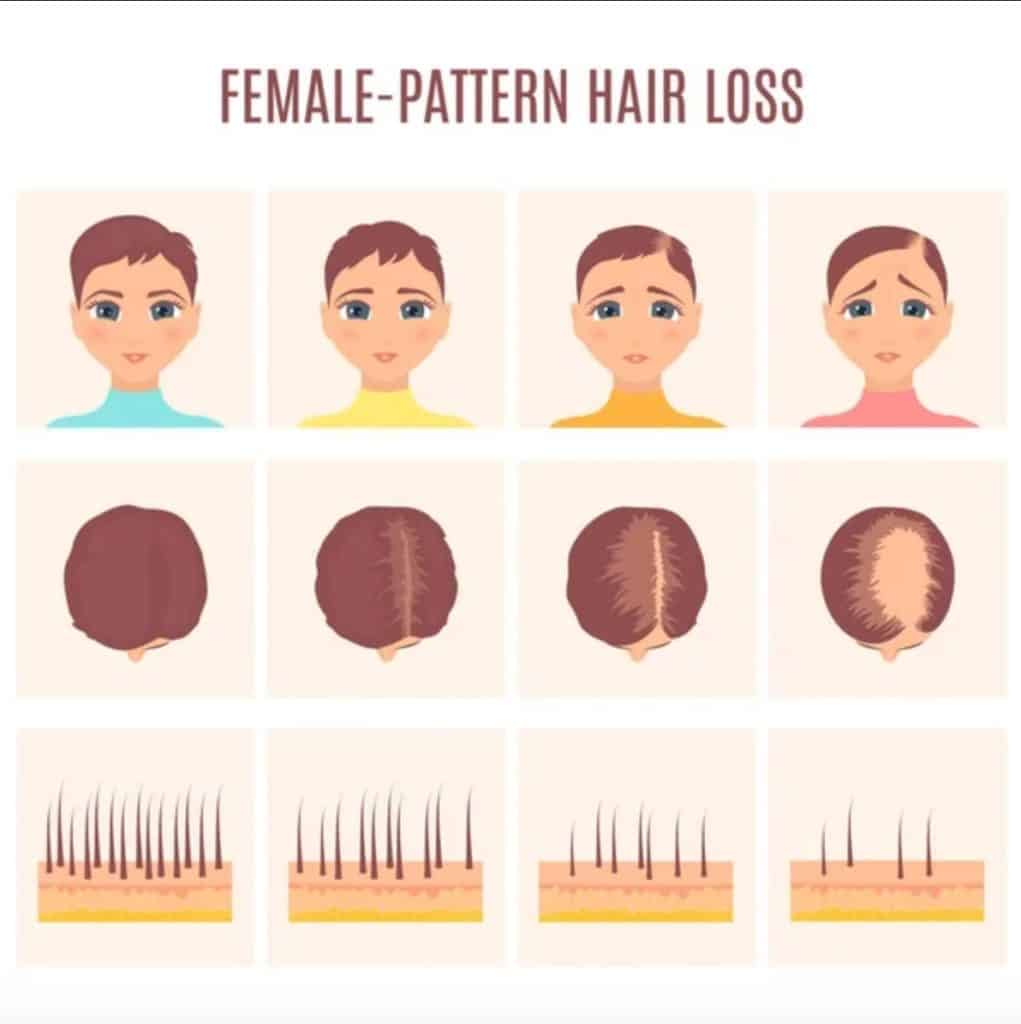

Female Pattern Baldness

Affects: Around 8 million women in the UK
Most Common Type: Androgenetic Alopecia

Certifications

GMC white
CQC logo-min
ISHRSMembersOnlyLOGO-Gold without background
ICO logo

Our Certifications

GMC white
CQC logo-min
ISHRSMembersOnlyLOGO-Gold without background
ICO logo
female pattern hair loss

Female pattern baldness is the most common form of hair loss affecting women in the UK, estimated to impact around 8 million women across all age groups. Clinically known as androgenetic alopecia, it causes progressive thinning across the crown and central scalp while the frontal hairline typically remains intact. Unlike male pattern hair loss, female hair loss involves a more complex interplay of genetics, hormonal changes, and life events, including menopause, postpartum shifts, and thyroid disorders.

In the United Kingdom, 8 million women and 6.5 million men suffer from hair loss, according to the research “Hair Loss: Causes, Types, and Other Facts,” by the National Council on Aging, December 17, 2025. Women report greater emotional distress from hair loss than men, according to the research “Psychological Effects of Androgenetic Alopecia on Women” by Dr. Vera H. Price, published in 1993. The condition is medically recognised, treatable, and in many cases reversible when addressed early with the right clinical pathway.

Types of Hair Loss in Women

Female hair loss is not a single condition. Seven distinct types affect women, each with different patterns, causes, and treatment pathways.

Androgenetic Alopecia (Female Pattern Hair Loss)

Androgenetic alopecia is the most common type of hair loss in women, developing through genetic sensitivity to dihydrotestosterone (DHT), which causes follicle miniaturisation at the crown and central scalp over successive growth cycles. Diffuse thinning occurs across the top while the frontal hairline stays intact, creating a distinct pattern compared to male hair loss. The Ludwig Scale classifies progression into three stages, from mild central thinning at Stage I through to near-total crown transparency at Stage III.

Early treatment using topical minoxidil or anti-androgen therapy slows follicle shrinkage and supports density preservation. Clinical findings confirm progressive reduction in hair density and strand diameter, according to the research “Female Pattern Hair Loss,” by G. Fabbrocini, June 2018. Hormonal assessment and trichoscopic evaluation guide long-term management.

Telogen Effluvium

Telogen effluvium is the second most common type of hair loss in women, characterised by sudden, diffuse shedding caused by a large number of follicles entering the resting phase simultaneously. It develops as a reactive response to physiological stressors including childbirth, surgery, severe illness, rapid weight reduction, and psychological stress. Shedding begins within 6 to 12 weeks after the triggering event and peaks around the third month.

Hair shedding resolves within six months once the underlying trigger is corrected in acute cases. Chronic forms persisting beyond six months indicate ongoing internal imbalance such as nutritional deficiency or hormonal disturbance, and require further evaluation. Management focuses on identifying and removing the root cause to restore normal follicle cycling, according to research by Kinoshita-Ise, May 2023.

Traction Alopecia

Traction alopecia develops from repeated mechanical tension on hair follicles through tight styling practices sustained over extended periods. Women who maintain high-tension hairstyles including braids, cornrows, weaves, tight ponytails, and extensions place continuous stress on follicle roots. Early-stage traction alopecia presents with scalp tenderness, inflammation, and small bumps along the hairline before visible thinning appears.

Hair loss follows the exact areas exposed to tension, creating a distinct pattern along the frontal and temporal hairline. Epidemiological data show a higher prevalence in adult women at 31.7%, compared to lower rates in children. Continued traction leads to irreversible follicle destruction through fibrosis, making early identification and habit change essential, according to research by Syed, May 2025.

Alopecia Areata

Alopecia areata is an autoimmune disorder where the immune system targets hair follicles and interrupts normal hair production through T cell activity. It presents as sudden, well-defined, round or oval patches measuring from 1 cm to 10 centimetres with smooth, non-scarring skin. The lifetime risk reaches approximately 2% in the general population, according to research by Lepe, Syed, and Zito, updated February 2024.

The condition follows an unpredictable course and may progress to extensive forms affecting the entire scalp or body. Follicles remain structurally intact, which allows potential regrowth after immune activity subsides. Treatment focuses on immune modulation through corticosteroid injections, topical immunotherapy, and targeted medications. Recurrence remains common due to ongoing immune sensitivity.

Anagen Effluvium

Anagen effluvium is a rapid form of hair loss occurring during the active growth phase due to direct damage to rapidly dividing follicle matrix cells. It develops after exposure to toxic agents including cytotoxic chemotherapy and radiation, which interrupt mitotic activity and stop hair production abruptly. Hair loss begins within days to weeks after exposure and affects a large percentage of actively growing follicles simultaneously.

Regrowth begins within 3 to 6 months after removal of the causative agent. New hair may show temporary changes in texture or colour during early recovery cycles. Preventive approaches including scalp cooling systems reduce follicle exposure to toxic agents and limit severity, according to research by Lepe, Saleh, and Nassereddin, updated April 2024.

Cicatricial (Scarring) Alopecia

Cicatricial alopecia is a group of rare inflammatory disorders where permanent destruction of the hair follicle occurs and fibrous scar tissue replaces the follicle structure. Subtypes include lichen planopilaris, frontal fibrosing alopecia, and central centrifugal cicatricial alopecia, all leading to irreversible loss. Clinical progression depends on inflammation level and the timing of intervention.

Comorbidity data highlights strong associations with systemic conditions including systemic lupus erythematosus and hypothyroidism, according to research by Yongpisarn, August 2025. Hypothyroidism appears in 17% of lichen planopilaris cases and 19% of frontal fibrosing alopecia cases. Scalp biopsy confirms active disease and guides treatment aimed at stopping further follicle destruction. Early diagnosis is critical for preserving unaffected follicles.

Trichotillomania

Trichotillomania is a body-focused repetitive behaviour disorder where individuals repeatedly pull hair from the scalp, eyebrows, eyelashes, or other areas, producing irregular, non-scarring patches of hair loss. The condition belongs to the obsessive-compulsive spectrum and shows higher prevalence in adult women than men. Hair loss presents with uneven patches and broken hairs of different lengths along the margins.

Prevalence data confirm that trichotillomania affects an estimated 0.6% to 3% of the global population, with a 2024 study reporting a 2.3% rate among students, according to research by Banafshi and Khatony, September 2025. Onset commonly begins during childhood or adolescence. Cognitive behavioural therapy using habit reversal techniques reduces pulling behaviour and supports regrowth in areas without permanent damage.

Signs and Symptoms of Female Hair Loss

Female hair loss rarely presents as sudden bald patches. More commonly, it begins subtly and progresses over months or years before becoming clearly visible. Recognising early signs allows faster clinical intervention and better treatment outcomes.

Early Warning Signs

Widening Part Line

A gradually widening central parting is one of the earliest visible signs of female pattern hair loss. As follicles miniaturise at the crown, the scalp becomes more visible through the hair, particularly under direct light. The change is often slow enough that many women only notice it when reviewing photographs from previous years.

Reduced Hair Volume

Hair appears less dense and full across the scalp, particularly at the crown. Ponytail diameter decreases as fewer terminal hairs remain active. Volume loss typically precedes any visible scalp exposure and may feel like a general thinning rather than a localised bald area.

Increased Shedding

Finding larger amounts of hair in the shower drain, on the pillow, or in a hairbrush is a common early indicator. Normal daily loss ranges from 50 to 100 strands. Persistent loss exceeding 150 strands daily for more than three months, without a clear temporary trigger, warrants clinical evaluation.

Thinner Ponytail

A noticeably thinner circumference when tying the hair back reflects a measurable reduction in active follicle count. This is one of the most reliable self-monitoring tools women use to track progressive density changes between clinical appointments.

Scalp Visibility at Crown

Visible scalp exposure at the crown under direct light, particularly when hair is parted, indicates progression beyond early-stage thinning. At Ludwig Stage II, thinning becomes clearly visible without a deliberate part, signalling that follicle miniaturisation has affected a broader area than the initial central zone.

Changes in Hair Texture

Hair strands becoming progressively finer, softer, and more prone to breakage reflect the structural changes that occur as follicles miniaturise. Reduced sebum production accompanies miniaturisation, removing the natural protective coating that keeps strands flexible, which increases breakage during everyday styling.

Causes of Hair Loss in Women

Female hair loss stems from multiple overlapping causes. Understanding whether the trigger is hormonal, genetic, medical, or lifestyle-related determines the correct treatment pathway.

Hormonal Causes

Hormonal changes represent one of the most significant drivers of female hair loss, acting directly on follicle sensitivity throughout a woman’s life. The key hormonal mechanisms are:

Dihydrotestosterone (DHT)

DHT binds to follicle receptors and progressively shrinks follicle size, producing thinner and shorter strands over time. In women with genetic sensitivity, DHT-driven miniaturisation leads to patterned thinning at the crown, according to research by Elise A. Olsen, November 2018. Anti-androgen therapies including spironolactone reduce DHT’s impact on genetically sensitive follicles.

Oestrogen and Progesterone Decline

Oestrogen supports the active growth phase of the hair cycle and protects follicles from androgen influence. As oestrogen declines at menopause, follicles become more sensitive to DHT and the growth phase shortens. Progesterone decline further reduces the body’s natural androgen-blocking capacity, accelerating thinning in post-menopausal women.

PCOS and Androgen Excess

Polycystic ovary syndrome produces elevated androgen levels that accelerate follicle miniaturisation in genetically predisposed women. PCOS-related hair loss presents as diffuse crown thinning and is often accompanied by other androgenic symptoms including acne and irregular cycles. Hormonal blood panels confirm PCOS as a causative factor.

Thyroid Hormone Imbalance

Both hypothyroidism and hyperthyroidism disrupt the hair growth cycle, producing diffuse shedding across the scalp. Thyroid imbalance disrupts hormone regulation and interferes with the hair growth cycle, leading to diffuse shedding across the scalp. Hair thinning appears in a large proportion of untreated cases, according to the British Thyroid Foundation, 2024. Thyroid hormone normalisation through medication typically restores hair density within several months.

Postpartum Hormonal Shift

The sharp decline in oestrogen following childbirth triggers widespread telogen effluvium, with peak shedding occurring 3 to 6 months after delivery. The condition is temporary in the majority of cases and resolves within 12 months as hormone levels stabilise. Nutritional support during the postpartum period accelerates recovery and limits the duration of excessive shedding.

Genetic and Age-Related Causes

Hereditary factors determine baseline follicle sensitivity to androgens and set the trajectory for how hair density changes across a lifetime. The genetic mechanisms are:

Androgenetic Alopecia Inheritance

Female pattern hair loss carries a polygenic inheritance pattern, meaning multiple genes from both maternal and paternal lines contribute to follicle sensitivity. Having an affected parent or grandparent increases the likelihood of developing the condition, though severity and age of onset vary significantly. Genetic predisposition accounts for approximately 90% of permanent progressive thinning cases in women.

Age-Related Follicle Changes

Follicle sensitivity to androgens increases as hormone levels shift with age. Women observe a widening part line as density decreases through the 30s and 40s, with the crown being the first area to require assessment for a potential crown hair transplant, with a sharper acceleration commonly occurring after menopause. By age 50, close to 50% of women notice a considerable increase in hair loss and thinning, reflecting the combined effect of declining oestrogen and increasing androgenic influence on sensitive follicles.

Ludwig Scale Staging

Ludwig Stage I presents as mild diffuse thinning at the crown, visible when the hair is parted under direct light, with the frontal hairline fully intact. Ludwig Stage II shows clearly visible crown thinning and a noticeably wider part line, with scalp directly visible through the hair in the central zone. Ludwig Stage III indicates near-total transparency of the scalp across the crown, leaving only a narrow band along the frontal hairline, at which stage spontaneous recovery without clinical or surgical intervention is unlikely.

Medical and Health-Related Causes

A range of systemic health conditions disrupt the hair growth cycle either directly through follicle inflammation or indirectly through hormonal and metabolic imbalance. The key medical causes are:

Autoimmune Disorders

Autoimmune conditions including alopecia areata, systemic lupus erythematosus, and thyroid-related autoimmunity cause the immune system to target healthy follicles. Patchy or diffuse loss results depending on the specific condition and the extent of immune activity. Clinical management targets immune modulation rather than the scalp directly.

Iron Deficiency Anaemia

Low ferritin levels limit oxygen delivery to hair follicle cells, weakening the hair shaft and accelerating shedding. Iron deficiency is particularly significant for premenopausal women, as menstrual blood loss depletes ferritin stores that follicle cells depend on during active growth. Physicians recommend maintaining ferritin levels from 70 to 100 ng/mL for optimal hair growth. Supplementation prescribed by a physician restores levels and supports follicular recovery within 3 to 6 months.

Severe Illness, Surgery, or High Fever

Physical stress shocks the system and pauses secondary functions including hair growth. Follicles enter a resting phase after the medical event, and shedding occurs 3 to 4 months after the triggering episode. The condition is temporary and resolves within 6 to 9 months once the body fully recovers. Hair density returns to its previous state once internal stability is restored.

Nutritional Deficiencies

Deficiencies in biotin, zinc, vitamin D, and protein compromise the structural integrity of the hair shaft and impair the biological processes required for hair production. Hair follicles rank among the most metabolically active tissues in the body, and caloric or protein malnutrition measurably impacts hair growth, according to research by Emily L. Guo and Rajani Katta, published 2017. Blood tests identify which nutrients require replenishment, and targeted supplementation supports healthy regrowth over time.

Lifestyle Causes

Daily habits and lifestyle choices create physiological conditions that either support or undermine follicle health. The key lifestyle-related causes are:

Chronic Stress

Acute psychological or physical stress pushes follicles prematurely into the shedding phase through elevated cortisol. Shedding begins 3 to 4 months after the stressful period and resolves as cortisol levels normalise. Women with a genetic predisposition to androgenetic alopecia experience accelerated miniaturisation when stress-related androgenic pressure adds to already-sensitive follicles. Structured stress management including adequate sleep and mindfulness practices reduces internal triggers linked to shedding.

Tight Hairstyles

Chronic tension from braids, cornrows, weaves, and tight ponytails causes traction alopecia by repeatedly pulling follicles away from the scalp. Early signs include scalp tenderness and small bumps along the hairline before visible thinning appears. Removing the tension source early restores follicle function, but continued traction leads to irreversible scarring. Alternating hairstyles and choosing low-tension styling reduces cumulative follicle stress.

Rapid Weight Loss

Rapid caloric restriction deprives follicles of the protein, iron, and micronutrients required for hair shaft synthesis. The body prioritises vital organs over hair growth during nutrient shortages, triggering diffuse telogen effluvium. Consuming a minimum of 50 grams of protein daily from sources including eggs, fish, and legumes supplies the amino acids required for keratin production. Steady weight management ensures consistent scalp nourishment and prevents shedding associated with crash diets.

Smoking and Alcohol

Smoking restricts scalp microcirculation and generates free radicals that damage follicle DNA, with research confirming measurably higher hair loss prevalence in smokers compared to non-smokers. Alcohol consumption depletes zinc, folic acid, and vitamin B12, each playing a direct structural role in hair shaft synthesis. Both habits accelerate follicle miniaturisation in women already predisposed to androgenetic alopecia.

Chemical and Heat Damage

Chemical relaxers, bleaching agents, and repeated heat styling weaken the structural integrity of the hair shaft and cause breakage that mimics density loss. Thermal damage and chemical stress are distinct from follicle-level hair loss but can compound the visible appearance of thinning when combined with androgenetic alopecia. Using heat protectants and maintaining recovery periods between chemical treatments preserves existing strand strength.

Diagnosing Hair Loss in Women

Accurate diagnosis determines the correct treatment pathway. Female hair loss requires a structured clinical assessment to distinguish between androgenetic alopecia, telogen effluvium, autoimmune disorders, and medical-condition-related shedding.

Clinical History and Ludwig Staging

The specialist reviews medical history, family hair loss patterns, hormonal events such as pregnancies and menopause, and recent stressors or medications. Ludwig staging classifies crown thinning severity from Stage I (mild, visible only on parting) through Stage III (near-total crown transparency). Staging directs the treatment approach and helps set realistic outcome expectations.

Hormonal Blood Panel

A comprehensive blood panel checks ferritin, thyroid hormones T3 and T4, oestrogen, testosterone, DHEA-S, prolactin, and sex hormone-binding globulin. Identifying specific hormonal imbalances allows targeted medical treatment rather than a generalised approach. Iron deficiency anaemia is confirmed through ferritin and haemoglobin measurement, with ferritin levels below 30 ng/mL considered a significant contributor to hair shedding.

Trichoscopy

Trichoscopy is a non-invasive dermoscopic examination of the scalp that magnifies follicles and assesses miniaturisation patterns, hair shaft diameter variability, and scalp vessel morphology. It differentiates androgenetic alopecia from alopecia areata and scarring conditions without requiring a biopsy. Serial trichoscopy over 6 to 12 months monitors treatment response and tracks whether miniaturisation is stabilising or progressing.

Scalp Biopsy

A scalp biopsy is indicated when trichoscopy findings are inconclusive or when scarring alopecia is suspected. Histological analysis confirms the type of inflammatory infiltrate and the degree of follicle destruction. Biopsy remains the gold standard for diagnosing cicatricial alopecia subtypes including lichen planopilaris and central centrifugal cicatricial alopecia, where accurate diagnosis determines whether aggressive anti-inflammatory treatment can preserve remaining follicles.

When to See a Dermatologist

Women should seek specialist assessment when shedding exceeds 150 hairs daily for more than three months, when bald patches appear suddenly, when the part line is noticeably widening, or when hair loss accompanies fatigue, hormonal irregularities, or scalp inflammation. Early assessment at a trichological specialist clinic such as Harley Street Hair Transplant Clinics significantly improves treatment outcomes by identifying the cause before follicle damage becomes irreversible.

Treatments for Female Pattern Baldness

Female hair loss responds to a range of medical, laser, and surgical treatments. The best approach depends on the type of hair loss, its severity, and whether the underlying cause has been identified and stabilised.

Medical Treatments

Clinically validated medical options address the hormonal and follicular mechanisms driving female hair loss. The key medical treatments are:

Topical Minoxidil

Topical minoxidil 5% is the most widely used first-line treatment for female pattern hair loss. It prolongs the active growth phase and increases follicle size through vasodilation, delivering more nutrients to miniaturising follicles. Clinical evidence confirms improvement in density after consistent use for 4 to 6 months, according to research by Majed Aleissa, 2023. Oral minoxidil at low doses is increasingly used for women who find topical application difficult to maintain.

Oral Anti-Androgen Therapy

Spironolactone and cyproterone acetate reduce hormonal impact on follicles by blocking androgen receptors. These medications suit women with androgen sensitivity confirmed by hormonal blood panels and support thicker regrowth over time. Finasteride is not routinely prescribed for premenopausal women due to teratogenic risk but may be considered in post-menopausal women under specialist supervision.

Combined Topical Formulations

The combination of topical minoxidil and finasteride in a single spray delivers dual-mechanism action directly to the scalp, extending the growth phase through minoxidil while reducing local DHT through finasteride. Combined topical therapy reduces systemic absorption compared to oral routes, making it better tolerated for female patients with hormone-sensitive concerns.

Cause-Directed Medical Treatment

Where hair loss is secondary to a medical condition, treating the underlying cause produces the most reliable improvement. Thyroid hormone normalisation restores hair density in hypothyroid patients within several months. Iron supplementation correcting ferritin levels to above 70 ng/mL significantly reduces shedding associated with iron deficiency anaemia. Hormone replacement therapy at menopause can stabilise oestrogen-driven follicle decline in suitable candidates.

Laser and Regenerative Therapies

Non-surgical energy-based treatments stimulate follicle activity through biostimulation and improved scalp circulation. The key options are:

Low-Level Laser Therapy (LLLT)

Laser devices stimulate follicle activity and improve density through increased cellular energy production via photobiomodulation. Clinical findings show visible improvement in hair count and thickness after 24 weeks of consistent use. LLLT is suitable for women at Ludwig Stages I and II who want a non-pharmaceutical complementary treatment. Home devices and in-clinic laser cap sessions are both available.

PRP (Platelet-Rich Plasma) Therapy

PRP therapy involves injecting concentrated growth factors from the patient’s own blood into the scalp to stimulate dormant follicles and extend the active growth phase. Clinical evidence supports PRP as an effective adjunct to minoxidil in androgenetic alopecia, producing measurable improvements in density over a series of monthly treatments. PRP is often combined with surgical hair restoration to enhance graft survival and speed recovery.

Surgical Hair Transplant

Hair transplant surgery offers a permanent solution for women with stable, localised hair loss and adequate donor density. The key surgical considerations are:

DHI No-Shave Protocol for Women

DHI (Direct Hair Implantation) using the no-shave protocol is the preferred surgical method for female patients. Individual hairs are trimmed at skin level without shaving the surrounding hair, keeping the procedure entirely discreet. The Choi Implanter Pen places each graft at the precise angle and depth required to blend naturally with existing hair. DHI suits women with diffuse thinning at the part line and crown rather than complete bald zones.

FUE for Female Patients

Follicular Unit Extraction (FUE) extracts individual follicular units from the donor zone and implants them into thinning areas. Women with stable androgenetic alopecia at Ludwig Stage II or III — including those who may be candidates for FUT (strip) surgery where donor density is high — with confirmed adequate donor density at the back and sides of the scalp, are the strongest surgical candidates. A trichoscopic assessment of the donor zone is essential before surgery is recommended, as women with diffuse thinning across the entire scalp including the donor zone may not carry sufficient viable grafts.

Candidacy Assessment

Before any surgical recommendation, a specialist trichoscopic evaluation confirms donor density, maps the extent of thinning, and reviews hormonal status. Women must have stable hair loss, not actively shedding, to proceed. A free consultation at Harley Street Hair Transplant Clinics includes Ludwig staging, donor zone assessment, and a structured discussion of realistic outcome expectations — including whether a hairline hair transplant is part of the right plan. Costs are confirmed only after a full clinical assessment.

Recovery and Results Timeline

Transplanted hairs shed temporarily within 2 to 4 weeks after surgery before entering a new growth cycle. Early regrowth appears at 3 to 4 months, with density building steadily through months 6 to 12 and full results visible at 12 to 18 months. Comprehensive hair transplant aftercare guidance is provided to all surgical patients, covering washing protocols, sun protection, and follow-up appointment scheduling at 1, 3, 6, and 12 months.

Preventing and Managing Female Hair Loss

While genetic predisposition cannot be changed, the rate of progression and severity of female hair loss can be meaningfully slowed through consistent clinical management and lifestyle adjustment.

Nutritional Support

Adequate intake of protein, iron, zinc, biotin, and vitamin D provides the biological foundation for healthy follicle activity. A comprehensive blood panel identifies specific deficiencies before supplementation is started, ensuring targeted rather than untargeted supplementation. Consuming a minimum of 50 grams of protein daily from eggs, fish, legumes, and poultry supplies the amino acids required for keratin production. Correcting ferritin to above 70 ng/mL measurably reduces shedding in iron-deficient women within 3 to 6 months.

Stress Management

Elevated cortisol pushes follicles into the resting phase and delays regrowth by suppressing normal anagen cycling. A consistent routine incorporating adequate sleep of 7 to 9 hours nightly, physical exercise, and mindfulness practices reduces cortisol to levels that support normal follicle cycling. Measurable improvements in shedding rate appear within 8 to 12 weeks of sustained stress reduction. Women with genetic sensitivity to androgens benefit most from cortisol control, as stress compounds DHT-driven miniaturisation.

Scalp and Hair Care

Replacing tight braids, buns, and extensions with loose, low-tension hairstyles eliminates a major mechanical contributor to follicle inflammation. Alternating hairstyles reduces cumulative follicle stress along the hairline and temples. Using heat protectants and limiting chemical processing preserves strand structural integrity and prevents breakage that mimics density loss. Gentle cleansing with a mild, pH-balanced shampoo maintains scalp health without stripping follicle-supporting sebum.

Early Clinical Intervention

Beginning topical minoxidil at the first sign of progressive thinning slows miniaturisation before Ludwig Stage II is reached. Early hormonal assessment identifies treatable contributors including thyroid imbalance, iron deficiency, and androgen excess before follicle damage becomes irreversible. A specialist consultation at Harley Street Hair Transplant Clinics provides Ludwig staging, trichoscopic assessment, and a personalised clinical plan within a single appointment. Earlier intervention consistently produces better long-term density outcomes than delayed treatment.

Medical Monitoring

Women with established androgenetic alopecia benefit from annual trichoscopic monitoring to track whether miniaturisation is stabilising or accelerating. Blood panels are repeated every 6 to 12 months to ensure ferritin, thyroid hormones, and sex hormone levels remain within optimal ranges. Monitoring allows prompt adjustment of treatment protocols before significant further density loss occurs, preserving the hair that remains rather than attempting to restore what has already been lost.

Female vs Male Pattern Hair Loss: Key Differences

Understanding the differences between male and female hair loss helps explain why treatment protocols differ significantly between sexes and why female patients require specialist evaluation rather than a generic approach.

Pattern of Thinning

Female hair loss presents as diffuse thinning across the crown and central scalp with the frontal hairline preserved, classified by the Ludwig Scale from Stage I to III. Male hair loss follows a defined receding hairline and bald zone progression classified by the Norwood-Hamilton Scale, with visible M-shaped temporal recession from early stages.

Hormonal Mechanism

Male pattern hair loss is driven almost exclusively by DHT sensitivity in scalp follicles, producing a consistent, predictable miniaturisation pattern. Female hair loss involves a more complex hormonal picture including oestrogen deficiency, progesterone decline, and elevated androgens from conditions such as PCOS or menopause, requiring individualised hormonal assessment.

Rate of Progression

Male hair loss progresses more rapidly and predictably, commonly reaching advanced stages by the mid-30s in genetically predisposed individuals. Female hair loss advances slowly and irregularly, with sharper acceleration occurring after menopause as oestrogen decline removes a key protective mechanism against androgenic follicle sensitivity.

Donor Zone Assessment

Men commonly possess a strong, clearly defined DHT-resistant donor zone at the back of the scalp, making surgical hair transplant outcomes highly predictable. Women with diffuse thinning across the entire scalp, including the donor zone, require thorough trichoscopic assessment to confirm sufficient viable graft availability before surgery is recommended. Not all women are surgical candidates.

Psychological Impact

Women report measurably greater psychological distress from hair loss than men experiencing the same degree of thinning, with higher rates of depression, social withdrawal, and reduced self-esteem. Society places a strong emphasis on full hair as a marker of femininity, making visible thinning carry a heavier emotional weight than equivalent male hair loss. This distress underscores the importance of early access to accurate diagnosis and effective treatment.

Frequently Asked Questions: Female Pattern Baldness

What is female pattern baldness?

Female pattern baldness, known clinically as androgenetic alopecia, is a hereditary condition causing progressive thinning across the crown and central scalp. Unlike male hair loss, the frontal hairline is usually preserved. The Ludwig Scale classifies its progression from mild (Stage I) to advanced (Stage III).

How many women in the UK are affected by hair loss?

Around 8 million women in the UK experience some degree of hair loss. Androgenetic alopecia affects approximately 12% of women aged 20 to 29, rising to up to 40% of women by age 50, according to published trichological research.

What are the early signs of female pattern hair loss?

Early signs include a widening central part line, reduced overall hair volume, a thinner ponytail, and increased shedding during washing or brushing. These changes often appear gradually over months before becoming clearly visible.

Is female hair loss permanent?

It depends on the cause. Androgenetic alopecia causes progressive, permanent follicle miniaturisation without treatment. Telogen effluvium, postpartum shedding, and stress-related loss are often temporary and resolve once the underlying trigger is addressed.

What treatments are available for hair loss in women?

Clinically validated options include topical minoxidil 5% (extending the growth phase), oral anti-androgen therapy (reducing DHT sensitivity), low-level laser therapy, and nutritional correction targeting iron, vitamin D, and zinc deficiencies. For stable, localised loss, surgical hair transplant using FUE or DHI techniques offers a permanent solution.

Can women have a hair transplant?

Yes. Women with stable, localised thinning and adequate donor density are suitable candidates for hair transplant surgery. DHI (Direct Hair Implantation) using the no-shave protocol is particularly suited to female patients as it keeps the procedure discreet. A specialist trichoscopic assessment confirms candidacy before surgery is recommended.

How is female hair loss different from male hair loss?

Female hair loss presents as diffuse thinning across the crown with the frontal hairline preserved. Male hair loss follows a defined receding hairline and bald zones classified by the Norwood Scale. Female loss also involves a more complex hormonal picture, including oestrogen decline and PCOS-related androgen excess, compared to the DHT-dominant mechanism in men.

When should I see a specialist about hair loss?

Seek specialist advice if shedding exceeds 150 hairs daily for more than three months, if bald patches appear suddenly, if the part line is noticeably widening, or if hair loss is accompanied by fatigue, hormonal irregularities, or scalp inflammation. Early intervention significantly improves treatment outcomes.

Patient Testimonials

Aside from achieving fantastic results, we believe that keeping in touch with our patients before, during and after their hair transplantation procedure is paramount – it helps to keep our patients feeling calm and in control. We’re always on hand to provide guidance, support and aftercare advice. Time and again, our patients tell us that this is what sets us apart from other clinics.

You can read our great reviews of FUE hair transplants over on Google.

Posted on Google Google
Anthony Schettino profile picture
Anthony Schettino
03/09/2026
Google star 1Google star 2Google star 3Google star 4Google star 5Trustindex verifies that the original source of the review is Google.
My experience so far with HSHT Clinics has been excellent. Sara was my first point of contact in the initial consultation. She immediately put me at ease, explained everything in detail and was able to answer all my questions without ambiguity. After that, everything was very well organised and every appointment has been on time and useful. My surgery was performed by Dr Ditta and his team. That was also a great experience (as far as surgery goes). He was very empathetic and took my ideas and opinions into account before proceeding. The recovery was nowhere near as bad as I anticipated - essentially, I was back to normal in two weeks. It’s been 4 months since the surgery and I’ve had a few follow ups with Sara. So far, everything is looking good! Thanks again to the HSHT clinics. Highly recommend at least a consultation with them.
Posted on Google Google
Nikki profile picture
Nikki
19/07/2026
Google star 1Google star 2Google star 3Google star 4Google star 5Trustindex verifies that the original source of the review is Google.
Incredibly friendly staff, wonderful aftercare and meticulous care during the treatment. Couldn't ask for more
Posted on Google Google
anthony page profile picture
anthony page
13/07/2026
Google star 1Google star 2Google star 3Google star 4Google star 5Trustindex verifies that the original source of the review is Google.
Really happy with the service from beginning to end. Aftercare was very thorough. Very pleased with the final results. Final appearance took some time to come through, but the team kept in touch with me throughout and the follow up was very good. Would definitely recommend them.
Posted on Google Google
Stephen Healy profile picture
Stephen Healy
10/07/2026
Google star 1Google star 2Google star 3Google star 4Google star 5Trustindex verifies that the original source of the review is Google.
Had an amazing experience here during my Hair Transplant. Dr Aziz Elgindi was absolutely fantastic from the onset. A very professional surgeon who made me feel relaxed throughout the entire procedure. Could not be more happier with my results. Its only been 6 months and I have a full hairline. I have recommended this surgeon to others.
Posted on Google Google
Alex Fenn profile picture
Alex Fenn
09/07/2026
Google star 1Google star 2Google star 3Google star 4Google star 5Trustindex verifies that the original source of the review is Google.
After years of being insecure about my hairline I decided to finally take the plunge and go for a transplant. I had an initial consultation with Sara at the start of May and she was so informative, happy to answer any questions and there was no pressure to book whatsoever. The flexibility with dates was incredible and we settled on a date at the end of June. I had a series of follow up calls with the surgeon in the lead up too which was so helpful and communication was fantastic. On the day, Dr Elgindi and his team were super welcoming and lovely to be around! The procedure was comfortable and a breeze compared to what I was expecting! In terms of results, I am super happy already with the progress so far, I had minimal swelling and by 10 days all the scabs had fallen off and my new hairline looks fabulous! I am super excited to see the full results by 12 months time, and would recommend this clinic to anyone in a heartbeat.
Posted on Google Google
Joanna M profile picture
Joanna M
30/06/2026
Google star 1Google star 2Google star 3Google star 4Google star 5Trustindex verifies that the original source of the review is Google.
Harley Street Hair Transplant Clinic have been great. As a woman, my hairline has always been a sensitive topic for me, to the point I’d use a ridiculous amount of hairspray before going out to cover everything in the event of a slight breeze. I finally started looking for clinics in early 2025 but struggled to find ones in the UK with experience of making a hairline more feminine. Thankfully, an acquaintance recommended Harley Street HTC. After arranging an initial consultation, they were able to provide me with a loss of four and after photos from other women, How many of our clinics were unable to because, understandably, most of their clientele were men. I have also quite a nervous patient to say the least. However, Sara could not have been more helpful throughout the whole process. She answered all of my many questions promptly and with compassion and care. The actual transplant went as smooth as you could hope for, and the clinical team were super kind when I was nervous about them shaving the donor area. For reference I had my temples and my front hairline done in their central London clinic. During the initial two week recovery periods, they went over and above answering my many questions promptly and calming my anxieties around doing different processes correctly. Since then, they’ve checked in on me every three months for the past year, where I’ve met with Sara to discuss regrowth and upkeep. As, unlike most looking to get a hair transplant, I had quite long hair already, I’ll be honest and say that there were some periods where my overall hair did not look great due to the drastically different lengths. However, that could not be helped unless I wanted to shave my whole head and start from scratch. I am happy to report that after 12 months, my donor area is blending in perfectly with the rest of my hair. Additionally, my recipient area has seen growth of about 4 or 5 inches and is very dense and full. Although I didn’t have the widest area done, I’m still over the moon with my results. Harley Street HTC has been fantastic throughout and I couldn’t recommend them enough!
Posted on Google Google
Fung Shing Hei profile picture
Fung Shing Hei
19/05/2026
Google star 1Google star 2Google star 3Google star 4Google star 5Trustindex verifies that the original source of the review is Google.
Great experience from consultation to aftercare. Dr Ditta’s team were professional, friendly, and made me feel comfortable throughout the whole process. The clinic was clean, well organised, and the support was excellent from start to finish. Would highly recommend.
Posted on Google Google
Claire Walliker profile picture
Claire Walliker
06/05/2026
Google star 1Google star 2Google star 3Google star 4Google star 5Trustindex verifies that the original source of the review is Google.
The practitioner I spoke to gave me some great advice. The conversation was very relaxed and made me feel totally at ease. After for speaking for about 40 minutes, I was given a clear step by step process to follow to get to where I need to be. I would totally recommend anyone who is suffer hair loss a consultation with them.
Posted on Google Google
Kyle Anderson profile picture
Kyle Anderson
16/04/2026
Google star 1Google star 2Google star 3Google star 4Google star 5Trustindex verifies that the original source of the review is Google.
I had FUE treatment just under 12 weeks ago and would definitely recommend to others. The treatment was targeted to most of my front hairline and some in the crown. The procedure went smoothly and the team were clear and assuring when talking through the details. The post care instructions were thorough and the communication was kept open for any questions I had. I am happy with my results so far and look forward to further growth.
Posted on Google Google
Hollie Eagle profile picture
Hollie Eagle
01/04/2026
Google star 1Google star 2Google star 3Google star 4Google star 5Trustindex verifies that the original source of the review is Google.
Lovely staff and a fantastic service, they make sure everything is explained and that you are comfortable before the procedure. Dr Elgindi did my transplant at the Bury, Manchester clinic, brilliant job, the healing process was fine and went as explained, so I didn't have to feel worried about if it had worked. Grafts are all showing well, just waiting for the shedding, looking forward to seeing the end result and feeling confident it will look good.

Share This