






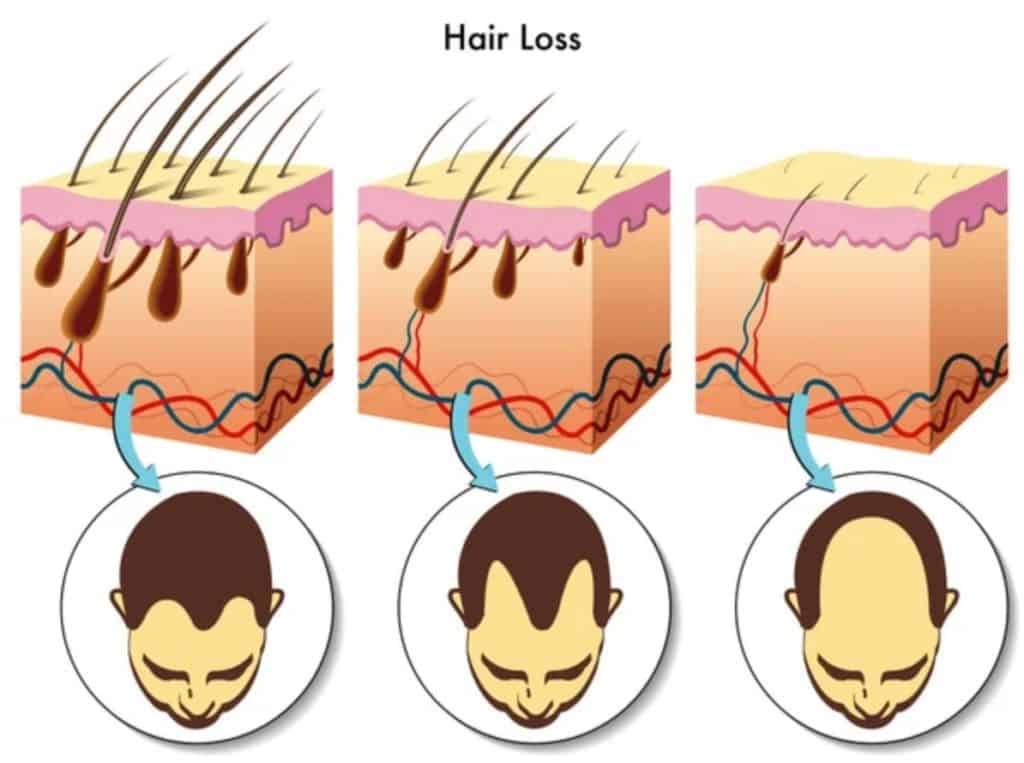
What is Hair Loss (Alopecia)?
Hair loss, medically known as alopecia, describes a partial or complete reduction of scalp hair density. Hair follicles follow a natural growth cycle involving growth, rest, and shedding phases. Disruption within that cycle leads to visible hair falling out and reduced hair volume. Dermatology research estimates that nearly 50% of adults experience noticeable thinning hair by age 50.
Visible hair loss often affects personal confidence and social perception. Studies in dermatology and psychology link alopecia with increased stress, anxiety, and lowered self-esteem. Early evaluation helps identify underlying causes such as genetics, hormonal imbalance, autoimmune disease, medication effects, or nutritional deficiency.
Modern dermatology offers several medical and surgical approaches. Dermatologists frequently recommend medication, scalp therapies, or regenerative treatments. Severe or permanent hair loss often responds well to surgical restoration. Hair transplant procedures redistribute healthy follicles to balding areas and restore natural density.
How Common is Alopecia?
Alopecia is a common hair disorder that affects millions of people worldwide. Research estimates that androgenetic alopecia alone affects approximately 50% of men over the age of 50 and around 25% of women by the same age. Broader research shows that hair thinning and pattern baldness affect an even larger population when all forms of alopecia are considered together.
Around 8 million women in the UK experience some form of hair loss. Approximately 7.5 million men in the UK are affected by male pattern baldness. These figures make alopecia one of the most widespread conditions seen in both dermatology and trichology clinics.
Types of Hair Loss
Medical classification divides hair loss into categories based on cause, pattern, progression, and outlook. Understanding the type is the first step toward choosing the right treatment.
Androgenetic Alopecia
Androgenetic alopecia represents the most common genetic form of hair loss. Hormonal sensitivity to dihydrotestosterone (DHT) causes hair follicles to miniaturise progressively. In men it typically follows the Norwood scale, beginning at the hairline or crown. In women it presents as diffuse thinning across the top of the scalp rather than a receding hairline.
Genetic inheritance from either parent determines susceptibility. Follicles in certain zones of the scalp carry receptors that react to DHT, shortening the growth phase with each cycle until strands become too fine to be visible. This process is gradual and begins earlier than most people realise, often in the late twenties or early thirties.
Treatment options that slow or reverse this process include finasteride, minoxidil, PRP therapy, low-level laser therapy, and, for advanced cases, surgical hair transplantation using FUE or DHI techniques.
Telogen Effluvium
Telogen effluvium involves temporary hair shedding when large numbers of follicles enter the resting phase simultaneously. This shift is typically triggered by a significant physiological or psychological event occurring two to three months before shedding becomes visible.
Common triggers include severe illness, major surgery, rapid weight loss, nutritional deficiency, prolonged psychological stress, pregnancy, and certain medications. The condition is usually reversible once the underlying trigger is addressed and the body stabilises.
Shedding in telogen effluvium tends to be diffuse rather than patterned, meaning hair thins across the whole scalp rather than in specific zones. Recovery typically takes six to twelve months. If shedding is prolonged or does not resolve, further investigation to rule out thyroid disorders or iron deficiency is warranted.
Alopecia Areata
Alopecia areata is an autoimmune condition in which the immune system mistakenly attacks hair follicles. The result is patchy, often circular areas of hair loss on the scalp or elsewhere on the body. The condition can affect anyone at any age and has no reliable predictor of its course.
In some cases hair regrows spontaneously within months. In others the condition progresses to alopecia totalis (complete scalp hair loss) or alopecia universalis (loss of all body hair). Treatments include corticosteroid injections, topical immunotherapy, and newer JAK inhibitor medications that have shown strong results in clinical trials.
The psychological impact of alopecia areata is significant due to its unpredictable nature. Support and early dermatological review are important parts of management.
Traction Alopecia
Traction alopecia develops from continuous tension on hair follicles caused by tight hairstyles such as braids, cornrows, extensions, weaves, or tight ponytails. The pulling force damages follicles over time, causing hair to thin along the hairline and temples first.
In early stages the damage is reversible if the cause is removed promptly. Prolonged tension over months or years can cause permanent follicle destruction in affected areas. This is particularly common in women with textured hair who regularly wear styles that place high tension on the frontal hairline.
Prevention is the most effective approach. Where follicle damage is permanent, hairline transplantation using FUE can restore lost density with natural-looking results.
Cicatricial Alopecia (Scarring)
Cicatricial alopecia, or scarring alopecia, refers to a group of rare inflammatory conditions that permanently destroy hair follicles and replace them with fibrous scar tissue. Once follicles are scarred they cannot regenerate hair, making early diagnosis and treatment critical to preserving existing follicles.
Conditions in this category include lichen planopilaris, frontal fibrosing alopecia, discoid lupus erythematosus, and folliculitis decalvans. Symptoms often include scalp tenderness, itching, redness, and scaling around affected areas.
Treatment aims to halt progression rather than reverse existing damage. Anti-inflammatory medications, antimalarials, and immunosuppressants are used depending on the specific diagnosis. Hair transplantation is possible in stable, inactive cases where the inflammatory process has been controlled for at least two years.
Anagen Effluvium
Anagen effluvium refers to rapid hair loss during the active growth phase. It occurs most commonly as a side effect of chemotherapy and radiation therapy, which target rapidly dividing cells including those within hair follicles. Hair loss typically begins within one to three weeks of starting treatment and can affect the entire scalp.
Unlike telogen effluvium, which is gradual, anagen effluvium causes sudden and often dramatic shedding. The good news is that in most cases hair regrows once treatment concludes, though texture and colour may temporarily differ from the original hair. In rare cases of high-dose radiation, permanent follicle damage can occur.
Scalp cooling during chemotherapy can reduce the extent of hair loss in some patients. Consultation with an oncologist and trichologist before treatment begins helps set realistic expectations.
Trichotillomania
Trichotillomania is a psychological disorder characterised by compulsive, repetitive hair-pulling from the scalp, eyebrows, eyelashes, or other body areas. It falls within the category of obsessive-compulsive related disorders and is often associated with anxiety, stress, or boredom.
Hair loss in trichotillomania presents as irregular patches with broken hairs of varying lengths, distinguishing it from the smooth bald patches of alopecia areata. The condition affects both children and adults and is more common than often assumed.
Treatment is primarily psychological, involving cognitive behavioural therapy (CBT) and habit reversal training. Where follicle damage has occurred from long-term pulling, trichoscopy assessment determines whether hair transplantation could restore affected areas after the compulsive behaviour has been successfully addressed.
Signs of Hair Loss
Hair loss presents differently depending on the underlying cause and how far the condition has progressed. Recognising the signs early improves treatment outcomes significantly.
Common Signs
Excessive Hair Shedding
Large amounts of hair appear on pillows, hairbrushes, or shower drains beyond the normal daily loss of 50 to 100 strands. Persistent heavy shedding over several weeks warrants clinical evaluation to identify the underlying cause.
Thinning Hair Across the Scalp
Hair strands gradually lose density across the scalp, appearing finer and less voluminous over time. This is one of the earliest visible signs of androgenetic alopecia and telogen effluvium.
Receding Hairline
Hair along the forehead moves backwards, creating an M-shaped pattern in men or a widening of the frontal hairline in women. This is a hallmark sign of androgenetic alopecia in both sexes.
Widening Hair Part
The natural part in the hair becomes visibly wider, exposing more scalp than usual. This often signals diffuse thinning and is one of the most reliable early indicators of female pattern hair loss.
Patchy Bald Spots
Circular or irregular bald patches develop on the scalp, often appearing suddenly. This pattern is characteristic of alopecia areata and warrants prompt dermatological assessment.
Visible Scalp Through Hair
Reduced hair density exposes more of the scalp, particularly under bright lighting or when hair is wet. This becomes noticeable as follicle miniaturisation progresses.
Early Signs
Increased Daily Shedding
More strands than usual appear on pillows, hairbrushes, or in the shower. While some daily shedding is normal, a consistent increase over several weeks is worth monitoring.
Finer Hair Strands
Individual hairs become thinner in diameter, losing their previous texture and strength. This miniaturisation is often the first biological sign that androgenetic alopecia is underway.
Slower Hair Growth
Hair takes longer to grow back after cutting or shedding. A shortened growth phase is a sign that follicle cycles are being disrupted.
Reduced Hair Volume
Hair gradually loses fullness and body, causing hairstyles to appear flatter and less voluminous even when freshly washed and styled.
Rare and Severe Signs
Scalp Pain or Burning Before Shedding
Tenderness, burning, or pain on the scalp before or during hair loss can indicate an inflammatory condition such as lichen planopilaris or frontal fibrosing alopecia. This requires urgent dermatological assessment.
Hair Loss on Eyebrows, Eyelashes, or Body
Loss extending beyond the scalp to eyebrows, eyelashes, or body hair may indicate alopecia universalis or a systemic medical condition affecting follicles across the body.
Scalp Scarring
Smooth, scarred areas on the scalp where hair no longer grows indicate cicatricial alopecia. Scarring is permanent and requires specialist treatment to halt further progression.
Pus-Filled Lesions on the Scalp
Pus-filled spots or sores indicate a bacterial or fungal infection that can damage follicles if left untreated. Folliculitis decalvans is a rare example that causes permanent scarring if not managed promptly.
Causes of Hair Loss
Hair loss rarely has a single cause. In most cases, several contributing factors interact. Understanding the primary driver is essential for selecting the right treatment.
Genetic and Hormonal Causes
Genetic Predisposition (Androgenetic Alopecia)
Genetic inheritance causes hair follicles to become sensitive to dihydrotestosterone (DHT), a hormone derived from testosterone. Over time, DHT-sensitive follicles shrink and produce progressively finer hair until they stop producing entirely. This pattern can be inherited from either parent and may begin as early as the late teens in men.
DHT Sensitivity
DHT shrinks genetically susceptible follicles by binding to androgen receptors in the scalp. Each growth cycle becomes shorter until the follicle can no longer sustain visible hair. Blocking DHT with finasteride is one of the most evidence-based medical approaches to slowing this process.
Hormonal Changes (Pregnancy, Menopause, Thyroid)
Hormonal fluctuations during pregnancy, after childbirth, during menopause, or as a result of thyroid disorders disrupt the hair growth cycle and can push large numbers of follicles into the shedding phase simultaneously. Postpartum hair loss typically resolves within six to twelve months as hormone levels stabilise.
Polycystic Ovary Syndrome (PCOS)
PCOS increases androgen production in women, which can trigger thinning along the central parting and hairline. It is one of the most common causes of female pattern hair loss in women under 40.
Thyroid Disorders
Both hypothyroidism and hyperthyroidism disrupt follicle activity. Hair loss associated with thyroid conditions is typically diffuse and reverses once thyroid hormone levels are appropriately managed with medication.
Medical and Medication-Related Causes
Autoimmune Conditions (Alopecia Areata)
The immune system incorrectly targets hair follicles as foreign tissue, causing patchy hair loss. The severity ranges from small patches to complete scalp or body hair loss. The condition can be unpredictable in its course and requires specialist management.
Chemotherapy and Radiation
Anticancer drugs target rapidly dividing cells, including hair follicle cells in the active growth phase. Hair loss typically begins within weeks of starting treatment. In most cases hair regrows after treatment concludes, though texture may differ initially.
Certain Medications
Blood thinners, antidepressants, anticonvulsants, blood pressure medications, and hormonal therapies are among the drugs associated with hair shedding. The mechanism is usually telogen effluvium triggered by physiological stress from the drug. Switching medication or adjusting dosage under medical guidance often resolves the issue.
Diabetes
Poor blood circulation and metabolic disruption in diabetes affect scalp vascularity and follicle health. Insulin resistance and hormonal imbalance associated with type 2 diabetes can also contribute to androgenetic alopecia progression.
Scalp Infections
Fungal infections such as tinea capitis cause patchy hair loss by invading the hair shaft and follicle. Bacterial infections can also damage follicles if untreated. Antifungal or antibiotic treatment is typically effective, and hair usually regrows once the infection clears.
Rapid Weight Loss
Dramatic caloric restriction places physiological stress on the body and can push follicles into the resting phase. This includes hair loss associated with GLP-1 receptor agonist medications where the primary driver is rapid weight reduction rather than direct drug toxicity.
Lifestyle and Nutritional Causes
Iron Deficiency
Iron supports oxygen transport to rapidly dividing follicle cells. Deficiency, whether from diet or blood loss, reduces the energy available for hair growth and is one of the most common and correctable causes of diffuse hair thinning, particularly in women of reproductive age.
Protein Deficiency
Hair shafts consist largely of keratin, a protein. Insufficient dietary protein deprives follicles of the building blocks they need, leading to shedding and reduced strand strength. Low protein intake from restrictive diets is a frequently overlooked cause of hair loss in young women.
Vitamin D Deficiency
Vitamin D receptors in the scalp play a role in regulating the hair growth cycle. Low vitamin D levels have been linked to both telogen effluvium and alopecia areata in clinical research, though supplementation alone is not a proven standalone treatment.
Biotin Deficiency
Biotin (vitamin B7) supports keratin infrastructure in hair and nails. True biotin deficiency is rare but can occur in people with certain digestive conditions or after prolonged antibiotic use. Supplementation is only beneficial where a genuine deficiency exists.
Prolonged Stress
Severe emotional stress, illness, surgery, or bereavement can push large numbers of follicles into the resting phase simultaneously, causing diffuse shedding two to three months later. This is telogen effluvium and typically resolves as stress levels normalise.
Scalp and Hair Product Damage
Excessive heat styling, tight hairstyles, harsh chemical treatments, and certain hair dyes weaken the hair shaft and can cause breakage and traction alopecia over time. Damage to the follicle itself, rather than the hair shaft, is required for permanent loss.
How is Hair Loss Diagnosed?
Accurate diagnosis determines whether hair loss is temporary or permanent, and which treatment is appropriate. Dermatologists use a combination of clinical assessment and targeted investigations.
Medical and Family History
Doctors begin by asking about family patterns and recent health changes to identify genetic predisposition, medication use, dietary shifts, hormonal events such as pregnancy or menopause, and any recent significant illness or surgery. A thorough history narrows the differential diagnosis considerably before any physical examination takes place.
Physical Scalp and Hair Examination
Visual inspection allows clinicians to observe specific thinning patterns, scalp condition, follicle density, and hair shaft characteristics. The distribution of loss often reveals the type: patterned loss suggests androgenetic alopecia, patchy loss suggests alopecia areata, and diffuse loss across the whole scalp suggests telogen effluvium.
Pull Test
Gently grasping a small bundle of around 40 hairs near the scalp and pulling firmly reveals whether active shedding is occurring. More than six hairs extracted is considered a positive result, indicating a telogen effluvium or active inflammatory process.
Trichoscopy (Scalp Microscopy)
High-magnification imaging of the scalp enables clinicians to see follicle miniaturisation, vellus hair density, yellow dots, black dots, and other pattern markers that distinguish between types of alopecia without the need for biopsy in many cases. It is fast, non-invasive, and highly informative.
Blood Tests
Laboratory analysis identifies nutrient deficiencies including iron, ferritin, vitamin D, zinc, and B12. Thyroid function tests, hormonal panels including androgens and oestrogens, and inflammatory markers help rule out systemic causes of hair loss that require medical rather than cosmetic treatment.
Scalp Biopsy
Removing a small tissue sample for microscopic analysis provides definitive evidence for conditions that are difficult to distinguish clinically, particularly the various forms of scarring alopecia. Biopsy is not routinely required but is essential when the diagnosis is uncertain and the condition is progressive.
When to See a Doctor
A doctor should be consulted when shedding is sudden and severe, when patchy bald areas appear unexpectedly, when hair loss is accompanied by scalp pain, burning, or visible inflammation, when shedding has persisted for more than three months, or when hair loss is affecting mental health and daily life. Early assessment gives the best chance of preserving existing follicles.
Hair Loss Treatments
Treatment selection depends on the type of hair loss, its severity, whether follicle damage is permanent, and the patient’s goals. A staged approach, starting with the least invasive option appropriate for the diagnosis, is usually recommended.
Non-Surgical Treatments
Minoxidil
Minoxidil is a topical or oral vasodilator that extends the hair growth phase and increases blood flow to follicles. It is effective for both male and female pattern hair loss and is available without prescription. Results typically appear after three to six months of consistent use. The effect is maintained only for as long as treatment continues.
Finasteride
Finasteride is an oral medication that blocks the enzyme responsible for converting testosterone into DHT. By reducing scalp DHT levels, it slows or halts the miniaturisation of genetically sensitive follicles. Clinical trials show it stabilises hair loss in over 85% of men and produces visible regrowth in a significant proportion. It is not licensed for women of childbearing age due to teratogenic risk.
PRP Therapy (Platelet-Rich Plasma)
PRP uses the patient’s own growth factors, isolated from a blood sample and concentrated by centrifuge, to stimulate dormant follicles. Injected into the scalp, it promotes follicle activity, extends the growth phase, and improves hair density. It is most effective as an adjunct to other treatments in early-to-moderate hair loss.
Low-Level Laser Therapy (LLLT)
Medical-grade laser devices increase cellular energy production within follicle cells, promoting growth phase activity. LLLT is cleared by regulatory bodies for both male and female pattern hair loss. It is best used alongside minoxidil or finasteride to maximise effect.
Topical Finasteride and Minoxidil Combination
Combining both active ingredients in a single topical spray allows targeted application with reduced systemic absorption compared to oral finasteride. Clinical evidence supports combination therapy as more effective than either treatment used alone for androgenetic alopecia. Combination tablets are also available for patients who prefer a single oral treatment over topical application.
Surgical Hair Restoration
Hair transplantation is the most effective long-term treatment for permanent hair loss. It relocates healthy, DHT-resistant follicles from the donor zone at the back and sides of the scalp to balding or thinning areas. The transplanted follicles retain their genetic resistance to DHT and grow permanently in their new position.
FUE (Follicular Unit Extraction)
FUE extracts individual follicular units one by one using a micro-punch device. There is no linear scar, recovery is faster than FUT, and the technique is suitable for most patients. Sapphire FUE uses precision sapphire blades to create finer recipient channels, improving density and reducing healing time. Read more about FUE hair transplant at Harley Street.
DHI (Direct Hair Implantation)
DHI uses a Choi implanter pen to place each graft directly into the scalp without pre-made channels. This allows greater control over the angle and direction of placement, making it particularly suited to adding density within existing hair or restoring the hairline with high precision. A no-shave option is available. Read more about DHI hair transplant at Harley Street.
FUT (Follicular Unit Transplantation)
FUT removes a strip of donor tissue from the back of the scalp, which is then dissected into individual grafts under magnification. It allows a higher number of grafts in a single session and is the preferred technique when a large area requires coverage or when the patient prefers not to shave the donor area. A fine linear scar remains in the donor zone. Read more about FUT hair transplant at Harley Street. Specialist procedures including beard transplants and eyebrow transplants are also available.
Who is a Suitable Candidate?
The ideal candidate for hair transplant surgery has a stable hair loss pattern, sufficient donor hair density, and realistic expectations about outcomes. Age, Norwood or Ludwig classification, scalp laxity, and donor reserve are all assessed at a free consultation. Most patients aged 25 and above with established pattern hair loss are suitable for at least one technique.
How to Prevent Hair Loss
Not all hair loss is preventable, but lifestyle factors that accelerate genetic or nutritional hair loss can be addressed to slow progression and preserve existing follicles.
Balanced Nutrition
Consuming adequate protein, iron, zinc, and vitamins B and D provides the building blocks hair follicles need. A blood test to identify specific deficiencies is more useful than taking supplements without evidence of need. Correcting a genuine iron or vitamin D deficiency often produces visible improvement within three to six months.
Stress Management
Reducing chronic stress through regular exercise, sufficient sleep, and psychological support prevents the cortisol-driven hormonal disruption that triggers telogen effluvium. Acute stressors cannot always be avoided, but managing the body’s overall stress load reduces the severity and duration of shedding episodes.
Gentle Hair Care
Avoiding tight hairstyles that pull on the hairline, limiting heat styling, and using gentle cleansing products reduces mechanical and chemical damage to hair shafts and follicles. This is especially important for patients who are already experiencing early androgenetic alopecia, where follicles are more vulnerable. Patients with established hairline recession may wish to explore hairline transplantation options.
Scalp Hygiene
Washing the scalp regularly removes sebum, product build-up, and environmental debris that can contribute to follicle inflammation. A clean, healthy scalp environment supports optimal follicle function and reduces the risk of scalp conditions that accelerate shedding.
Early Medical Intervention
Seeking evaluation at the first signs of thinning gives the widest range of treatment options. The follicle miniaturisation process in androgenetic alopecia is progressive and largely irreversible once follicles are dormant. Medical treatments such as finasteride and minoxidil are significantly more effective at preserving existing hair than at recovering hair that has already been lost.
Related Information
Find out more about specific types of hair loss and how they are treated at Harley Street Hair Transplant Clinics.
Affects around 7.5 million men in the UK. The most common cause of hair loss in men, driven by genetic sensitivity to DHT and following the Norwood scale from hairline recession to crown loss.
Affects around 8 million women in the UK. Presents as diffuse thinning across the crown and top of the scalp rather than a receding hairline, and is classified using the Ludwig scale.
Frequently Asked Questions
Losing between 50 and 100 strands a day is considered normal as part of the natural hair growth cycle. Consistent shedding significantly above this level over several weeks is worth discussing with a doctor, particularly if accompanied by visible thinning or scalp changes.
Male pattern baldness can begin as early as the late teens or early twenties in genetically predisposed men, though it more commonly becomes noticeable in the thirties. Female pattern hair loss typically begins in the thirties to forties, often accelerating after menopause. Temporary hair loss from stress or nutrition can occur at any age.
It depends on the type and cause. Temporary hair loss from telogen effluvium, nutritional deficiency, or medication typically reverses once the underlying cause is addressed. Genetic pattern hair loss is not reversible without treatment, though its progression can be slowed with medication. Once follicles are permanently dormant or scarred, hair transplantation is the only way to restore coverage in those areas.
Yes, androgenetic alopecia has a strong genetic component. The genes responsible can be inherited from either parent, and multiple genes contribute to susceptibility. Having a parent with significant hair loss increases the likelihood, though it does not guarantee the same pattern or severity will occur.
Hair shedding is the natural, daily loss of strands that have completed their growth cycle. It is normal and temporary. Hair loss refers to a condition where hair does not regrow after shedding, either because follicles are damaged, miniaturising, or have stopped producing new growth entirely. The distinction matters because shedding resolves on its own, while hair loss requires investigation and treatment.
Yes, severe or prolonged stress can trigger telogen effluvium, a condition where large numbers of follicles enter the resting phase simultaneously. Shedding typically becomes visible two to three months after the stressful event. The condition usually resolves within six to twelve months once stress levels normalise, though it can become chronic if stressors persist.
See a doctor if shedding is sudden and severe, if patchy bald areas appear unexpectedly, if hair loss is accompanied by scalp pain, burning, or visible inflammation, if shedding has persisted for more than three months without improvement, or if hair loss is causing significant distress. Early assessment preserves more treatment options and gives better outcomes.
A hair transplant is the most effective permanent solution for hair loss caused by follicle miniaturisation or permanent follicle damage. It is not appropriate for all types of hair loss and is not typically the first-line treatment for early-stage genetic hair loss, where medication may be sufficient. A thorough consultation with a GMC-registered surgeon determines suitability and recommends the most appropriate approach for each patient’s specific pattern, age, and donor reserve. View our hair transplant cost guide for transparent pricing information.
Patient Testimonials
Aside from achieving fantastic results, we believe that keeping in touch with our patients before, during and after their hair transplantation procedure is paramount – it helps to keep our patients feeling calm and in control. We’re always on hand to provide guidance, support and aftercare advice. Time and again, our patients tell us that this is what sets us apart from other clinics.
You can read our great reviews of FUE hair transplants over on Google.


