

Affects: Around 7.5 million men in the UK
Most Common Type: Androgenetic Alopecia




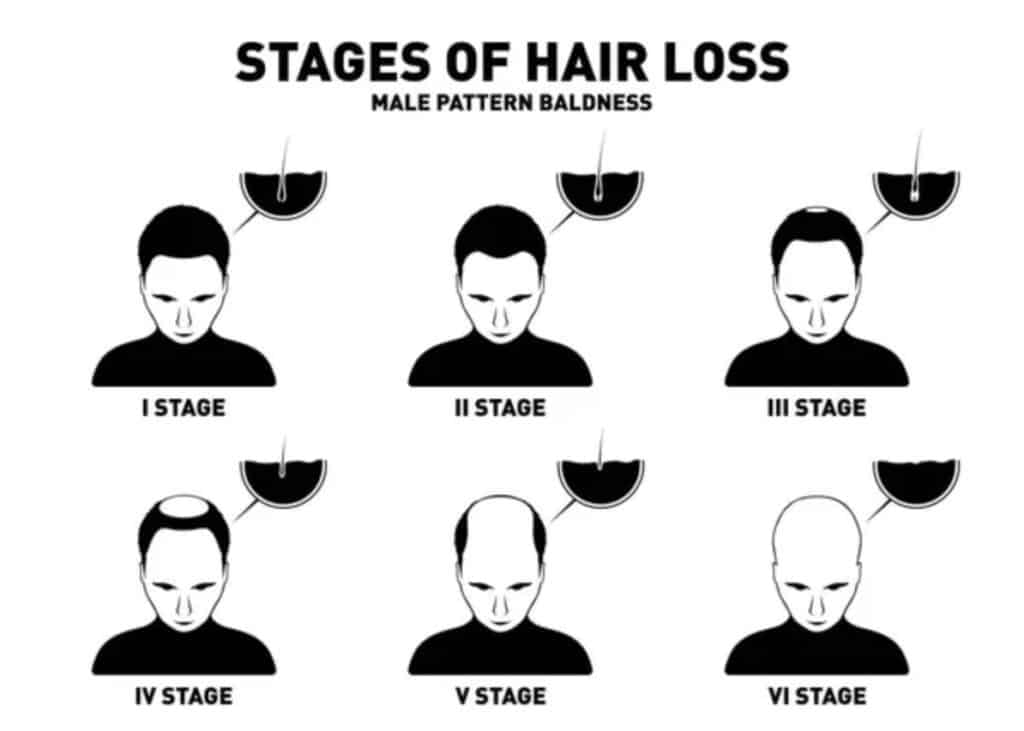
Male pattern baldness, known clinically as androgenetic alopecia, is the most common form of hair loss in men. It affects nearly half of all British men by the age of fifty and is caused by a genetic sensitivity to dihydrotestosterone (DHT), a hormone that progressively miniaturises hair follicles. Understanding the signs, causes, and available treatments helps men make informed decisions about managing their hair health before loss becomes advanced.
Hair loss in men can begin as early as the late teens or early twenties, often starting at the temples or crown before spreading across the scalp. While the condition is biological rather than a reflection of health, the emotional and psychological effects are well documented. Studies link androgenetic alopecia with reduced self-esteem, heightened anxiety, and changes in social confidence. Early intervention consistently produces better clinical outcomes than waiting until loss is extensive.
Research from the British Association of Dermatologists confirms that nearly half of men experience noticeable density changes by the age of fifty. Both medical and surgical treatments exist that can slow progression, stabilise loss, and restore natural-looking density to affected areas.


