



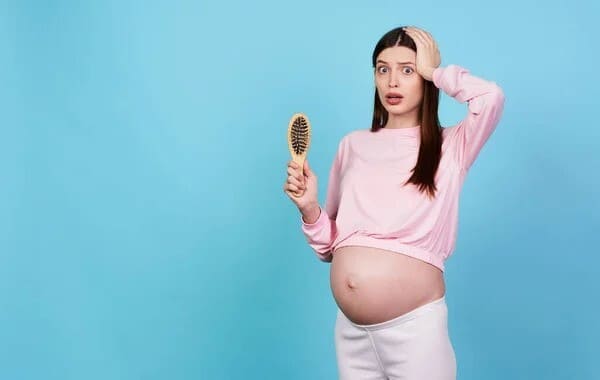
Postpartum hair loss can be a difficult event to overcome in the weeks after giving birth. In this article, you’ll find everything you need to know about this form of hair loss and if it is possible to prevent postpartum hair loss.
Key Takeaways
- Postpartum hair loss is a condition that affects women after giving birth. One study (Hirose, 2023) found this condition to affect over 90% of mothers in the first year after childbirth.
- Postpartum hair loss is caused by falling oestrogen levels after a mother has given birth to their child. This causes the hair follicles to enter a shedding phase, giving the impression of noticeable hair loss
- Currently, there is no way of preventing postpartum hair loss. However, if you wish to maintain increased hair growth in the months after giving birth, you can perform several practices that maintain hair health.
What is Postpartum Hair Loss?
Postpartum hair loss is a condition that affects women in the immediate couple of months after a mother has given birth to their child. This is caused by changing hormone levels in the mother’s body.
In the lead-up to giving birth, pregnancy hormones such as oestrogen, progesterone, and oxytocin can cause extra hair growth, leaving many women with visibly thicker and fuller-looking hair while pregnant.
However, after a mother has given birth, and her hormone levels begin to reach their “normal” pre-pregnancy levels, women may notice their thicker hair beginning to shed. This leads many women to believe they are suffering from excessive shedding or hair loss.
What Causes Postpartum Hair Loss?
Postpartum hair loss, also known as postpartum alopecia, is a common condition many women experience after childbirth. The condition is largely driven by hormonal fluctuations that occur after childbirth, specifically the drop in oestrogen levels that causes more hair follicles to enter the shedding phase.
Oestrogen performs a vital role during pregnancy, supporting the womb and softening the cervix in time for childbirth. During pregnancy, high levels of oestrogen prolong the growth phase of hair, leading to less shedding and fuller hair. So, hair growth during pregnancy is a side effect of increased oestrogen.
After childbirth, oestrogen levels drop sharply, causing more hair follicles to enter the shedding phase (telogen), leading to noticeable hair loss.
Something rarely mentioned by medical professionals is that postpartum hair loss may also be worsened by extraneous factors. These include:
- The physical stress of childbirth can shock the hair follicles into a resting phase, leading to increased shedding.
- The emotional and physical demands of caring for a newborn can contribute to overall stress, potentially exacerbating hair loss.
How Long Does Postpartum Hair Growth Last?
Postpartum hair loss typically lasts for about three to six months, though it can vary from person to person. Here’s a more detailed timeline of what you can expect:
Initial Onset Phase (1-3 Months)
Hair loss often begins between 1 and 3 months after childbirth. This is when many women start to notice more hair loss, or hair shedding, than usual.
The most common ways in which new mothers notice may notice postpartum hair loss are usually though:
- increased hair fall in the shower drain or plug-hole
- excess shedding when brushing hair (hair falls out while brushing)
- small clumps of hair on pillows and/or cushions.
During this phase, a woman’s hair will still look thick and full. Hair follicles still in the scalp will not have thinned or miniaturised.
Peak Shedding Phase (3-6 Months)
Postpartum hair loss usually peaks around the four-month mark. During this time, the shedding might be more noticeable, and some women may see thinning, especially around the temples and crown.
As pregnancy causes an artificial increase in the volume and thickness of a mother’s hair, one of the most noticeable aspects of postpartum hair loss around 3-6 months is the increased rate of thinning.
Improvement and Hair Growing Phase (6-12 Months)
After about six months, the rate of hair loss typically slows down, and new hair growth begins. Most women see significant improvement and return to their normal hair growth cycle by the one-year mark.
By around 12 months, most women have regained their pre-pregnancy hair volume and density. However, for some, it might take a little longer to see a complete recovery. If your hair grows quite slowly, using topical minoxidil or volumising shampoo may be recommended!
What Extraneous Factors Affect the Severity of Postpartum Hair Loss?
The severity and duration of postpartum hair loss can be influenced by several factors. Although this is primarily a hormonal condition, it can be worsened by social factors and individual differences. Some of these factors include:
A Woman’s Hair Growth Cycle
Each person’s hair growth cycle is different, which often affects how long postpartum hair loss lasts. On average, hair follicles grow around 0.5mm a day. That’s around 0.1 inch a week and 5 inches in a year.
For some, this may be quicker or slower. So, if your hair usually grows quite slowly, it may take a little longer than 12 months postpartum for your hair to grow back to its normal length and thickness.
Nutritional Deficiencies
One of the leading causes of hair loss in women is dietary deficiency. Not getting the right nutrition is not only detrimental to our health., but our hair growth too!
A keen focus on nutrition can support faster recovery of hair health. So, be sure to supplement your diet with a well-balanced vitamin supplement. Investing in a biotin supplement or hair mask may also increase hair growth for postpartum mothers.
Stress Levels
One of the leading environmental causes of hair loss is stress. Having a child can be one of the most stressful periods of a woman’s life. So, if you’re particularly susceptible to stress-related hair loss, this may worsen postpartum hair loss.
Managing stress levels is vital in preventing the prolongation of the hair-shedding phase.
When Should a Woman Seek Medical Advice For Postpartum Hair Loss?
If a mother’s hair loss is severe, persists beyond a year, or is accompanied by other symptoms, it’s advisable to consult with a GP, clinician, or medical professional. This is to rule out underlying health conditions and receive appropriate treatment.
Once the underlying cause of a mother’s hair loss has been diagnosed, then a treatment plan and medication/treatment can be recommended. Treatments for postpartum hair loss are usually aimed at naturally increasing the rate of hair growth on the scalp.
Biotin supplements, volumising shampoos, or even topical treatments (such as minoxidil or rosemary oil) are usually recommended. As postpartum hair loss is only a temporary condition and almost all women make a full recovery, more invasive treatments (such as PRP, dutasteride injections, or a hair transplant) are never recommended
How Frequent of a Condition is Postpartum Hair Loss?
Postpartum hair loss is a very common condition. It affects a significant majority of women after childbirth. It is estimated that 40-50% of women experience noticeable postpartum hair loss. This makes it a widely experienced condition among new mothers.
While nearly half of new mothers notice significant shedding, the degree of hair loss can vary. Some may experience mild thinning, while others might notice more substantial hair shedding.
The experience can also differ between first-time mothers and those who have had multiple pregnancies. Some women may notice more hair loss with one pregnancy compared to others.
What Can Be Done to Prevent Postpartum Hair Loss?
Little can be done to prevent postpartum hair loss. This is largely due to the little control we have over hormone levels during pregnancy. Increased levels of oestrogen and progesterone are vital in the development of the foetus and preparation of the mother for birth.
As such, the increased rate of hair growth and hair loss is simply a side effect of pregnancy that cannot be truly prevented. To slow down the rate of postpartum hair loss, many women may take a vitamin supplement or topical hair treatment.
In some cases, this can slow down the perceived rate of hair loss. However, a mother’s hair will make a full recovery in time.
Conclusion
Postpartum hair loss is a very common (and temporary) experience for new mothers. Triggered by natural hormonal changes after childbirth, it typically begins a few months postpartum, peaks around the 3–6 month mark, and gradually improves within a year.
While there’s no proven way to prevent postpartum hair loss, focusing on good nutrition, gentle hair care, and stress management can help support healthier regrowth during this period. The most important thing to remember is that postpartum hair loss is not permanent. For the vast majority of women, hair returns to its pre-pregnancy density with time.
Reference
- Hirose, A., Terauchi, M., Odai, T., Fudono, A., Tsurane, K., Sekiguchi, M., Iwata, M., Anzai, T., Takahashi, K. & Miyasaka, N., 2023. “Investigation of exacerbating factors for postpartum hair loss: a questionnaire-based cross-sectional study.” International Journal of Women’s Dermatology, 9(2), e084. Published 16 June 2023.