




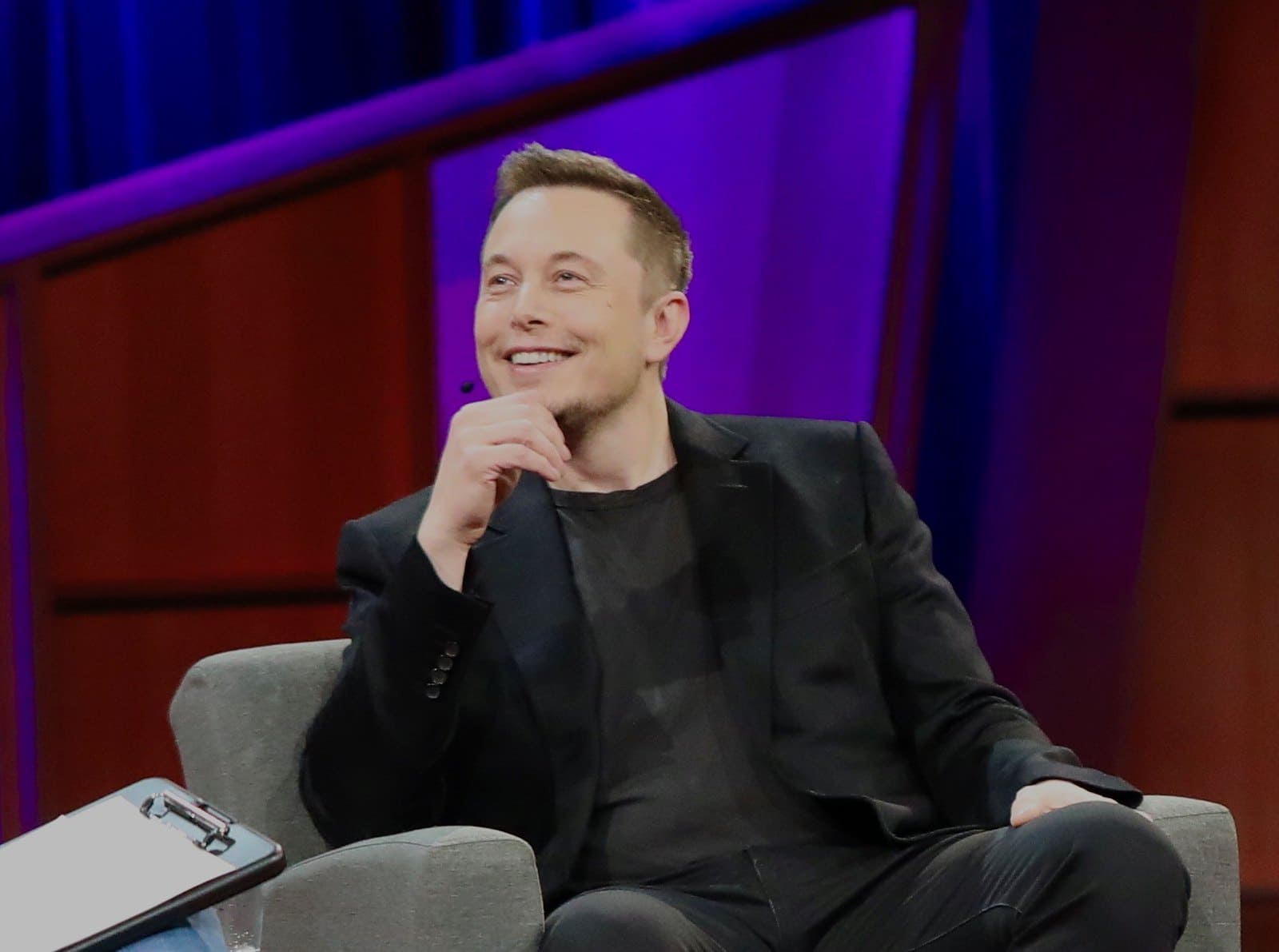
Elon Musk has been in the public eye for near on two decades. Known for his peculiar charisma and Silicon Valley ambitions, you might not immediately think of him in the context of hair restoration. But it has been publicly noted that Musk underwent a very successful hair transplant, and the results speak for themselves.
Like so many men, early pictures of him show hair loss starting in his adolescent years. Despite being on the more severe end of male pattern baldness, Musk is a good example of what hair restoration surgery can achieve for the millions of men and women across the UK.
On this page, you can find out about his hair loss, the likely restoration process, and the results his transplant produced.
Elon Musk’s male pattern baldness

In his early years, it is fairly clear that Musk was born with naturally thin hair. Looking at pictures of him as a teenager, the hair on his forehead is noticeably thin and shows signs of maturation at an unusually early age. He had a full head of hair, but the early signs of male pattern baldness would have made him a future candidate for a transplant.
In a picture taken at around age 16, he already shows signs of Stage 2 on the Norwood Hamilton Hair Loss Scale. His forelock and crown were very much present, but his temples had started to recede and no follicles were visible there.
Had he been aware of his balding at that age and considered how quickly it would progress, he could have slowed things down with Minoxidil or Finasteride. That said, being young at the time, he would not have been a candidate for surgery. A transplant that early would have been pointless since further loss would still have occurred.
In one of his most well-known photos, taken around the launch of PayPal, his hair sits at roughly Stage 3 on the Norwood scale. The receding hairline had moved further up, with deepening temporal recession, thinning on the forelock, and likely some thinning at the crown too. It is a common loss pattern and one that responds well to transplant surgery.
From a range of photographs, it looks likely that Musk opted for a permanent solution somewhere around Stage 4 on the Norwood scale. Without surgery, his crown would have continued thinning and the bridge connecting the forelock to the back of the scalp would have eventually disappeared.
Has Elon Musk had a hair transplant?
Given how extensive his loss was at a relatively young age, and how far it would likely have progressed on the Norwood scale, Musk would have been a good candidate for FUT (Follicular Unit Transplantation). FUT is generally used for patients with extensive baldness where FUE (Follicular Unit Extraction) alone may not be sufficient. The procedure involves removing a strip of skin from the back of the scalp, dissecting the follicles under a microscope, and implanting them into the thinning areas.
If you look carefully at photos, you can see the remnants of a strip scar at the back of Musk’s head. This is the tell-tale sign of FUT. Unlike FUE, which takes individual follicles one at a time, FUT leaves a linear scar where the strip was removed and requires stitches to close.
His first hair transplant is widely reported to have taken place around 2002. FUE did not become widely used until the 2010s, which makes FUT the far more likely technique given the timing and the extent of his hair loss at that stage.
A second procedure has been suggested by several observers, based on how noticeably fuller and thicker his hair looks in more recent photographs compared to the early 2000s. By that point, he appeared to have regained hair on his temples and forelock, though it still looked relatively short and thin at first. Over time, results became noticeably more substantial. Given the single strip scar visible at the back of his head, it is likely the second procedure was FUE, used to add density on top of the earlier FUT work. This kind of staged approach is not unusual for patients who experienced extensive loss early in life.
The results of Elon Musk’s hair transplant

Looking at the results, most of the implanted hair went into his temple area, bringing the hairline forward considerably. Hair was also added to the forelock, giving him a fuller appearance and the capacity to grow a longer fringe.
Today, his haircut suits his current hairline well. Short back and sides, with the top switching between short and a slightly longer length depending on the occasion.
A new hairline does more than just address hair loss. It opens up how you can style your hair, and for many patients, it genuinely takes years off how they look. That holds true with Musk.
How much did Elon Musk pay for his hair transplant?
Nobody knows the exact figure, but estimates put his transplant cost at around $20,000, which works out at roughly £15,000 to £16,000 in the UK. As a billionaire with access to top US surgeons, his budget would not have been a limiting factor.
The cost of a hair transplant is driven largely by how many grafts are needed. The more extensive the loss, the more grafts are required and the higher the cost. In Musk’s case, the loss was substantial, so costs were correspondingly high. Two procedures would also have roughly doubled the total bill.
FUT carries additional cost beyond just graft count. Removing the strip, dissecting it into individual units under a microscope, and closing the scalp with stitches all takes considerably more surgical time than FUE. That time factors into the final price.
For comparison, hair transplant costs in the UK typically start from £3,000 for a smaller FUE session and rise from there depending on the extent of coverage needed. You do not need to be a billionaire to get good results, and the techniques available now are considerably more refined than what was on offer in 2002.
Elon Musk’s hair in 2025 and 2026
Musk’s public profile has changed considerably since this article was first written in 2022. He has been far more visible globally, and with that comes more scrutiny of his appearance.
Looking at photographs from 2024 and 2025, his hair continues to look thick and full across the frontal zone and temples. The hairline sits in a natural position, with no obvious signs of further recession. Whether this reflects the long-term durability of his transplant work, ongoing medical hair loss treatments such as Finasteride or PRP, or both, is impossible to say from photographs alone. What is clear is that the results have held up well across more than two decades.
It is worth noting that transplanted hair, once established, does not fall out in the same way as native hair affected by DHT. The grafts taken from the donor area carry a genetic resistance to the hormone responsible for male pattern baldness, which is why well-executed transplants tend to deliver permanent results. Musk’s hair appears to be a good illustration of that.
For anyone watching his appearances in recent years and wondering whether a hair transplant is worth it, his results over time make a reasonable case. The work done in the early 2000s, topped up likely with FUE, has produced a hairline that reads as entirely natural twenty-plus years on.