




If you’re researching hair loss treatments, then you have probably come across a medication called Stemoxydine. Stemoxydine is a topical medication that, when applied to the scalp, can stimulate hair growth and improve hair density. On this page, you’ll find everything you need to know about Stemoxydine, including its efficacy, safety, and whether you can get it in the UK!
Key Points
- Stemoxydine is a topical hair loss treatment sometimes used to treat genetic hair loss. It works by mimicking a low-oxygen (hypoxic) environment to stimulate hair regrowth on the scalp. This helps wake up dormant hair follicles.
- Stemoxydine may help with androgenetic alopecia, telogen effluvium, and post-partum hair loss, but it won’t regrow hair in completely bald areas. Hair transplants remain the only option for that. However, it is suitable for men and women.
- While other hair loss medications like Minoxidil and topical finasteride are approved by the FDA (US) and MHRA (UK) and are proven effective treatments for hair loss, the same cannot be said for Stemoxydine. More research into Stemoxydine’s efficacy needs to be conducted.
What is Stemoxydine for Hair Loss?
Stemoxydine is a topical treatment that is used to treat early symptoms of male pattern baldness (androgenetic alopecia). The Stemoxydine molecule works in an opposing way to Minoxidil by stimulating hair follicles through hypoxia and creating an ideal environment for hair growth.
It works by creating a hypoxic environment for your hair follicles which should “wake up” dormant hair follicles. In doing so, Stemoxydine is believed to improve the conditions within the hair follicle to restore and maintain hair density.
Stemoxydine is commonly found in formulations like serums, shampoos, or other topical solutions that are applied directly to the scalp. You can also buy the medication directly over the counter from your local health store (like Boots or Holland & Barrett). It is not classed as a prescription medication in the UK.
How Does Stemoxydine Work?
 Stemoxydine is classified as a prolyl-4-hydroxylase (P4H) inhibitor. P4H inhibitors help to shorten the kenogen phase of the hair growth cycle, inducing the anagen phase of your hair follicles. The aim is to stimulate dormant hair follicles into growth!
When you apply this medication to your scalp, it is designed to mimic hypoxic conditions in your stem cells to promote hair growth. By creating a hypoxic environment (oxygen deprivation), the growth (anagen) phase of the hair follicle is stimulated, causing your hair to grow at a quicker rate than if you don’t use the treatment.
While studies into Stemoxydine’s efficacy are limited, this hair kenogen phase shortener is added to many hair treatments and high-quality shampoos. So, have a look on the back of your shampoo bottle to see if you need Stemoxydine!
What Hair Loss Conditions Can Stemoxydine Help to Treat?
Scientific research shows Stemoxydine to be a promising solution for treating several hair loss conditions, including androgenic alopecia (male & female pattern hair loss), telogen effluvium, and alopecia areata! If you suffer from one of the following conditions, then you may want to consider Stemoxydine as a hair loss treatment:
- Androgenetic Alopecia – genetic hair loss conditions like male pattern baldness are one of the most common causes of hair loss across the world. It is thought to be caused by the DHT hormone, which causes your hair follicles to shrink over time. If you are uneasy about taking hormone-blocking treatments (like finasteride or dutasteride), then topical treatments like Stemoxydine or Minoxidil may be for you!
- Telogen Effluvium – this type of hair loss occurs when a significant number of hair follicles prematurely enter the shedding (telogen) phase of the hair growth cycle. Stemoxydine helps combat this by promoting the regeneration of follicles that have been temporarily pushed into the shedding phase. By stimulating follicular activity, it may encourage the hair to grow back more quickly.
- Alopecia Areata – AA is an autoimmune condition where the immune system attacks hair follicles, leading to patchy hair loss. It’s less common than androgenic alopecia but is very distinct. Hair loss is often concentrated in a small area (the size of a 50p piece). Although a temporary form of hair loss, topical medications like Stemoxydine can be applied to encourage your hair follicles to grow back quickly.
- Post-partum Hair Loss – after a woman has had a baby, they may experience temporary hair shedding due to hormonal changes. This condition is usually temporary and resolves on its own after several months. However, excessive hair shedding causes many new mothers to feel self-conscious about their hair loss. So, using a medication like Stemoxydine can help accelerate new hair growth in the immediate aftermath of post-partum hair thinning.
If you’re looking to combat thinning hair or a receding hairline, then Stemoxydine may be a safe and effective topical medication you can try! Book yourself in for a free consultation today and start your hair restoration journey!
How Should I Apply Stemoxydine?
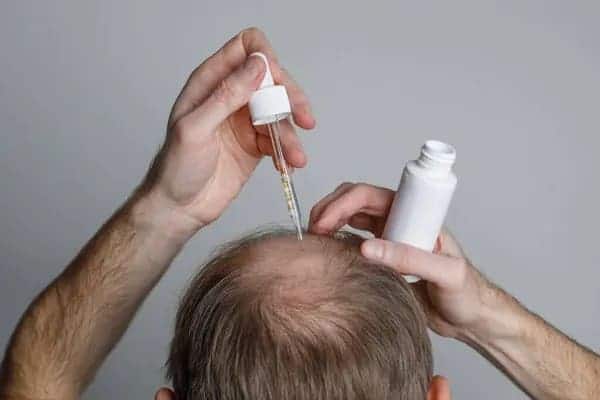
Stemoxydine is a topical medication. This means it should be applied topically to the scalp. It is most commonly found in the form of a serum but can also be bought as a foam. Apply the solution directly to the areas where you experience thinning or hair loss. Here are some general tips for application:
- Cleanse the Scalp: It’s best to apply Stemoxydine to a clean, dry scalp. Many people use it after washing their hair and letting it dry. We also recommend you apply Stemoxydine in the evening so it has all night to soak in.
- Apply the Serum: Use the applicator provided (or your fingertips) to apply the serum directly to the thinning areas of the scalp. If you have a serum, apply the pipette as instructed. If it comes as a foam, pump it onto the scalp, as required.
- Massage It In: Gently massage the serum into your scalp to ensure even coverage and better absorption. Use the tips of your fingers and rub it in gently.
- Let It Absorb: After applying, leave the serum on your scalp. It’s usually recommended to leave it on for several hours or overnight before washing it out, depending on the product instructions. If you are worried about the Stemoxydine running onto your clothes/pillow, wear a shower cap to sleep.
How Do I Know if My Stemoxydine Treatment is Working?
As with any medication, it can be difficult to know how and when your hair loss treatment has started working. That’s why we usually recommend our patients to take a picture of their hair before they start the treatment. Then, a patient should take pictures every three months in order to gauge whether the hair loss treatment is working!
Once you have a collection of images, it becomes easy to spot how effective your Stemoxydine treatment is at preventing hair loss and encouraging hair growth. If your treatment is working, then you will notice a gradual improvement in hair growth and increase in thickness in hair density.
It is generally recommended that a course of Stemoxydine should last around 3 months. However, you are likely to notice the benefits of this topical hair treatment after 8 weeks. It should prevent further hair thinning and stimulate healthy hair growth.
Hair Loss Treatments Compared: is Stemoxydine Effective at Hair Regrowth?
Choosing the right topical treatment for your hair loss can be confusing, especially when there are so many medications on the market today. In the rest of this article, we’re going to compare Stemoxydine against Minoxidil and topical finasteride to help determine which treatment is right for you!
Before we start, it’s important to stress that none of these treatments are going to restore hair follicles in an area where you have already balded/receded. If you were looking to reverse your hair loss or reshape your hairline, you would need a hair transplant surgery. Have a look at follicular unit extraction and follicular unit transplantation to see which hair transplant would be right for you!
How Does Each Medication Work?
As stated in the previous sections, Stemoxydine mimics a hypoxic (low oxygen environment) to reactivate dormant follicles. Comparatively, Minoxidil works in almost the opposite way. Minoxidil is a vasodilating medication which increases blood flow to the hair follicles, prolonging the growth phase of your hair.
Topical finasteride works in quite a different way to the other two medications. This is a DHT blocking medication which inhibits the 5a-reductase enzyme to reduce DHT levels (the hormone responsible for genetic hair loss).
How Effective Is Each Medication?
Both Minoxidil and topical Finasteride are clinically proven to be effective at treating androgenetic alopecia. Due to the vast range of clinical evidence supporting their efficacy, these two treatments are approved by the FDA (America) and the MHRA (Great Britain).
As Stemoxydine is a novel hair loss treatment, there is limited scientific evidence supporting its efficacy, safety, and side effects. So this is definitely something to consider if you are looking for hair loss solutions.
What Common Side Effects Are Caused By Each Treatment?
As all three treatments are topical solutions, they tend to cause similar side effects. The most common side effect experienced by patients taking these treatments is minor irritation on the scalp. This can feel quite itchy and look red/dry/flaky.
If you experience any side effects, you should stop taking your treatment. If symptoms persist, then you should contact your GP and/or clinic from which you have received your medication/solution.
Conclusion
So, does Stemoxydine treat hair loss? Well, it’s complicated. Taking this topical hair loss treatment may improve hair density and encourage hair regrowth. However, clinical research on stemoxydine is currently limited and so it may be wiser to opt for a “proven” topical hair loss medication like Minoxidil, finasteride, or dutasteride.